






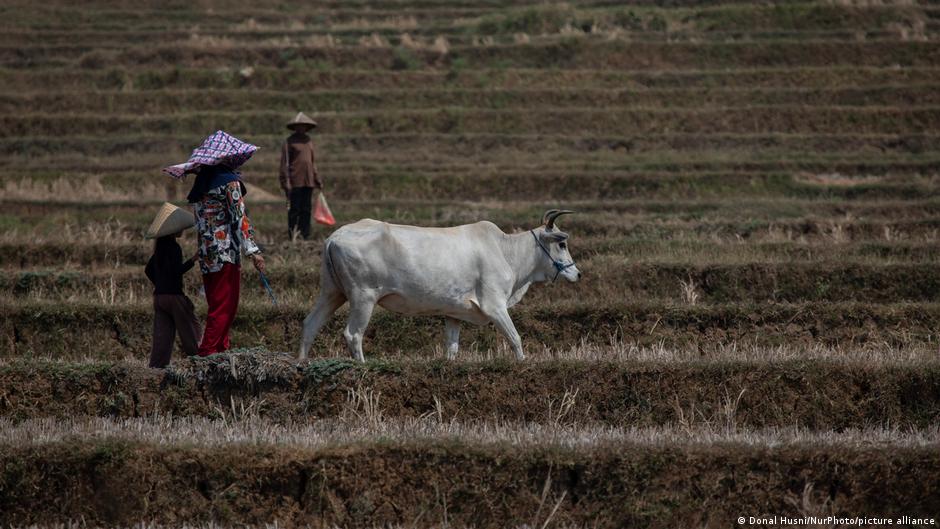
The global food system faces mounting pressure, and new research highlights regions where these strains could trigger widespread instability.
Severe droughts and extreme weather events are devastating agricultural output across multiple regions. A developing El Niño pattern threatens to exacerbate food shortages for millions in the coming year. Simultaneously, ongoing conflicts and geopolitical tensions are disrupting supply chains essential for transporting food and agricultural inputs.
The conflict in Ukraine has repeatedly destabilized grain markets, while tensions affecting the Strait of Hormuz have driven up energy and fertilizer costs, raising expenses for farmers worldwide.
Analysts have long cautioned that increasing food insecurity could fuel political instability. When families cannot secure adequate nutrition, competition for land, water, and other vital resources intensifies—often prompting displacement. In nations with fragile institutions, these pressures can contribute to social unrest and escalate into armed confrontation.
Recent research has identified where such risks are most pronounced. The Climate-Driven Agricultural Decline Index (CADI), developed by Hannes Mueller and collaborators, maps how climate change is transforming agricultural productivity globally. “The most severe losses occur in tropical regions,” noted Mueller, a researcher at the Institute for Economic Analysis and the Barcelona School of Economics.
Climate change is already diminishing food production across numerous areas. Hundreds of millions of people inhabit regions where harvests have declined compared to three decades ago. Mueller cited Cambodia, Bangladesh, Burundi, Nigeria, Paraguay, and El Salvador as nations already experiencing significant agricultural losses.
“Northern Africa represents another region requiring much closer attention. When you examine the data visualization, the situation appears dire. It genuinely looks alarming,” he observed.
Burundi’s vanishing lakes and the fight to bring them back
To view this video please enable JavaScript, and consider upgrading to a web browser that supports HTML5 video
Climate change represents only one dimension of this complex issue. Armed conflicts, trade disruptions, export restrictions, and escalating fertilizer costs can amplify food insecurity substantially.
Within the next quarter-century, nearly half of the global population may reside in regions where agricultural output has declined.
New winners, losers, and conflicts
These pressures can destabilize governments, accelerate migration patterns, and provide opportunities for armed groups to recruit members. In societies already experiencing instability, such factors can push them toward systemic crisis.
However, CADI’s research reveals a counterintuitive finding: Improvements in agricultural productivity also appear to correlate with increased violence risk. Mueller explained that the critical issue extends beyond scarcity to encompass change itself. The climate crisis and related shocks do not merely impoverish certain regions. They also generate new opportunities while altering the value of land and resources.
In certain locations, previously marginal land becomes more productive and valuable. This attracts investment and fuels competition for ownership and access rights.
Consequently, nations that appear to benefit overall may encounter new tensions domestically. Sudan, for instance, is projected to increase food production as climatic conditions shift. However, while some areas could become more productive, others may suffer losses, creating internal divisions between beneficiaries and those left behind—elevating conflict potential.
This emerging instability, according to Mueller, also affects regions where productivity changes have not yet materialized. “If we know your land will become more productive, I may attempt to seize it now. This represents precisely where negotiations collapse and violence emerges,” he stated.
Even in stable, prosperous regions, the climate crisis is generating future challenges. While seemingly minor, shifting grape-growing conditions in Europe are impacting local agricultural communities. Major sparkling wine producers have begun acquiring land in elevated regions.
“It is not yet productive, but they already anticipate future grape harvest locations,” Mueller explained. “Large agricultural corporations are purchasing land. This phenomenon occurs globally. Local populations are displaced as major producers enter markets, land values increase, and conflicts emerge over resources that remain decades away from utilization.”
How climate change is reshaping the world’s wine map
To view this video please enable JavaScript, and consider upgrading to a web browser that supports HTML5 video
One of the CADI team’s most significant discoveries indicates that agricultural transformation more frequently results in conflict within non-democratic systems. When climate shocks, food insecurity, and resource competition affect democratic nations, their institutions typically compel competing interests toward negotiation rather than violence.
“Democratic processes may appear frustrating and unwieldy. Change rarely occurs as swiftly as citizens desire. However, this represents a valuable feature because it forces dialogue between parties,” Mueller observed. “Negotiation platforms exist. Institutions support constructive discussions. This continuous process of finding solutions stands at the core of conflict prevention.”
South Asia as a warning sign
“We dedicate insufficient attention to threats against our livelihoods’ foundations,” stated Abdullah Fahimi of the German Council on Foreign Relations (DGAP). “These threats can trigger major crises and displace millions of people. The regions warranting closest observation include South Asia and the Sahel, where climate vulnerability combined with rapid population growth means affected populations could expand dramatically.”
Fahimi noted that South Asia stands out due to its dependence on both vulnerable water sources and international food markets. Food prices have increased substantially over recent decades. “South Asia, home to approximately two billion people, relies heavily on imports,” he added. These imports include wheat, maize, and palm oil from nations including Russia, Ukraine, Canada, and Malaysia.
Simultaneously, local agricultural systems face growing threats from heat waves, flooding, declining soil productivity, and saltwater intrusion caused by rising sea levels.
Beyond the immediate human consequences, events such as the catastrophic flooding that struck Nepal in August 2026 provide insight into long-term challenges that may become increasingly common. “The Himalayas and Hindu Kush mountain ranges supply most agricultural and drinking water throughout the region,” Fahimi noted. “Climate change is accelerating glacier and snowpack melting.”
In the near term, increased meltwater could enhance water availability. However, later this century, he warned, the region could confront “a massive humanitarian crisis affecting approximately two billion people.”
As food insecurity intensifies, social and political ramifications multiply. “When resource scarcity or climate change impacts compel people to seek alternative livelihoods, some ultimately become recruited by extremist organizations,” Fahimi noted, referencing examples from Nigeria and Afghanistan.
In other instances, public discontent targets governments perceived as failing to protect citizens’ livelihoods. Governmental legitimacy becomes questioned, potentially escalating into violent confrontation.
This perspective aligns with Mueller’s broader assessment. Climate change, conflicts, and trade disruptions do not automatically generate violence. However, climate adaptation cannot focus solely on cultivating different crops or adopting new technologies. Populations and societies must also adapt to shifts in access to land, water, and employment opportunities.
The central question concerns whether societies possess institutions capable of managing these transformations. Where governmental bodies, judicial systems, and local organizations help communities navigate new circumstances, external shocks may be absorbed effectively. Where such institutions remain weak, pressure on food systems may translate into pressure on peace and stability itself.
Will food insecurity spark ‘large-scale conflict’?
To view this video please enable JavaScript, and consider upgrading to a web browser that supports HTML5 video


