






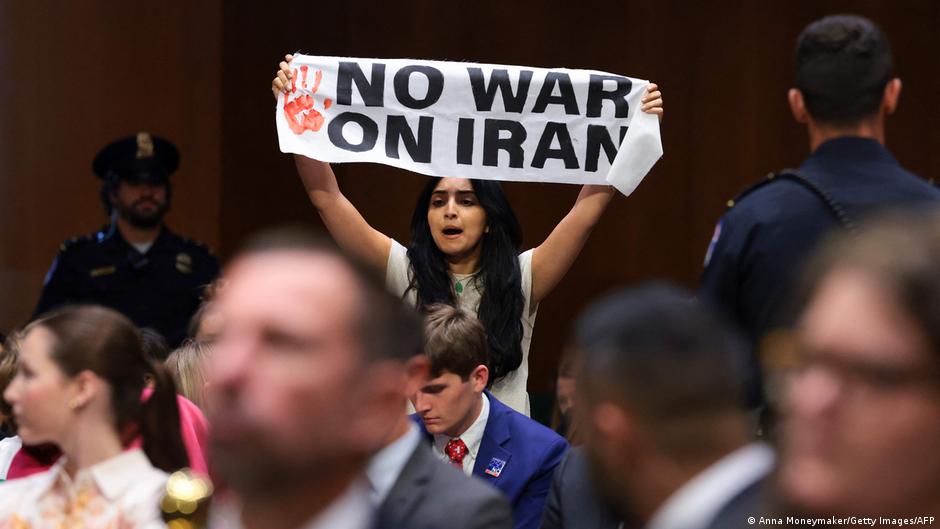
The upcoming Tuesday election is poised to be one of the most consequential midterm contests in modern US history, with relations with Israel and the ongoing conflict with Iran serving as central focal points of the political standoff.
A growing contingent of Democrats, including rising star Ohio Senate nominee Abdul El-Sayed, has become vocal critics of the Iran war, describing the conflict as “illegal” and “stupid.”
During the campaign, President Donald Trump attempted to minimize the threat posed by the war, asserting that only “one or two targets” remained in Iran and that these could be addressed within a short timeframe. Nevertheless, the president later indicated that diplomatic communications were still ongoing, with Tehran retaining a strong interest in a resolution and ample time remaining to address the crisis.
“I have urged arming the Iranian protesters to overthrow the regime,” Cruz said in an online post after spending a day with Trump.
Behind the scenes, analysts caution that the political elite in Washington may not be as divided on Iran as it appears. Furthermore, even a decisive Democratic victory might not provide sufficient leverage for the Trump administration regarding the Iran conflict.
Democrats and Republicans Induce a Broad Consensus on Iran
Speaking to DW, former National Security Advisor John Bolton indicated that Democrats are expected to secure a majority in the House of Representatives, possibly the Senate, granting them control over the Iran war funding. The US Congress can allocate defense budgets or impose restrictions on financial resources, Bolton noted. He added that the president can veto such legislation, which would then necessitate a two-thirds majority in both chambers to succeed.
Nevertheless, Bolton underscored that the US president retains the power to veto congressional legislation, which would then require a two-thirds majority in both houses to succeed.
What Does Tehran Think?
While warning of a “crushing response” to any new strikes on underground sites, Tehran has confirmed ongoing indirect communication via Doha and Muscat, keeping its diplomatic option open.
International security analyst Shahin Modarres, leading the Iran team at ITSS Verona, told DW that Tehran’s actions are based on a miscalculation. The regime assumes that a Democratic Congress can easily restrain the White House.
He argued that Iran’s strategy—dragout peace talks, pressure on the Strait of Hormuz, and leveraging fuel prices—aims to deny Trump a victory before November. Yet, Modarres cautioned that this approach could backfire after the election, when the Trump administration would have no incentive to delay its actions.
Will Trump Launch New Strikes and Declare Victory?
Former Trump ally John Bolton believes the president will only decide on Iran’s next steps after the election, once political pressure diminishes. “I cannot predict what the US President will do; even Trump himself does not know his final decision right now,” he told DW. Bolton cites a potential US attack on “Kuh-e Kolang,” a new Iranian nuclear site near Natanz, as an example; “In this scenario, Trump could damage these facilities, declare victory, and pull back.”
Bolton: ‘Regime Change’ as the Guarantee Against Iranian Nuclear Capabilities
Throughout the conflict, Trump has repeatedly emphasized that the US goal is to deny Iran the capability of acquiring nuclear weapons, a claim the administration has asserted to have been successful. Bolton, in contrast, argues that the Islamic Republic will continue to pursue nuclear capabilities as long as it remains in power. He views “regime change” as the only sustainable solution to prevent Iran from obtaining nuclear weapons.
Iran conflict: Could a new phase of the war be imminent?
To view this video please enable JavaScript, and consider upgrading to a web browser that supports HTML5 video
Nevertheless, Bolton pointed out that the US president can veto congressional legislation, which would then require a two-thirds majority in both assemblies to overcome.
“Even if Democrats hold a majority in both houses, their influence will be limited to the legislative and political tools of Congress,” he said.
US diplomat and Iran expert Alan Eyre, a fellow at the Middle East Institute, described a kind of “bipartisan consensus” that Republicans and Democrats have on Iran.
“Both major US parties share significant common ground in their opposition to the political structure of the Islamic Republic and in their support for policies aimed at exerting pressure on Tehran to change its behavior,” he said.
What does Tehran think?
While warning of a “crushing response” to any new strikes on underground sites, Tehran has confirmed ongoing indirect communication via Doha and Muscat, keeping its diplomatic option open.
Shahin Modarres, an international security analyst leading the Iran team at ITSS Verona, told DW that Tehran’s actions are based on a miscalculation. The regime, he argued, assumes that a Democratic Congress can easily restrain the White House.
Tehran’s strategy in dragging out peace talks, pressuring the Strait of Hormuz, and letting fuel prices weigh on US voters, aims to deny Trump a win before November. However, Modarres noted this strategy may backfire after the election, when the Trump administration will no longer have any reason to delay its moves.
This approach also ignores the fact that both US parties largely agree on not letting Iranian develop nuclear weapons, he said.
How serious are Iran’s new threats of retaliation?
To view this video please enable JavaScript, and consider upgrading to a web browser that supports HTML5 video
Will Trump launch new strikes and declare victory?
Trump’s ally-turned-critic John Bolton believes the president will only decide on Iran after the election, once the political pressure grows less acute.
“I cannot predict what the US President will do; even Trump himself does not know his final decision right now,” he told DW.
Bolton cites as an example a possible US attack on “Kuh-e Kolang,” the new nuclear site he claims the Iranian government is constructing near Natanz.
“In this scenario, Trump could damage these facilities, declare victory, and pull back.”
Bolton: ‘Regime change’ only guarantee against Iran getting nukes
Trump has consistently emphasized that the US goal is to deny Iran the capability of acquiring nuclear weapons. Throughout the conflict, the US president has also repeatedly claimed his administration had succeeded in this regard.
Bolton, in contrast, believes that the Islamic Republic will continue to pursue nuclear weapons capability for as long as it remains in power.
The former Trump advisor views “regime change” as the only sustainable solution to keep Iran from acquiring nuclear weapons.
US military buildup: What message is it sending Iran?
To view this video please enable JavaScript, and consider upgrading to a web browser that supports HTML5 video
US failing to communicate with ordinary Iranians
Eyre emphasized the difficulty of using external tools to bring about sustainable change. In his view, even if there is a consensus in Washington opposing the Islamic Republic and demanding a change in its behavior, this US consensus alone cannot overcome the structural obstacles to political change inside Iran. He reiterated that any fundamental transformation must emerge from within Iranian society itself.
The veteran diplomat also pointed to the failure of American diplomacy to “convey a clear, coherent, and authentic message to Iranian society.”
He noted that official US government messaging is only incompletely reflected in the media outlets that the vast majority of Iranian citizens rely on for news.
“Furthermore, targeted and principled engagement with the core of Iranian society has generally not been a priority for successive US administrations,” he said. “Iranian citizens see that the US takes certain positions at the rhetorical level, but behaves differently in practice.”
According to Eyre, this gap between words and deeds in Washington is a structural phenomenon that is not limited to a single administration or a single election cycle.
Iran’s regime: inside the system protecting its rulers
To view this video please enable JavaScript, and consider upgrading to a web browser that supports HTML5 video
Edited by: Darko Janjevic
Also Read
- Bomb threats target seven flights across Europe
- U.S. Secretary of State Sends Independence Day Greetings to Dominica
- Government Confirms Sufficient Domestic Gas Supply for Winter, Signals Positive Outlook for Fuel Prices
- UK Meat Suppliers Assess Impact as European Refrigeration Systems Face Cyberattacks


