






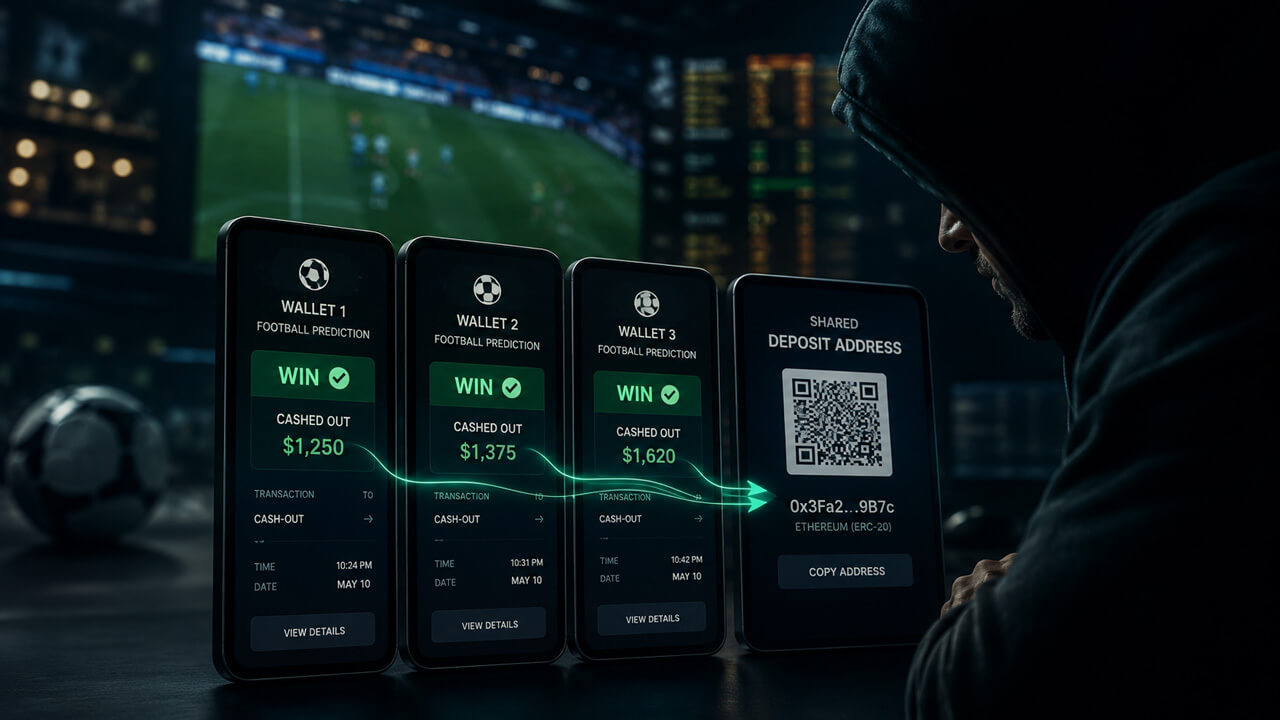
Three cryptocurrency wallets collectively generated $24.25 million in profit from World Cup prediction markets before routing their proceeds to the same Binance deposit address, prompting scrutiny over whether a single trader controlled the accounts.
On June 21, blockchain analytics platform Lookonchain identified the wallets as mintblade, GRIMDRIP, and EndlessFate. The accounts recorded 13 winning positions from 16 settled World Cup bets, then ceased trading and withdrew their remaining funds, the platform said.
Mintblade earned $9.24 million after winning five positions without a recorded loss. GRIMDRIP secured $7.6 million from two winning trades, while EndlessFate collected $7.41 million after correctly predicting six of nine outcomes.
All three wallets transferred their proceeds to Binance using the deposit address 0xB08B…317D, according to Lookonchain. A common exchange deposit route can indicate that accounts belong to the same person or organization because exchanges typically assign individual deposit addresses to customers.
While the transactions do not identify the individuals operating the wallets or explain how the bets were chosen, the shared address and trading record alone do not prove that the accounts received nonpublic information.
The accounts’ trading pattern attracted attention because they stopped placing bets after earning their profits and withdrew their funds.
Onchain analyst Specter noted that similar trading patterns had been observed in other wallets since the World Cup began, though he offered no evidence linking those accounts to the three identified by Lookonchain.
Large profits do not necessarily signal misconduct. Prediction‑market users can build substantial positions when liquidity is available, and bettors taking the other side of heavily favored outcomes can receive large payouts when an upset or draw occurs.
However, the absence of public identities makes it difficult to determine whether highly successful traders relied on rigorous analysis, accepted elevated risk, or accessed information unavailable to other participants.
Neither Polymarket nor Binance has publicly confirmed Lookonchain’s findings as of press time.


