






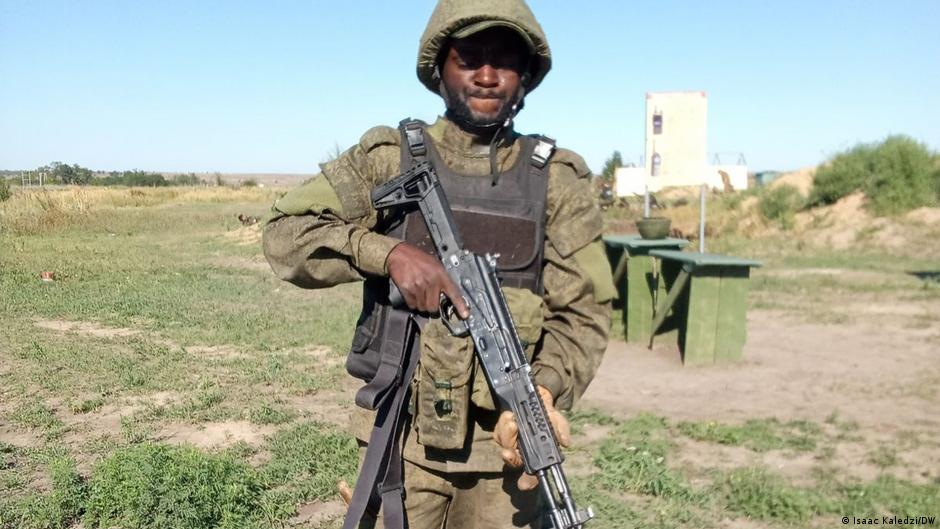
Trapped in Conflict: Young Cameroonians Lured into Russia’s War Through False Promises
Cameroon has become one of the leading sources of African recruits for the Russian military, where young men are lured by false promises of employment and expedited Russian citizenship before discovering themselves on the front lines of the conflict in Ukraine.
Ukrainian officials state that nearly 3,000 citizens from various African nations have fought—or are still fighting—for Russia as of May this year; Cameroon, Ghana, Egypt, Kenya and Uganda were identified as major source countries.
In April, the Cameroonian government confirmed that Russia had reported the deaths of 16 Cameroonian nationals, seven of whom died in military action in Ukraine.
Poverty driving youths into Russia’s duplicitous schemes
The actual death toll is likely higher, according to DW correspondent Dorcas Ekupe, reporting from Bamenda in northwestern Cameroon.
Looking at other reports reveals severe suffering, including families grieving lost loved ones, indicating the real death toll exceeds the figures initially disclosed by the government.
She described two forces causing this worrying phenomenon: economic desperation and deliberate deception.
Many recruits, she said, travel to Russia believing they have secured jobs in construction or as security guards, or that they are taking part in academic programs.
“Once in Russia, they then end up on the battlefield,” Ekupe said.
African recruits fighting in Ukraine: Where’s the AU?
To view this video please enable JavaScript, and consider upgrading to a web browser that supports HTML5 video
Russia’s perceived appeal is further fueled by highly structured influence campaigns
Banjo Herman, a lecturer and political analyst at the University of Bamenda, pointed to the central role of the Wagner Group—and its successor, the Africa Corps—as Moscow’s primary instrument for expanding its presence and reputation across Africa.
Military recruitment dressed up as ‘cultural’ outreach
He also cited Russian government initiatives such as the “African Initiative” and “Alabuga” as programs that appear to offer cultural or educational exchanges but have been linked to military recruitment.
“On the surface, recruitment may seem like cultural outreach,” Banjo explained. “Often Cameroonians believe they are being offered work opportunities, without realizing the hidden motivations underneath,” adding that promises of Russian citizenry within six months serve as especially compelling draws.
“While there may be appearances of cultural programming,” Banjo emphasized, “offered fighters are frequently unaware of the true nature of the arrangements.”
Why young men continue to risk their lives
Banjo underlines that the economic condition of recruits typically drives this decision-making process.
“Consider yourself a carpenter in Cameroon earning merely 100,000 CFA francs per month, yet having someone promise 3 million CFA francs to come and work—the offer appears exceptionally enticing,” he illustrates.
He also referenced the diversity of outcomes: “Not all Cameroonians in Russia are victims of deception. Some have resided there for years, integrated into the military over time, and are performing considerably better for their efforts.”
Nevertheless, the combined promise of substantial financial reward alongside the chance at Russian citizenship remains powerful enough to convince even aware individuals to accept recruitment offers and serve in Ukraine.
Ekupe concurred, noting a pervasive sense of fatalism among some youth: “Some simply shrug and say, ‘If I die, I die,’ and nonetheless consent to participate in Russian forces.”
Africans pay high human cost fighting for Russia in Ukraine
To view this video please enable JavaScript, and consider upgrading to a web browser that supports HTML5 video
Those left behind often suffer the most
Families on the home front face profound sorrow as they bear these costs in silence. Ekupe recounted instances where mothers only learned of their sons’ deaths years later—a poignant example involved a 35-year-old Cameroonian who was killed in combat, bringing his family devastating news.
She warned that many households receive no compensation from the Cameroonian government, leaving those left behind bearing burdens alone.
“When recruits arrive and discover the reality deviates from their expectations, contacting families becomes extraordinarily difficult,” Ekupe observed. “Recruits frequently require time to adjust to the new environment and circumstances.”
Russia ducking from responsibility
Concerning legal accountability, Banjo remarked that international law does not prohibitively prevent a foreign national from voluntarily enlisting in another state’s armed forces.
Legal liability emerges only when recruitment involves fraud, coercion, trafficking or mercenary activity.
He referenced Article 47 of the Additional Protocol to the Geneva Conventions, defining a mercenary as someone who engages directly in hostilities motivated primarily by private financial gain.
Under existing frameworks, responsibility for the death of a foreign fighter in another country’s war predominantly rests with the individual and their family rather than the recruiting state.
Cameroon: insufficient campaigns to fight recruitment
Cameroon’s government has publicly declined to deploy troops abroad beyond agreed-upon international mandates, while warning citizens against involvement in foreign conflicts.
Analysts contend that Cameroonian and broader African governments must adopt a comprehensive three-pronged strategy to halt further tragedy. This would encompass economic reforms aimed at creating opportunities and reducing conditions that attract deceptive recruitment; direct diplomatic pressure on Moscow to hold recruitment networks accountable; and a proactive public awareness campaign issuing clear warnings about the dangers of such schemes.
Meanwhile, Ghana has already formally lodged a complaint with Russia, demanding an end to its nationals’ participation.
However, in Cameroon, a significant obstacle may lie within the country’s long-standing military cooperation with Russia, a partnership renewed multiple times during presidential terms of Paul Biya.
Banjo noted that the absence of an official Cameroonian response—reflecting the understanding that recruitment operates through private networks—limits the state’s capacity for formal intervention.
“To effectively curb this,” Banjo asserted, “the government must revisit its governance policies and establish an inclusive, transparent framework offering genuine opportunities within the system.”
Note: This article includes content generated by artificial intelligence via the AfricaLink podcast.
Cameroon’s youth caught in Russia’s war recruitment drive
To play this audio please enable JavaScript, and consider upgrading to a web browser that supports HTML5 audio
Edited by: Sertan Sanderson
Also Read
- US Department of Defense Launches Specialized ChatGPT for Secure AI Workloads
- Kemi Badenoch Reshuffles Shadow Cabinet as Stride and Patel Depart
- India Endorses All Peace Efforts to Resolve Ukraine Conflict, Modi Tells Putin
- Two stocks on Josh Brown’s list have been huge winners. How he’s trading them now


