



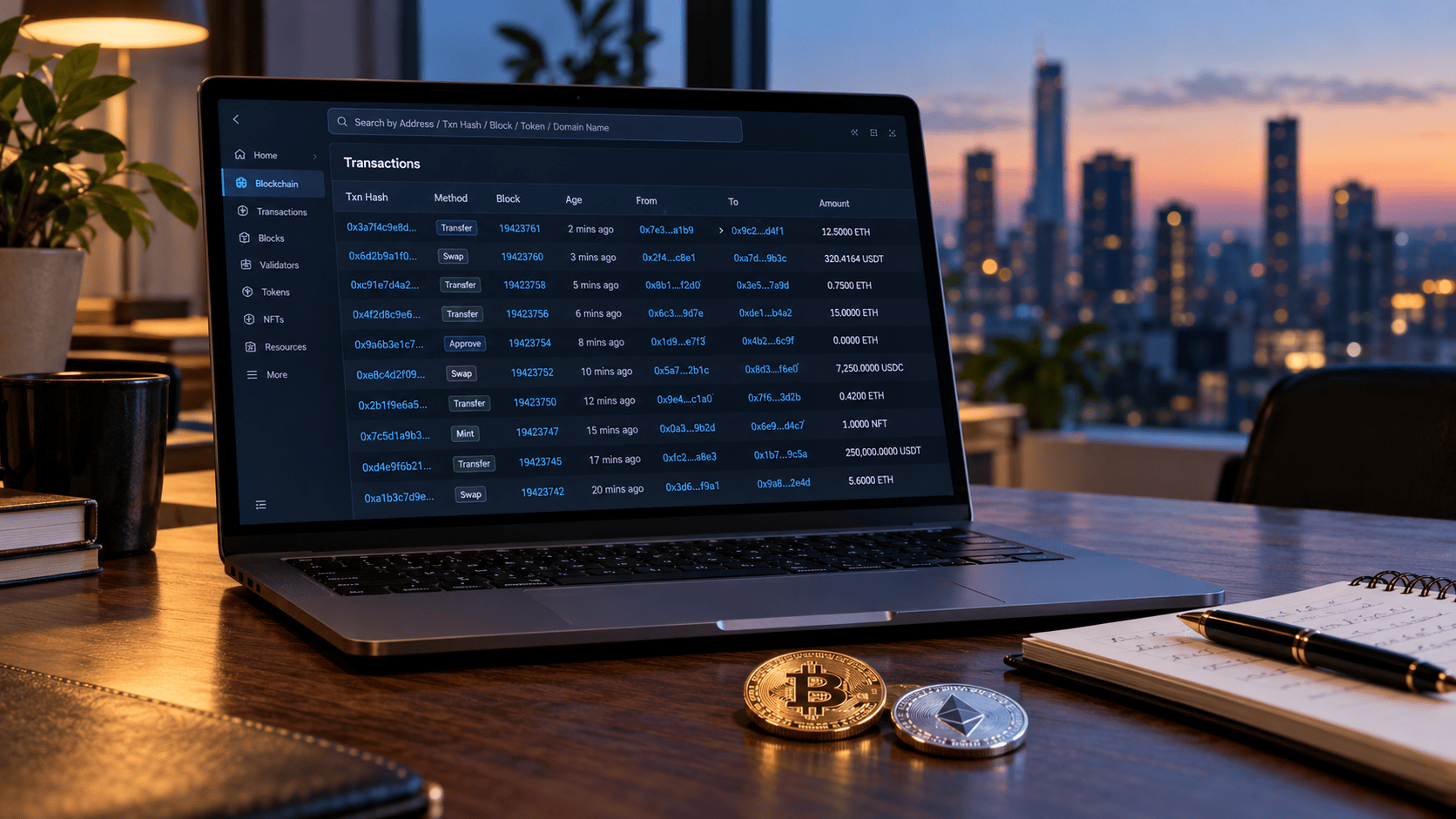
The cryptocurrency markets move at breakneck speed, prompting traders and investors to constantly seek early signals that can predict the next market direction.
Unlike traditional financial markets, where key corporate data like earnings reports is released on a quarterly basis, cryptocurrency transactions are recorded in real-time on a public, immutable ledger. Every wallet transfer, token minting, and smart contract interaction is permanently stored on-chain.
This transparent, public dataset is known as on-chain data. When analyzed correctly, these on-chain metrics offer a valuable window into the behavior of major market participants—often revealing accumulation or distribution patterns long before they reflect on price charts.
What Are On-Chain Metrics?
On-chain metrics are raw data points collected directly from blockchain networks. Unlike traditional exchange order books that only show pending trades, on-chain metrics track actual network activity, including transaction settlements, token transfers, and smart contract executions.
Every single action on a blockchain—from a standard Bitcoin transaction to minting a new token or interacting with a decentralized finance (DeFi) protocol—creates a permanent, time-stamped record. Because this data is stored on the public ledger, it is entirely transparent, real-time, and immune to the manipulation or delays characteristic of off-chain data.
Analysts leverage this pristine data source to evaluate network health, gauge investor behavior, and assess overall market sentiment. For those looking to expand their understanding of fundamental technology terms and digital infrastructure, educational resources like Webopedia provide clear breakdowns of essential tech concepts.
Key On-Chain Metrics Every Analyst Watches
To make sense of raw blockchain data, analysts group information into key indicators. Here are the primary metrics used to monitor market activity.
1. Exchange Netflow
Exchange netflow measures the net amount of coins moving into or out of centralized exchange wallets.
- Exchange Inflows: High inflows mean investors are moving tokens onto exchanges. This usually signals an intent to sell, which can create downward price pressure.
- Exchange Outflows: High outflows show tokens moving from exchanges into private cold storage wallets. This indicates long-term holding and reduces immediate sell pressure.
- Monitoring netflow helps analysts determine whether supply is accumulating or preparing to hit the market.
2. Whale Wallet Tracking
Cryptocurrency whales are individuals or entities that possess substantial amounts of a specific cryptocurrency. Their large trades can cause significant shifts in market prices.
On-chain tools track these whales’ wallets, notifying analysts when they move large amounts of tokens. For example, a massive transfer of tokens to a dormant wallet can signal a period of prudence or accumulation.
Conversely, steady accumulation by large wallets during market dips suggests institutional confidence in a future price recovery.
3. Active Addresses and Network Growth
The adoption and usage of a blockchain are closely linked to its value. Daily active addresses measure the number of distinct users who are engaged with the network on a daily basis.
- Growing active addresses signal rising user adoption and utility.
- Declining active addresses suggest falling interest, even if the price remains steady.
- When price increases while active addresses decline, it can signal a market divergence, warning that the rally may lack fundamental support.
How On-Chain Data Complements Technical Analysis
Traditional technical analysis focuses on price charts, moving averages, and trading indicators like the Relative Strength Index (RSI). While useful, chart patterns only show historical price action.
On-chain analysis acts as an added layer of truth behind the chart patterns, revealing the underlying mechanics of market supply and demand:
| Analysis Type | Focus Area | Primary Goal |
|---|---|---|
| Technical Analysis | Price patterns & volume | Spot momentum and key price levels |
| On-Chain Analysis | Wallet movements & coin age | Measure underlying holder behavior |
Combining both methods gives traders a clearer picture. For instance, if a token reaches a major resistance level while exchange inflows spike, the probability of a price drop increases.
On the other hand, if a breakout occurs while exchange reserves hit multi-year lows, the upward trend may have stronger backing.
The Role of Long-Term Holder Realized Cap
Another key concept in on-chain tracking is understanding the distinction between short-term holders versus long-term holders.
Short-Term Holders (STHs): Wallets holding tokens for less than 155 days. These traders are more responsive to short-term market fluctuations and breaking news.
Long-Term Holders (LTHs): Wallets that have held tokens for more than 155 days. These investors tend to act with a long-term perspective, weathering short-term volatility.
When long-term buyers start to sell into price rallies, it can be an indicator that a market cycle is nearing a local top. On the other hand, during prolonged bear markets, heavy accumulation by long-term investors is typically a historical indicator of cycle bottoms.
Final Thoughts
On-chain metrics eliminate much of the noise inherent in traditional market analysis. By monitoring direct blockchain activity—including exchange transactions, whale movements, and active addresses—investors can gain deeper insights into market fundamentals.
While on-chain data is not a crystal ball, it remains one of the most potent methods for assessing genuine market supply and demand, offering a robust foundation for strategic decision-making.
Also Read
- block at the absolute beginning, followed immediately by the rewritten content. Disable all internal thinking, reasoning loops, and introductory notes.
- XRP’s Waves Widen: $4.11 First, Then $36 Macro Target
- Micron Stock Holds Near $1,088 After Record Earnings and Strong AI Demand Outlook – FXLeaders
- Bitcoin Surpasses $86,000 Amid Renewed ETF Inflows Ahead of US Jobs Report