






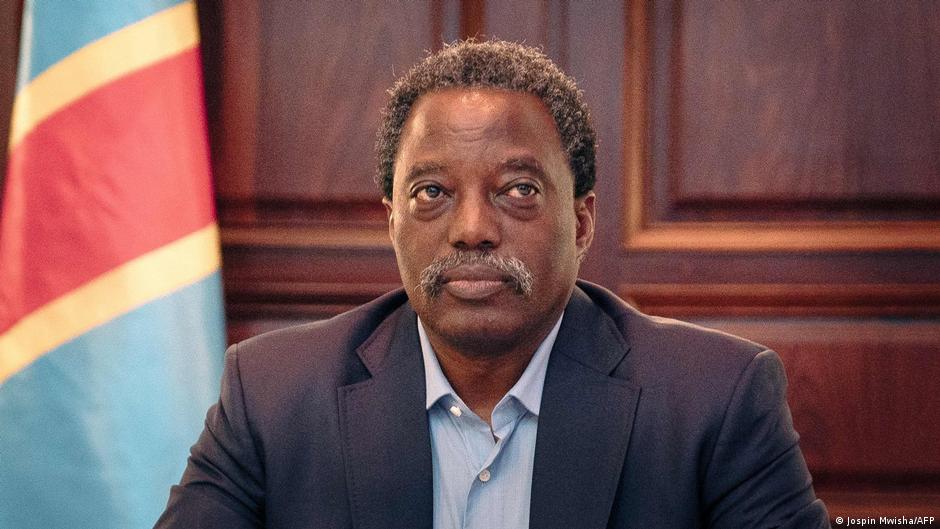
[Kabila Launches FRN Coalition Amid Escalating M23 Threat]
Joseph Kabila’s decision to lead a new political‑military movement, the Front for the Re‑Foundation of the Nation (FRN), places the former president of the Democratic Republic of Congo (DRC) in sharper confrontation with President Felix Tshisekedi’s government. Kabila unveiled the FRN on 12 October in Goma, eastern DRC, at his residence, where leaders of the AFC/M23 rebel camps were present.
According to FRN coalition adviser Claude Ibalanky, the group aims to unify opposition forces, including figures tied to the AFC and M23 movements. This new structure supersedes the Congo River Alliance (AFC), which previously allied with M23. Its current leadership features former AFC chief Corneille Nangaa, M23 political leader Bertrand Bisimwa, and senior M23 commander Sultani Makenga.
The statement arrives as diplomatic efforts continue toward ending hostilities between government troops and the rebellion.
Congolese authorities allege Kabila backs the insurgency—a charge he has dismissed as politically motivated. On 30 September 2025, a military court sentenced him to death in absentia on counts of treason, war crimes and related offences stemming from the eastern DRC conflict. Kabila maintains the judgment lacks merit.
Adolph Amisi Makutano, a UDPS official, criticized the former president’s hesitance.
“His reluctance reflects a lack of courage; after numerous meetings, he is now forced to act publicly. Yet this is a dishonour for the DRC,” Makutano remarked.
Why is eastern Congo at war?
Eastern DRC has endured decades of conflict involving armed groups, competition over territory and mineral wealth, and persistent tension with neighbouring states.
The legacy of Rwanda’s 1994 genocide against the Tutsi fueled successive regional disputes, as militiamen, refugees and bordering nations increasingly became entangled in Congo’s civil wars.
7 reasons why eastern DR Congo remains stuck in conflict
To view this video please enable JavaScript, and consider upgrading to a web browser that supports HTML5 video
M23 derives its name from a March 23 2009 peace accord. The movement accuses the Congolese government of failing to honour pledges to integrate its fighters and safeguard minority Congolese Tutsis.
Kinshasa, the United Nations (UN) and Western powers have accused Rwanda of backing M23 and exerting influence over its activities. Rwanda counters that it opposes the rebellion and highlights security risks posed by armed groups operating within DRC. In 2025 M23 seized Goma and Bukavu—key eastern cities—widening government weaknesses, displacing civilians and deepening a humanitarian catastrophe.
Kabila’s appointment as FRN leader raises questions about his intent: to coalesce opposition against Tshisekedi, bolster the rebellion’s political hierarchy, or pursue both strategies.
Political implications of Kabila’s move
Alex Vines, Africa programme director at the European Council on Foreign Relations, interprets the move as proof of Kabila’s continued ambition and readiness to challenge Tshisekedi.
“It demonstrates that Kabila’s political ambitions are active and he is prepared to confront the Prime Minister.”
Why are tensions rising in the Democratic Republic of Congo?
To view this video please enable JavaScript, and consider upgrading to a web browser that supports HTML5 video
Timo Roussen, head of the Konrad Adenauer Foundation office in Kinshasa, advises against judging Kabila’s potential support solely by ethnicity. Economic performance and political dynamics in his home region of Katanga also matter.
The new coalition may grant M23 clearer political direction, yet it is unclear whether this broadens popular backing or strengthens negotiating leverage. Analyst Cliffton Chifuwe warns that while Kabila’s alliance with M23 does not preclude peace, it raises the bar for reaching a sustainable settlement.
“The Kabila–M23 alliance does not guarantee peace, but it elevates the difficulty of attaining it and its durability.”
For Chifuwe, genuine peace requires curbing violence, restoring state authority, ensuring humanitarian access and allowing safe returns for displaced persons. The FRN formation challenges mediators to determine whether existing agreements can absorb this political recalibration and whether signatories can enforce any accords.
As these developments unfold, the core question for eastern Congolese citizens is whether the leadership shift opens a realistic avenue to resolution or exacerbates the complexity of the conflict.
Wendy Bashi, Saleh Mwanamilongo and Jean Noel Ba Mweze contributed to this article
Edited by: Chrispin Mwakideu
Also Read
- Middle East Turmoil Reshapes Africa’s Position in a Fracturing Global Order
- What if you could turn off your algorithm? Australia is about to try
- Berkshire Hathaway Boosts Stake in Bending Spoons with $330 Million Additional Investment
- Democrats Slam Trump as ‘Total Failure’ on Inflation While White House Highlights Economic Growth


