






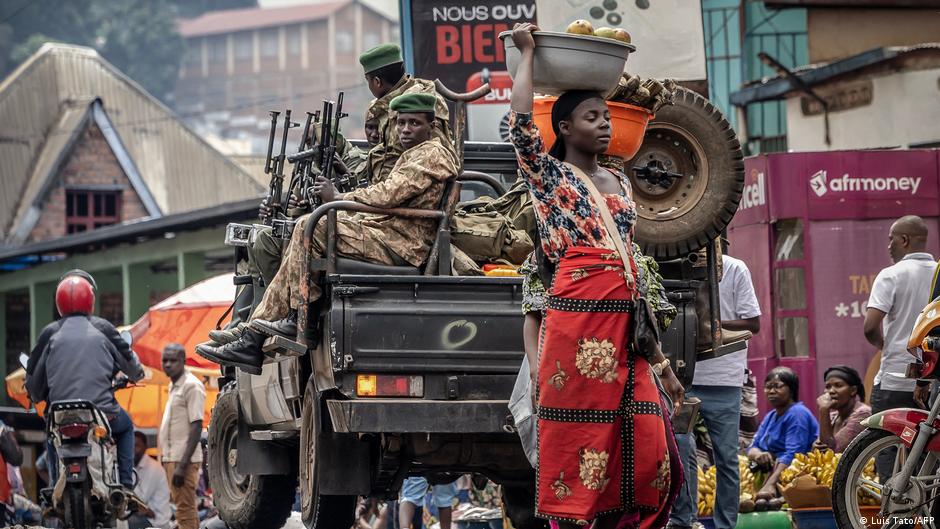
Representatives of the Congolese government and the Rwanda-backed M23 rebel group have agreed on a peace roadmap following negotiations in Geneva.
The agreement builds on the U.S.-brokered framework signed in Doha last year, outlining steps and timelines for negotiations and implementation, including a ceasefire monitoring mechanism slated to receive support from the UN peacekeeping mission, MONUSCO.
The United States, Qatar, the African Union (AU), and Switzerland have all voiced support for the process as mediating partners.
However, the document is not a comprehensive peace accord with binding resolutions; rather, numerous details still require negotiation.
Despite its limitations, the diplomatic initiative offers a glimmer of hope after years of bloody conflict in eastern DRC. Since 2022, fighting has killed hundreds of civilians and displaced millions, while the M23 continues to hold large swathes of the mineral-rich North Kivu and South Kivu provinces.
With persistent disagreements on core issues, doubts continue to cloud prospects for a durable peace.
How a drone strike on M23 triggered new DRC clashes
To view this video please enable JavaScript, and consider upgrading to a web browser that supports HTML5 video
From signature to implementation
Alex Vines, director of the Africa Programme at the European Council on Foreign Relations, described the current commitment as fragile. “There are likely to be many more bumps on the road — disagreements remain over issues including sanctions against M23, the release of detainees, and the timing of political reforms. So this remains a very fragile commitment,” he told DW.
Conflict analyst Clifton Chifuwe, executive director of the Centre for Peace Research and Advocacy (CPRA), concurs, citing the proliferation of armed groups, deep mistrust between Kinshasa and Kigali, and competition over eastern Congo’s mineral wealth.
He argues the paramount challenge lies in translating the roadmap into action. “Signing it is easier than implementing it on the ground,” he explained.
Chifuwe stressed that independent monitoring mechanisms and the inclusion of all key stakeholders are essential for any peace to endure.
One year under M23 rule in Goma
To view this video please enable JavaScript, and consider upgrading to a web browser that supports HTML5 video
Rwanda’s role in the conflict
Rwanda has repeatedly denied backing the M23, though international observers maintain that Kigali is deeply entrenched in the conflict.
Vines emphasized that Rwanda’s relationship with the rebel group remains central to the peace process:
“Rwanda’s good faith and its relationship with M23 is a really key consideration. Kigali’s buy-in to any agreement and influence over M23 is key.”
Remarks by Rwandan President Paul Kagame at an August 24 press conference further underscore the complexity; Kagame rejects accusations of Rwandan responsibility, blaming internal DRC factions instead.
He instead links any Rwandan involvement to what he describes as a longstanding security threat from across the border, naming the Democratic Forces for the Liberation of Rwanda (FDLR) — an armed group fighting alongside the Congolese military against the M23 — as his primary target.
Kagame warned that “if this problem of the FDLR is not resolved,” Rwanda would act to protect itself “at any cost.”
Mixed messages of hope and skepticism
There are grounds for cautious optimism: Chifuwe notes the roadmap’s focus on a sequenced implementation plan, with monitoring initiatives designed to detect early warning signs of renewed violence.
International mediators must sustain pressure on the parties while ensuring regional concerns are addressed.
In this context, Vines stressed the importance of continued U.S. and Qatari engagement, while insisting that African leadership via the AU not be sidelined.
For now, all parties have pledged to “pursue negotiations towards comprehensive peace and conflict resolution.”
DR Congo and Rwanda hope for peace and minerals deal
To view this video please enable JavaScript, and consider upgrading to a web browser that supports HTML5 video
What does peace mean for the displaced?
Ultimately, the roadmap will be judged not by the signatories’ rhetoric but by tangible results for the hundreds of thousands displaced in eastern DRC.
“The real test is whether ordinary Congolese people become safer and better off,” Chifuwe said emphatically, citing the restoration of state authority and transparent mineral resource management as critical objectives.
For Congolese civilians, the diplomatic language carries profound personal weight. Linda Kasongo, a refugee stranded in Zambia for five years, embodies this reality.
She told DW she longs to return home but dare not consider it, as violence continues to devastate lives and livelihoods in her home region.
“I hope it works out because I want to go home. I want to be with my people. I miss my people. I miss my home.”
Also Read
- Bitcoin May Have Further Upside After Largest Three‑Day Rally Since 2023, Analysts Argue
- MEXC Launches RealStocks API to Attract Algorithmic Trading Professionals
- Maximizing Impact: 3 Digital Strategies for Small Business Owners to Do More With Less
- U.S. Secretary of State Rubio Engages German Counterpart Wadephul on Ukraine Peace and Iran Nuclear Concerns


