






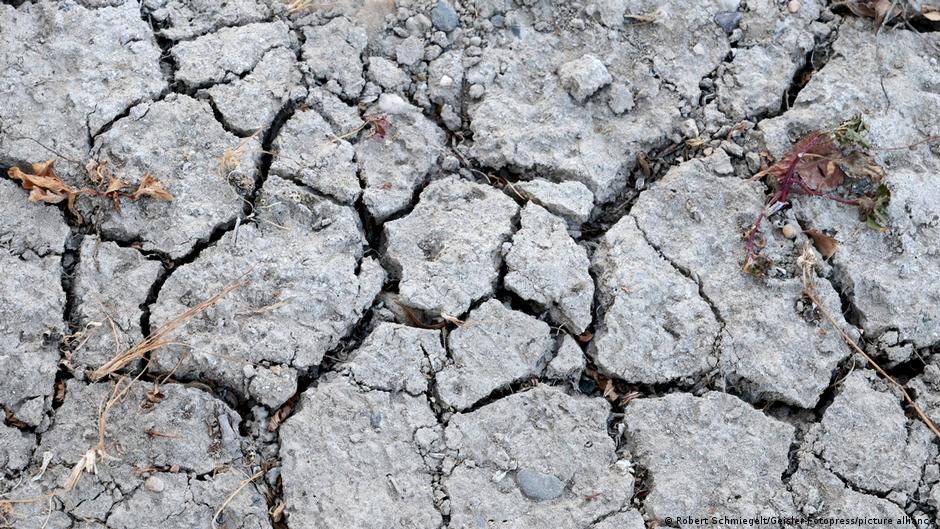
European Drought and Extreme Weather Spur Costly Inflation
Research institutions have not yet quantified the impact of extreme weather on inflation in Germany, although clear trends are emerging.
“If vessels on the Rhine can carry only a fraction of its usual cargo, the cost per tonne of freight will rise sharply,” says Torsten Schmidt, economist at the RWI – Leibniz Institute for Economic Research, to DW.
Schmidt explained that lower river capacity would increase the price of diesel and heating oil—energy products mainly transported by water—and that these higher costs would ultimately be passed on to consumers.
The Food and Agriculture Organization of the United Nations (FAO) incorporates the effects of global warming, extreme weather, and crop losses into its data sets.
Inflation driven by extreme weather and energy shocks
Latest analyses indicate that climate change and extreme weather events are influencing inflation, alongside supply bottlenecks and volatile gas and oil prices linked to the conflicts in the US‑Iran and Russia‑Ukraine regions.
More details:
A July 2025 study by the European Central Bank (ECB) together with five European research institutes, titled “Climate Extremes, Food Price Spikes, and Their Wider Societal Risks,” cautions against worsening inflation.
„Central‑bank mandates aimed at price stability may become harder to achieve as more frequent extreme weather events destabilize domestic and global food prices,” the paper explains.
Higher coffee costs in Brazil or Vietnam can also feed into EU inflation dynamics.
Will ECB raise interest rates again?
If longer‑term temperature increases amplify these pressures, tackling inflation with elevated interest rates could further hinder economic growth.
In its 2023 assessment, the ECB published “The asymmetric effects of weather shocks on euro area inflation,” which reached comparable conclusions when analyzing the four largest EU economies.
„With a changing climate implying a higher frequency and severity of extremes in Europe, the shocks examined here are expected to recur more often and may generate persistent upward pressure on inflation, particularly during hot summer months,” the study reads. „Because the differing impacts vary by season and country, the authors warn that climate change could widen divergence in inflation trajectories across euro‑area nations.”
The ECB reported that euro‑area inflation hovered between 2 % in France and 5.4 % in Lithuania last June; Germany stood at 2.4 %, slightly below the EU average of 2.8 %. Rising transport costs, measured at 5.3 %, remain a primary driver.
Whether the central bank will lift key rates again in light of ever higher waterway costs is uncertain. On June 11, it lifted the deposit rate by 0.25 percentage points to 2.25 %.
Why Europe’s extreme summers are getting worse
To view this video please enable JavaScript, and consider upgrading to a web browser that supports HTML5 video
‘World is unpredictable on so many fronts’
„For monetary policy, the pivotal question is whether this represents a single, transient spike in costs or whether other forces—such as energy prices triggered by the Iranian conflict—are amplifying the price surge, ” clarified Schmidt of the RWI.
He projected that a weather‑related price surge would not necessarily trigger tight monetary policy, but that multiple concurrent crises could generate broader, more persistent inflation that the ECB cannot ignore.
Holger Schulz, a financial specialist with the German Savings Banks Association (DSGV), advised that the German economy should seek to operate with higher inventory levels, emphasizing “stock, stock, stock.”
„This reflects lessons drawn from recent supply‑chain disruptions,” he added.
„Whether COVID‑19, the war in Ukraine, or the closure of the Strait of Hormuz, maintaining above‑average stock levels serves as an insurance premium in an era where the macroeconomic landscape is highly volatile,” he concluded.
This article was originally published in German.
Also Read
- U.S. Imposes Fresh Sanctions on Cuban State Mining and Construction Entities
- Trump escalates criticism of allies as Iran war victory remains out of reach
- WHO Allocates 70,000 Ervebo Vaccine Doses to DRC Amid Record Ebola Outbreak
- Como Mayor Introduces E-Bike Riding Ban After Personal Collision Incident


