







A comprehensive overview of recent economic developments and the trajectory ahead.
Canadian Highlights
- WTI crude surpassing $100 per barrel has reignited global inflation worries and elevated bond yields, though the potential restoration of Saudi pipeline flows has mitigated some near-term supply anxieties.
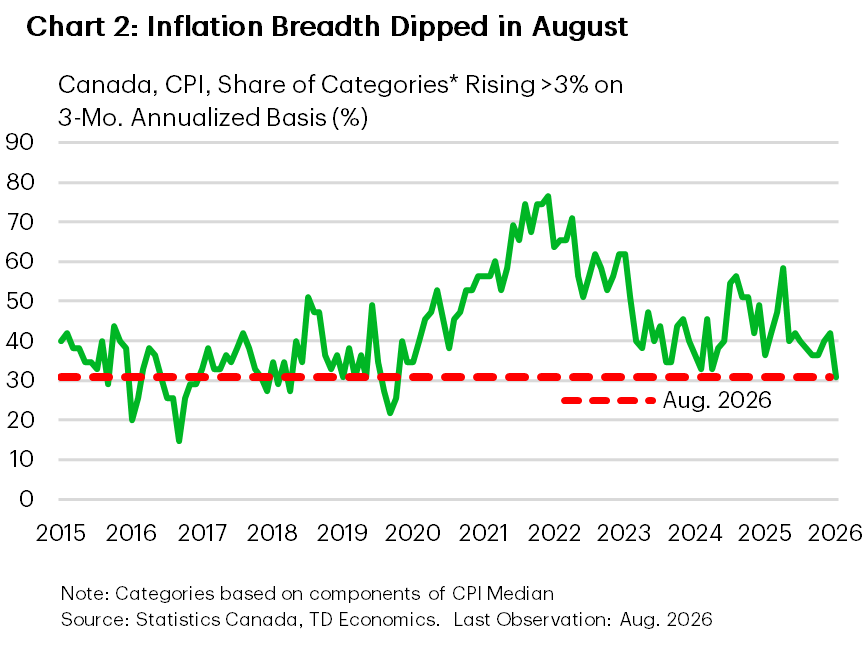
- Core inflation in Canada remains contained, with the Bank of Canada’s preferred metrics hovering near the 2% target, three-month momentum at 2.2%, and a narrowing breadth of price pressures.
- Canada’s recent investment summit coincided with a proposed Productivity Mega Deduction aimed at expanding accelerated depreciation and reducing the effective tax rate on new investments.
U.S. Highlights
- Sticky inflation and stronger-than-expected economic momentum compelled the Federal Reserve to raise interest rates this week.
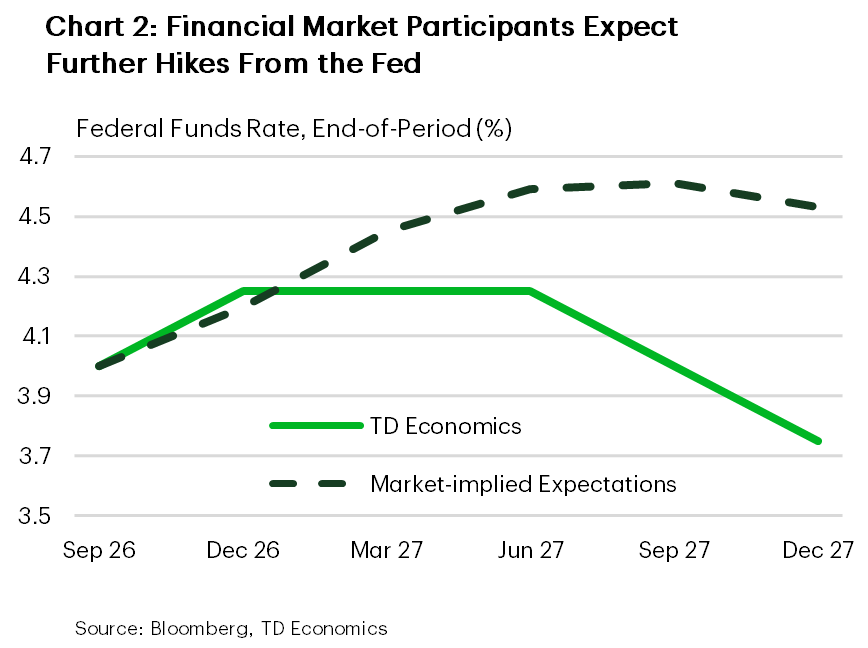
- We anticipate another rate hike, though an anticipated easing of inflationary pressures in the first half of 2027 could prompt a policy reversal in the second half of 2027.
- Volatility in AI-related markets and surging oil prices highlight a persistent tension: economic growth remains resilient, yet the very forces sustaining it are complicating the return to 2% inflation.
Canada – Inflation, Investment, and International Relations
Recent weeks have brought significant volatility to markets and the Canadian economy. Global inflation anxieties have intensified as WTI crude surged past $106 per barrel mid-week amid supply disruptions, sharply driving up bond yields. However, some concerns have eased after Saudi Arabia indicated that flows through a damaged pipeline could be restored relatively soon, though prices remain above $100 per barrel. Additionally, the Federal Reserve delivered its first rate hike since 2023. Consequently, markets worldwide anticipate tighter monetary policy, with Canadian pricing suggesting expectations for four Bank of Canada (BoC) hikes by mid-2027.
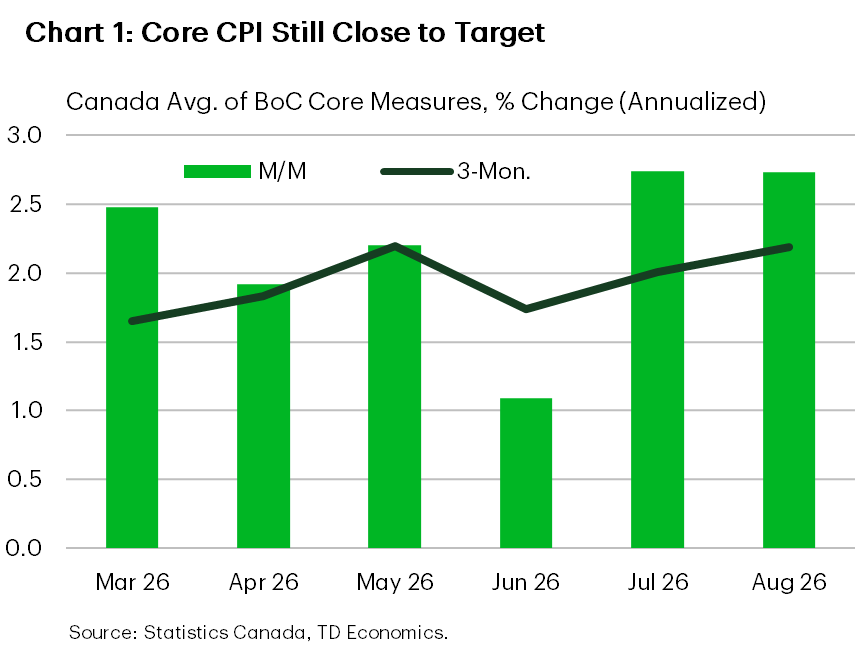

This expectation seems premature. While the energy market outlook remains concerning and further oil price increases could broadly elevate consumer prices beyond just gasoline and airfares, that has not yet materialized. Monday’s inflation data showed the BoC’s core measures (trimmed mean and weighted median) at 1.9% and 2.0%, respectively. Furthermore, on a three-month basis, inflation stands at 2.2%, and the breadth of inflation—the share of CPI categories rising above 3%—declined in the latest report.
However, the outlook is increasingly uncertain. Our updated forecast anticipates a slowdown in growth once the latest U.S. tariffs and trade restrictions take effect. Slower growth is expected to weigh on the labor market and sustain economic slack. Moreover, Canada is importing tighter financial conditions from the U.S. through elevated bond yields. Together, these factors support our view that the BoC will maintain its current stance.
Looking further ahead, the economic landscape presents intriguing possibilities. The Canadian government and major pension funds hosted an investment summit in Toronto this week to attract greater capital inflows. To kickstart this initiative, the federal government proposed tax reforms—a Productivity Mega Deduction—that would broaden accelerated depreciation to a wider array of assets and reduce the marginal effective tax rate on new investment to 6.4%. While too recent to incorporate into our current forecast, this policy could yield an economic upside of 0.3% to 0.8% of GDP. Given heightened economic uncertainty, we anticipate benefits closer to the lower end of that range, materializing in mid-to-late 2027.
Beyond 2027, European Commission President Ursula von der Leyen proposed that Canada become an “associate member” of the European Union. Practically speaking, this designation does not currently exist, and Canada already maintains a free trade agreement (CETA) with the EU that remains unratified by 10 member states. Therefore, any additional economic benefits from this relationship would be realized over a much longer horizon.
For the present, trade uncertainty and inflation risks dominate the economic landscape. Balancing these competing factors leads us to believe the BoC’s best approach is to proceed cautiously, monitoring data flows for signs that inflation is spiraling out of control.
U.S. – AI Highs, Oil Shocks and Higher Rates
Markets faced a more challenging iteration of the soft-landing narrative this week. Emerging AI headlines prompted investors to reconsider when massive capital commitments will yield profits, while rising oil prices rekindled concerns over inflation and household purchasing power. Treasury yields increased as investors reassessed the trajectory of policy rates and the premium required for holding longer-dated bonds. Robust investment and consumer spending are maintaining relatively loose financial conditions, leaving inflation stickier than policymakers would prefer.
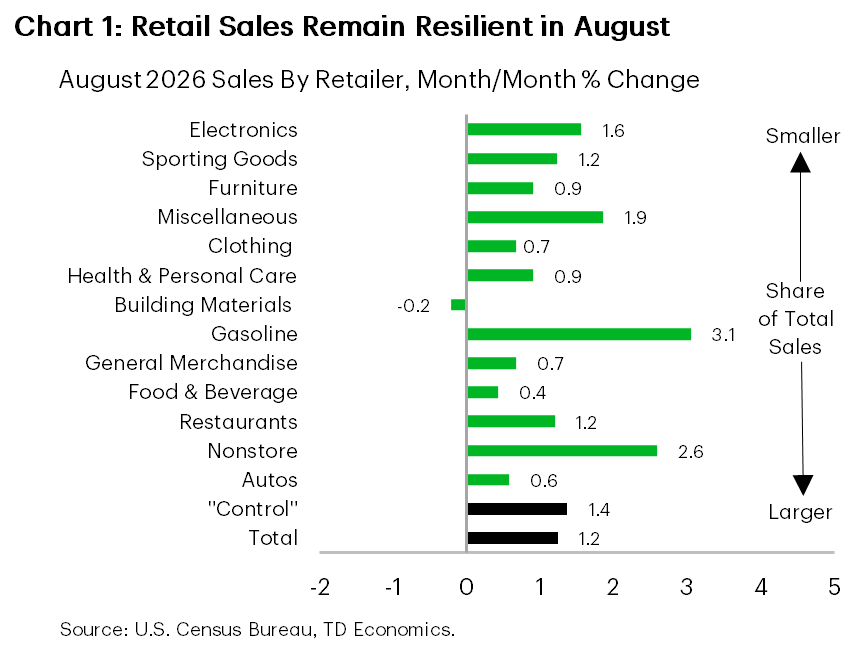
Wednesday’s unexpected retail sales data reinforced this perspective. August sales climbed 1.2% month-on-month, significantly exceeding expectations, with broad-based gains extending beyond gasoline and automobiles. Inflation-adjusted spending also advanced solidly, boosting our tracking for third-quarter consumption and near-term GDP growth. Conversely, housing starts offered a softer counterpoint, falling 2.6% as weaker multifamily construction offset stronger single-family building, while declining permits signaled further moderation. As a highly interest-rate-sensitive sector, housing is constrained by elevated borrowing costs. However, with financial conditions still supporting investment and consumption, this weakness remains isolated. The economy’s resilience makes a rapid return to lower rates less probable, as robust spending necessitates tighter policy to contain inflation.
The FOMC articulated this rationale in Wednesday’s decision. Beyond raising its policy rate, the Federal Reserve signaled that the current stance remains insufficiently restrictive and kept the door open to further tightening. Chair Kevin Warsh was notably explicit: rates must rise because inflation has remained too high for too long, financial conditions are not effectively restraining demand, and the persistent oil shock risks permeating broader price-setting behavior. The University of Michigan consumer sentiment survey corroborated this assessment, as year-ahead inflation expectations surged to 4.6% from 4.0% and long-run expectations crept up to 3.4%.
Our latest Quarterly Economic Forecast corroborates this conclusion. We now anticipate another rate hike this year and a delayed onset of easing—a significant departure from our previous view that the Fed could remain on hold as inflation recedes. Resilient consumer demand and AI-driven investment are extending the economic expansion, but they are also delaying the final stages of disinflation.
Next week’s lighter economic calendar will help determine whether stronger growth is expanding beyond consumers and AI investment. Business surveys, housing data, durable-goods orders, and numerous Fed speeches will provide critical signals, though the conclusion will likely not hinge on any single release. Resilience remains both the economy’s greatest asset and its primary policy challenge: growth is holding steady, but it is delaying the rate relief that households and businesses have anticipated.
Also Read
- Crédit Mutuel Arkéa Resumes Operations After $133 Million Fraud Attack, but Crypto Loss Remains Unconfirmed
- BoJ Minutes Point to Rising Inflation-Overshoot Worries, but Rate Hike Path Remains Contested
- Gold Price Attempts Comeback but Faces Steep Resistance Ahead
- American Bitcoin Corp. Delivers $126M Net Income Powered by $197 Million in Bitcoin Holdings Gains


