







The landscape shifts while core issues persist. A new season brings new leadership and roster adjustments for the Edmonton Oilers, yet goaltending remains a contentious topic—for all the wrong reasons.
Tristan Jarry allowed six goals on 23 shots (.739 SV%) in the season opener. Devon Levi fared worse in his first Oilers start, yielding seven goals on 22 shots (.682 SV%). Levi, acquired from Buffalo in the offseason, made his first NHL appearance since January 2025.
Frederik Andersen was signed in free agency but likely won’t feature until December, leaving Jarry and Levi as the current options. Both must deliver competent play, and fans have legitimate concerns. However, the front office should avoid panic moves unless a clear upgrade exists, and few are available. Last season’s hasty decisions proved costly.
Oilers Must Learn From Past Errors
A panic move is precisely why the Oilers find themselves in this position. They traded Stuart Skinner, Brett Kulak, and a 2029 second-round pick for Jarry and Sam Poulin. General manager Stan Bowman overpaid significantly, acquiring a more expensive goaltender with term remaining on his deal. The trade was unnecessary and arguably weakened the position. Skinner was at least a pending unrestricted free agent, while Jarry cleared waivers less than a year prior and carries a $5.375 million cap hit.

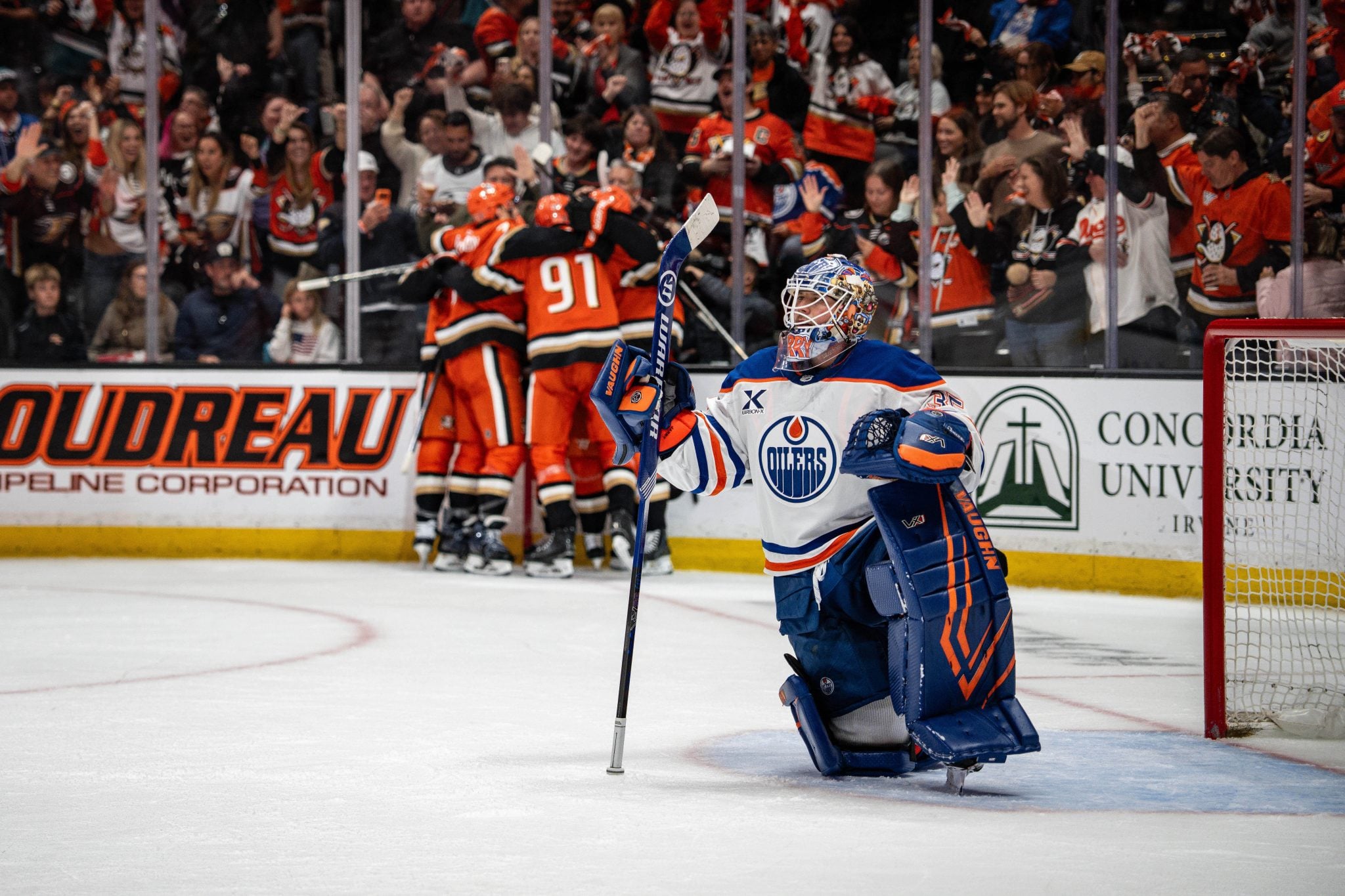
Consider the alternative: sending down Calvin Pickard and recalling Connor Ingram in November. Skinner and Ingram could have formed a solid, cheaper tandem. Instead, they held onto Pickard too long, and the cost proved significant. Ingram severely outplayed Jarry down the stretch. Greater patience with Skinner might have yielded a better trade for Kulak near the deadline rather than attaching him as an add-on. The subsequent acquisition of Spencer Stastney as Kulak’s replacement—and his current status as the eighth defenseman facing waivers—illustrates poor asset management that must be corrected.
A similar scenario could unfold. If Andersen returns in December and dominates, he might seize the starting role. Last season, the Oilers traded before fully evaluating Ingram. They must assess Andersen’s capabilities before forcing another move and hope Levi and Jarry can maintain stability until then. Edmonton lacks expendable assets and needs a home-run acquisition; failure to do so will prove disastrous.
No Team Will Rescue the Oilers
Every organization recognizes Edmonton’s desperate need for goaltending stability. Why would any team facilitate improvement? The price would be outrageous, and Edmonton lacks the assets to broker a deal, especially while pursuing top-six talent.
No team will assume Jarry’s cap hit for the next two seasons, and waiving him would save merely $1.15 million. Who replaces him? The organization is constrained by prior mistakes and cannot afford another poor decision.
Unless the target is Connor Hellebuyck—a scenario made unlikely by his probable refusal to accept a trade to a Canadian team—the Oilers should avoid forcing a deal. Even then, Winnipeg would demand far more than Matt Savoie, Isaac Howard, and a first-round pick; numerous teams could offer superior packages.
The Oilers face a difficult situation, but a panic trade is not the solution.


