







The Romans are renowned for constructing elaborate aqueduct systems that supplied water to their urban centers across the empire. These remarkable engineering feats transported water over vast distances and remained functional for centuries.
One notable example is the Valens Aqueduct serving Constantinople (modern-day Istanbul), stretching approximately 250 miles (400 kilometers). Archaeological evidence and historical records demonstrate the incredible longevity of these structures, making them among the most prominent surviving examples of Roman architectural achievement.
Selecting and Surveying the Route
The construction of Roman aqueducts began with identifying reliable water sources, typically natural springs. Engineers designed routes ensuring consistent downward gradients to maintain water flow toward destination cities. According to Ann Olga Koloski-Ostrow, a classics professor at Brandeis University, this was achieved through careful route planning that created an “ever so slight incline downwards from the spring to its end source.”
Roman surveyors employed specialized instruments to map precise elevations. Archaeologist Joseph Lewis from the University of Cambridge explains that they primarily used tools called the libra and dioptra. The dioptra, resembling a disc with a central sighting bar, allowed surveyors to measure elevation changes by aligning markers and observing sight lines.
The libra utilized a suspended plumb bob mechanism to gauge ground level differences. Surveyors would position this instrument at strategic points along proposed routes, comparing readings against calibrated rods placed in the ground. This meticulous approach ensured optimal water flow rates throughout the system.
Latest Videos FromLive Science
Construction Materials and Techniques
Roman builders relied heavily on a unique form of concrete known for its exceptional durability compared to contemporary alternatives. This mixture incorporated pozzolan—an ash-like material—combined with lime and water to create hydraulic cement that strengthened upon exposure to moisture. As Giovanni De Feo from the University of Salerno notes, “Roman concrete certainly played an important role, especially in bridges, arcades, and other structural elements.”


(Image credit: Marilyn Perkins / Future)
Preservation success resulted not solely from material selection but also strategic planning and adherence to sound geological principles. Engineers deliberately avoided unstable terrain prone to seismic activity or volcanic influence, choosing instead paths along robust bedrock formations capable of supporting heavy stone arches and channels.
Roman aqueduct design varied depending on topographical conditions. While some featured extensive elevated sections supported by towering arcades, others utilized subterranean tunnels where surface construction proved impractical. Gerda de Kleijn from Radboud University notes in her research that “aqueducts had hardly any stretches above ground outside the city, while others ran on arches for a considerable distance.”
Near urban destinations, engineers incorporated sedimentation basins allowing debris and particulates to settle before water entered distribution networks. Harry Evans, a professor emeritus at Fordham University, describes how “water would pool into the basin, sediment would sink to the bottom, then the water would continue from there on its course to the distribution tank.”
Project scale determined workforce requirements significantly. Researchers estimate that approximately 500 laborers completed the 12.4-mile (20 km) Hadrianic Aqueduct in Athens within fifteen years, illustrating both organizational efficiency and resource allocation strategies employed by Roman municipal authorities.
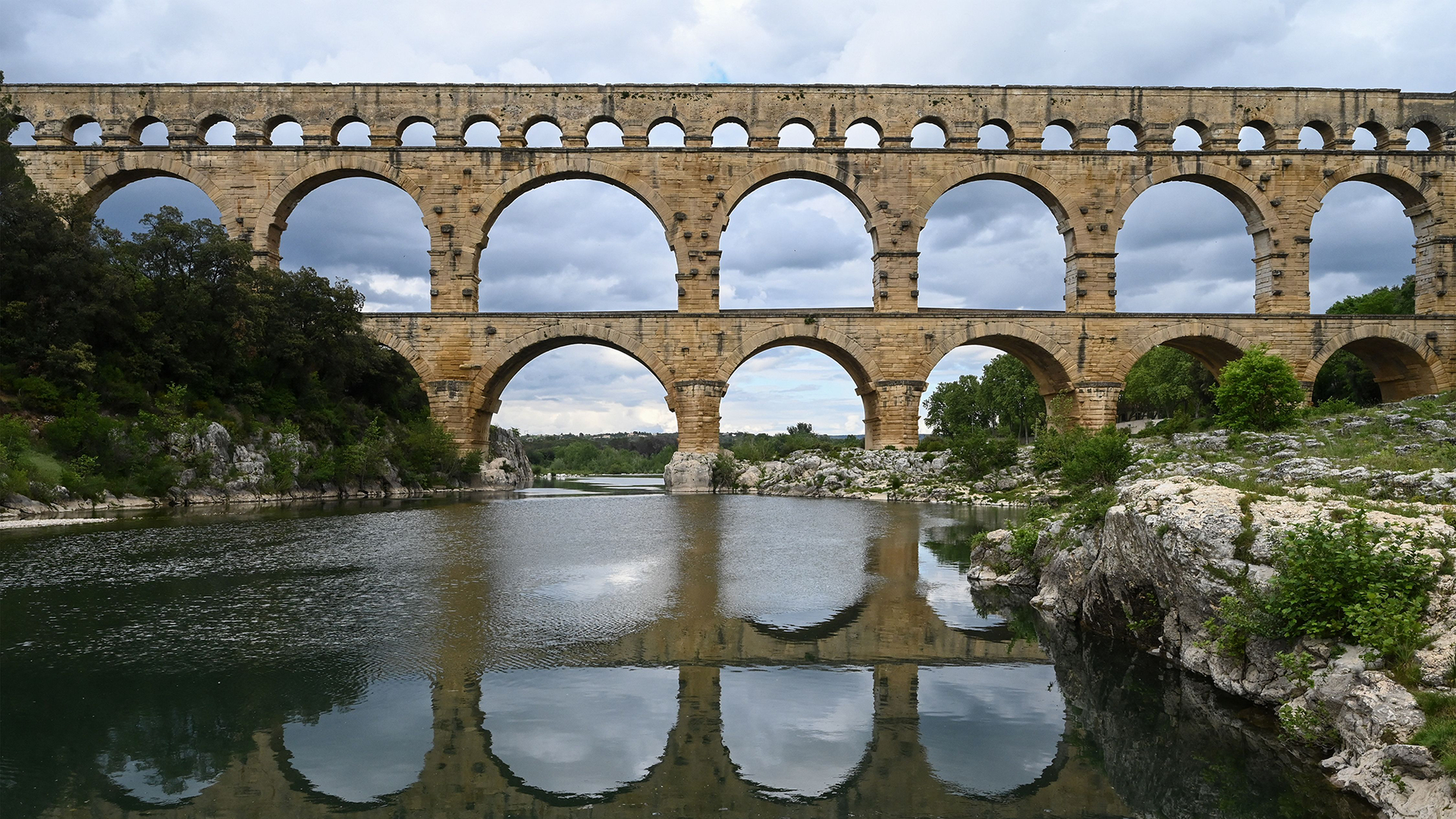
Beyond initial construction, ongoing maintenance ensured continued functionality and extended operational lifespans well beyond administrative upheaval periods. Studies conducted by Cees Passchier at Johannes Gutenberg University Mainz reveal that mineral deposits gradually accumulated inside channel walls requiring periodic cleaning interventions.
Maintenance crews systematically removed calcium carbonate buildup through scraping techniques prior to reapplying protective plaster coatings. In some installations, workers simply applied fresh layers directly over existing encrustations without removing underlying deposits entirely—an expedient approach reflecting practical priorities under varying resource constraints.
Labor demands fluctuated based on infrastructure complexity. Smaller installations like Divona required minimal staffing—perhaps twelve individuals—while major metropolitan supplies necessitated hundreds of dedicated operatives. Even following imperial collapse, many aqueducts persisted due to sustained local interest in preserving essential services.
The Aqua Virgo exemplifies enduring legacy; originally constructed in 19 BC, this monumental structure continues delivering potable water to contemporary Rome nearly fourteen centuries after its inauguration—an enduring testament to Roman civil engineering excellence.


