



The European Commission seeks to revitalize the enlargement process, which has left several candidate countries waiting for decades to join the bloc.
Albania, Montenegro, Moldova, and Ukraine emerge as the leading candidates for membership, with EU officials indicating that Montenegro could potentially join as soon as 2028.
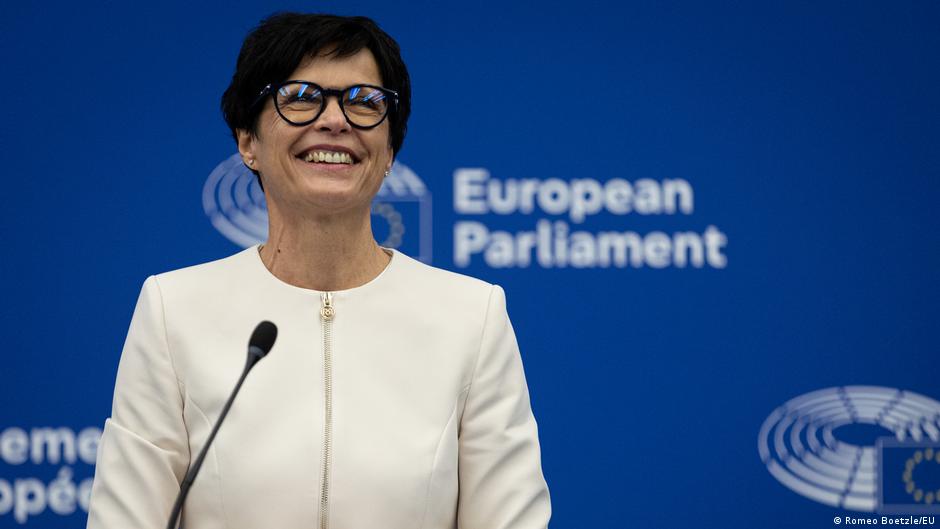
“A larger union represents a long-term investment in Europe’s peace, security, and prosperity,” stated Enlargement Commissioner Marta Kos during a press briefing in Strasbourg on October 6.
A central challenge lies in expanding the EU membership without complicating governance or risking democratic backsliding in prospective member states.
The Commission’s strategy involves two parallel tracks: requiring candidate nations to adhere to EU standards while simultaneously reforming the accession process to eliminate barriers and safeguard the union’s democratic principles.
Shifting from Unanimity to Qualified Majority Voting
One of the primary obstacles in accession negotiations has been the requirement for unanimous decisions among all 27 member states. Historically, individual states have frequently blocked candidates’ progress over bilateral disputes.
The delays stemming from Hungary’s obstruction of Ukraine’s negotiation progress serve as a prominent illustration.
The Commission now advises member states to abandon unanimity for decisions such as opening negotiation clusters, advocating instead for qualified majority voting.
The Unanimity Challenge
“Each negotiation cluster involves three separate decisions, each demanding unanimity — an impractical approach that clearly requires revision,” remarked an anonymous Commission official to journalists on Tuesday.
Transitioning to qualified majority voting would, however, necessitate a unanimous agreement among member states.
“I harbor doubts about achieving unanimous consent from member states on shifting to qualified majority voting,” observed Tinatin Akhvlediani, director of the enlargement program at the Centre for European Policy Studies (CEPS), in an interview with DW, referencing past unsuccessful attempts to amend voting rules due to member state opposition.
Staged Access to Membership Privileges
To encourage reforms in candidate countries, the Commission proposes staged integration, enabling these nations to access select membership benefits prior to full accession, provided they satisfy EU criteria.
“Staged integration does not replace full membership; it accelerates the enlargement process,” Kos affirmed on Tuesday, emphasizing that the approach remains strictly merit-based.
This mechanism could motivate candidate nations, noted Nina Vujanovic, a research fellow at the Brussels-based think tank Bruegel, in conversation with DW: “While reforms are essential, recognizing progress through early benefit access is equally crucial ahead of formal accession.”
Early access to EU privileges is not unprecedented; Montenegro, for instance, already participates in the Single Euro Payments Area (SEPA) despite not being a member state.
Aligning with Geopolitical Realities
The Commission aims to systematize early benefit access for candidate countries, tying it to strategic alignment with the EU.
“Such access will not be granted unless candidate countries genuinely align with EU objectives,” a Commission official informed journalists.
Introducing strategic alignment as a prerequisite reflects the EU’s response to escalating geopolitical tensions affecting both current members and candidate nations.
Candidate Nations: Choosing Between Russia and the EU
“The EU endeavors to prevent candidate countries from falling under Russian influence,” stated Heather Grabbe, a senior fellow at Bruegel, in discussion with DW. “Strategic alignment specifically targets figures like Aleksandar Vucic of Serbia, whose policies have clearly advanced Russian interests,” she added.
The revised procedures will require adherence not only to the EU’s foreign and security policies but also to its economic security standards. “Engaging in gas trade with Russia undermines trust-building with the European Union,” noted Nina Vujanovic.
Insights from Past Democratic Challenges in Hungary and Poland
To deter democratic backsliding in prospective members, the Commission recommends a 15-year timeframe during which sanctioning new members — through financial restrictions or voting rights limitations — would be streamlined.
In discussions with The Guardian and other European outlets, Commissioner Kos clarified that the EU has absorbed lessons from democratic regression observed historically in Poland and Hungary: “We must move beyond reliance on Article 7 alone to address figures like Viktor Orbán; swifter intervention mechanisms are essential.”
Evaluating Protective Measures: Fairness or Necessity?
Critics contend that this safeguard establishes inequitable conditions across the union.
“Such differentiation is fundamentally unjust,” asserted Heather Grabbe. “Looking ahead to the 2040s, why should Montenegro encounter distinct requirements compared to, for example, Slovenia?”
Numerous candidate countries exhibit fragile democratic institutions, as Tinatin Akhvlediani highlights: “Given their inherent democratic vulnerability, this tailored approach toward applicant states is thoroughly justified.”
Experts acknowledge that while uniformly stringent rules for all members would be ideal, practical implementation remains unattainable without unanimous consent — a scenario Grabbe colorfully describes as “extremely difficult to persuade turkeys to support Christmas.”
Although the Commission’s initiative to revise enlargement-related regulations is poised to advance the discourse, ultimate authority rests with member states to determine which proposals become binding policy.
The European Council — consisting of the heads of state or government from the 27 EU member states, alongside the European Council president and the European Commission president — is slated to review these proposals during its October 15–16 summit.
The conclusions reached will dictate the pace at which the Commission’s updated enlargement strategy can proceed.
Edited by: Aingeal Flanagan
EU Enlargement: Montenegro Poised for Membership by 2028
To view this video please enable JavaScript, and consider upgrading to a web browser that supports HTML5 video
Also Read
- Dual-Threat Energy Stock Delivers Both Income and Long-Term Growth
- Key Market Movers: Goldman Sachs, Webull, Worthington Steel, Micron, and Others See Significant Intraday Volatility
- Canada indefinitely suspends plans to expand medically assisted dying for mental illness
- Paxton admits Trump’s Iran war and US gas prices are plaguing Republicans in leaked audio