







Everything Everything recently spoke with NME about their potent new album, Poison Pop, revealing how revisiting their earlier work inspired them to push back against the “enshittification” of modern life.
The British art-rock band’s eighth LP follows 2024’s intricate Mountainhead. Where that record explored abstract concepts and traded guitars for synths, Poison Pop returns to the group’s frantic, punk-indebted roots, resisting a culture increasingly saturated with “slop.”
The album took shape during last year’s tour celebrating the tenth anniversary of Get To Heaven, their prescient third album that forecast the rise of the alt-right.
“We didn’t want to repeat the album we’d just made, but we were also busy promoting a record from ten years ago, which was a massive undertaking,” frontman Jonathan Higgs told NME. “Get To Heaven is a very aggressive record, and I’m ten years older now, so it became a case of saying, ‘Hey, remember how fucking insane we used to be?’”
“That put us in the headspace to make another fast record,” he added. “I wanted something that felt like a slap in the face. Mountainhead was built around a metaphor and kept at arm’s length by design, but this one is right in your face—you can’t hide from it.”
Across the record, the band confront today’s harrowing societal concerns: the addictive nature of social media, the endless cycle of online rage-bait, and our passive acceptance of “AI slop” overtaking art.

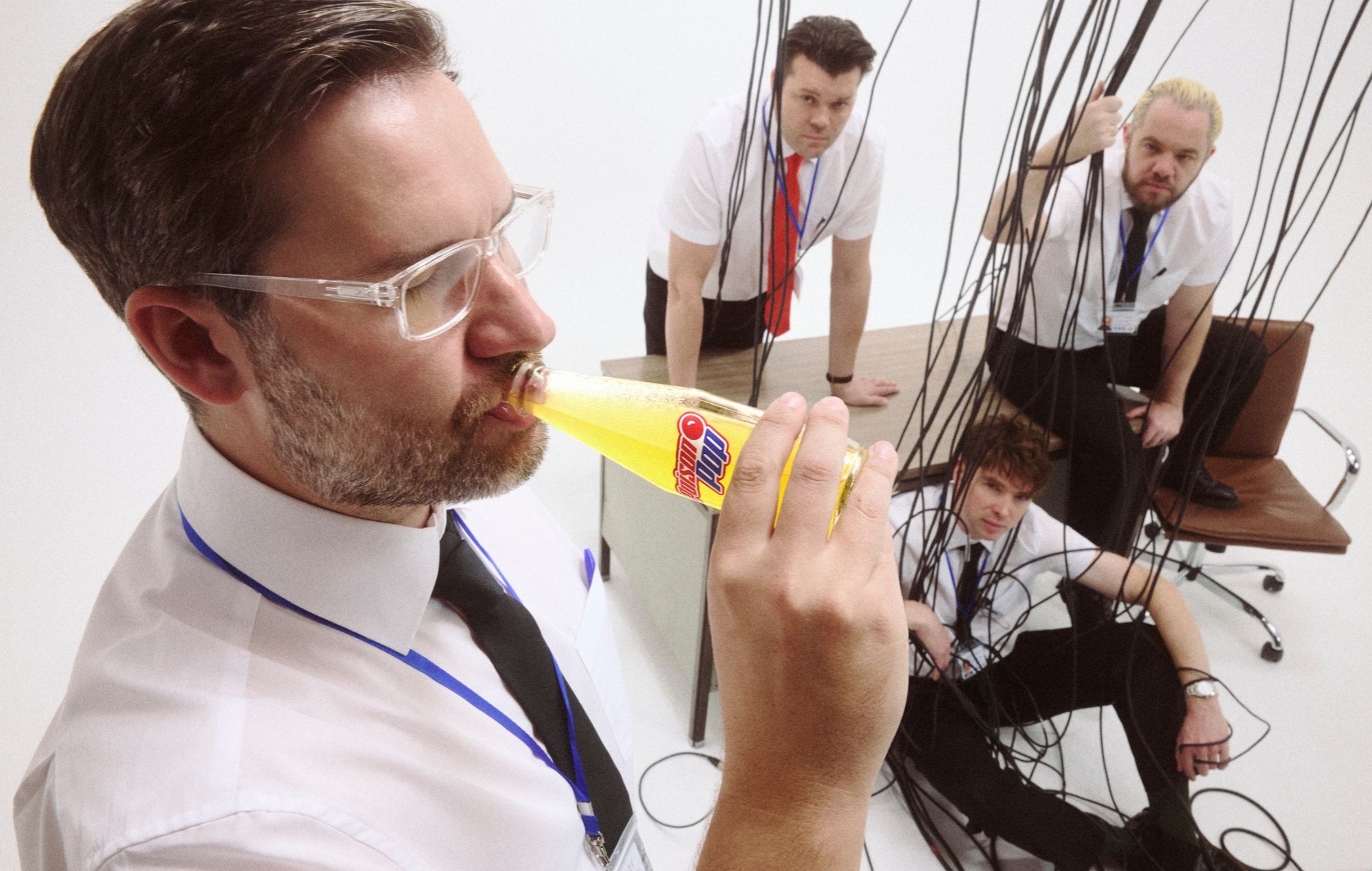


NME: Hi Jonathan. Congratulations on the new album. What’s changed for you in the two years since Mountainhead?
Jonathan Higgs: “This felt like an unusually long gap between albums for us. We usually dive straight into the next one, but this time we deliberately took our time to ensure the songs were right before moving forward.
“We rejected around 80 or 90 songs during the process. Once we narrowed it down to about 20, Alex [Robertshaw, guitarist] and I stepped back and asked the other guys to pick the best ones. It was unnerving, but we believed in everything we’d presented, so it was refreshing to hand over that perspective.”
The album centres on our current moment—social media dopamine loops, AI, culture wars. Why was it important to lean into that?
“Every time we make a record—or I write a lyric—people ask what it’s about, and my answer is always that it’s about the time we’re in. Sometimes I try to predict the future, but that’s getting harder. Lately I just want to reflect what’s around me, and right now uncertainty is the towering presence. The safety nets feel ripped away; nobody knows what’s coming.
“I wanted to address that without preaching. I’m not interested in telling people my opinions. Instead, I wanted to mirror the chaos of discourse. The record is full of conflicting messages and an overarching sense of addiction. Blood Radio, for instance, describes a station that drives you insane with rage, yet everyone keeps listening—it captures how good it feels to plug into that anger. Poison Pop is the same idea: a drink that kills you, but you still want it. That’s how I live, and how many people live. But there’s a breaking point where you either accept the enshittification of everything or try to reject it. The album is about wrestling with that tension.”

As someone acutely aware of the world, how do you view AI’s rising prominence in music?
“My feelings on AI shift constantly. We were early adopters—I’m pretty sure the Raw Data Feel cover was the first AI-generated album artwork. At the time it felt exciting, but attitudes have shifted.
“I think AI can be a useful artistic tool. But if you’re genuinely worried that AI can replicate what you do, maybe you shouldn’t be doing it. Am I worried an AI can do what I do? No. It might produce a convincing impression, but it won’t be as good. If anything, human-made art will grow in value precisely because of the flood of slop. It’s like a factory vase: thousands are made daily, but place one beside a handmade piece—which would you save from a fire?”
That value argument extends to the live experience, which AI can’t replicate. Is that why these songs feel built for the stage?
“Definitely. We’re increasingly focused on the live show when writing. We used to ignore it for creativity’s sake—‘Here’s 20 guitar tracks, we’ll never play this live.’ Now we’re attuned to pulling it off as four people with two hands each. It’s a challenge we don’t always nail, but this record is absolutely designed for the stage, because that’s one space AI can’t touch yet.”
Fontaines D.C. explored similar themes on their new album Dopamine Chamber. Have you heard it?
“I haven’t. When writing, I avoid contemporaries to avoid subconscious imitation. I look inward.
“But it is the conversation of the moment. We’re asking: ‘What is this doing to us, and how do we escape?’ There are two or three massive pressures right now—AI, social media, our inability to control them. It used to be exciting; now we’re seeing the rot set in.”

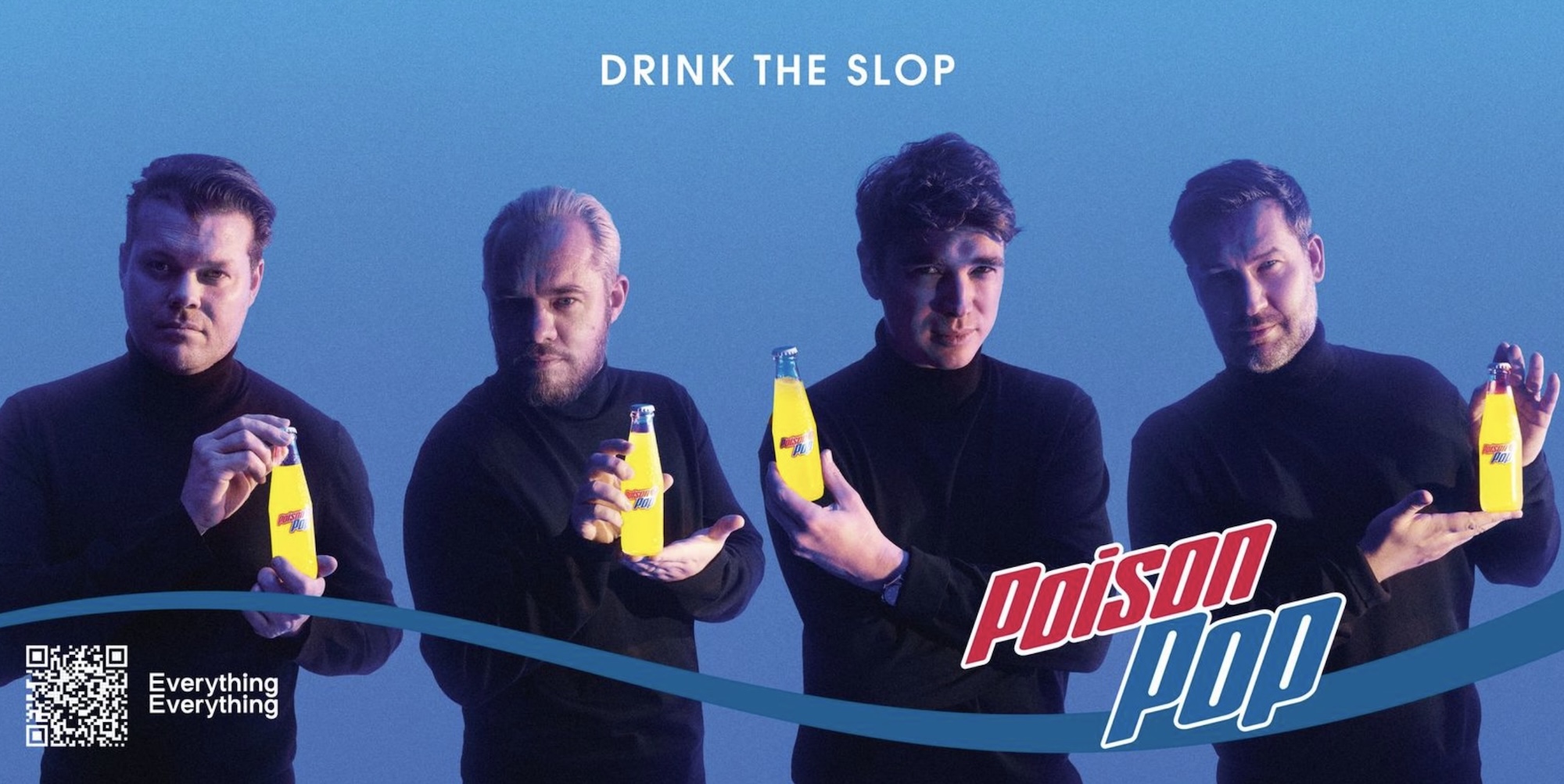
How was it revisiting Get To Heaven ten years on? Did it look different?
“The songs felt strikingly relevant, both in the US and UK. Much of that album was a warning about where we’d be in ten years—and nearly every bad scenario has come to pass.
“I wasn’t specific at the time, but it was written on the cusp of Brexit, Trump’s election, and what we then called the alt-right surge. Those tracks have only gained resonance. It was satisfying to dust them off and say, ‘This is what we warned about, and we weren’t wrong—though frankly, I wish we were.’”
Next year marks ten years of A Fever Dream. Any plans to mark it?
“The Get To Heaven tour raised that question for our whole catalog. Never say never, but we don’t want to get stuck looking back. It was a one-off, so no immediate plans—though if everyone hates the new record, we might have to!”
What do you hope people take from the new music?
“I hope they feel a sense of connection, because that’s all we ever really want. It’s a chaotic era, and genuine connection is increasingly hard to find—maybe this record can be one place where it happens.”
Also Read
- Sauron’s True Nature: Origins, Power, and History in Tolkien’s Legendarium
- Road to Redemption: How a Minnesota Folk Band Sold Their Home to Launch a Nationwide Tour
- Martin McDonagh’s ‘Wild Horse Nine’ Marks His Ascension to A-List Status
- Does Vegetable Broth Need to Be Refrigerated? Opened or Unopened


