







McNish’s hybrid Le Mans winners were, like this year’s F1 machinery, highly automated. “When the new energy-per-lap regulation was introduced in 2014, the first year was very manual, and it was simply impossible for drivers,” McNish said. “I was sitting on the pit wall, relieved I wasn’t in the cockpit, because of the cognitive overload.”
The power unit control was then automated to give drivers more mental bandwidth to manage the other demands of a race stint. “They handle strategy and tire feedback, along with the information and different elements of the differential,” McNish said. “Whatever he is being told about, he is racing at the same time. The more you can take away from the driver, the better.”
“However, ultimately, the driver has to maximize,” McNish told me. “There is a great deal of communication with the driver and a great deal of adaptation as the race evolves. As fuel load decreases, tires degrade, grip increases, or the track cools off—as it should on Sunday afternoon, it is definitely adaptive.”
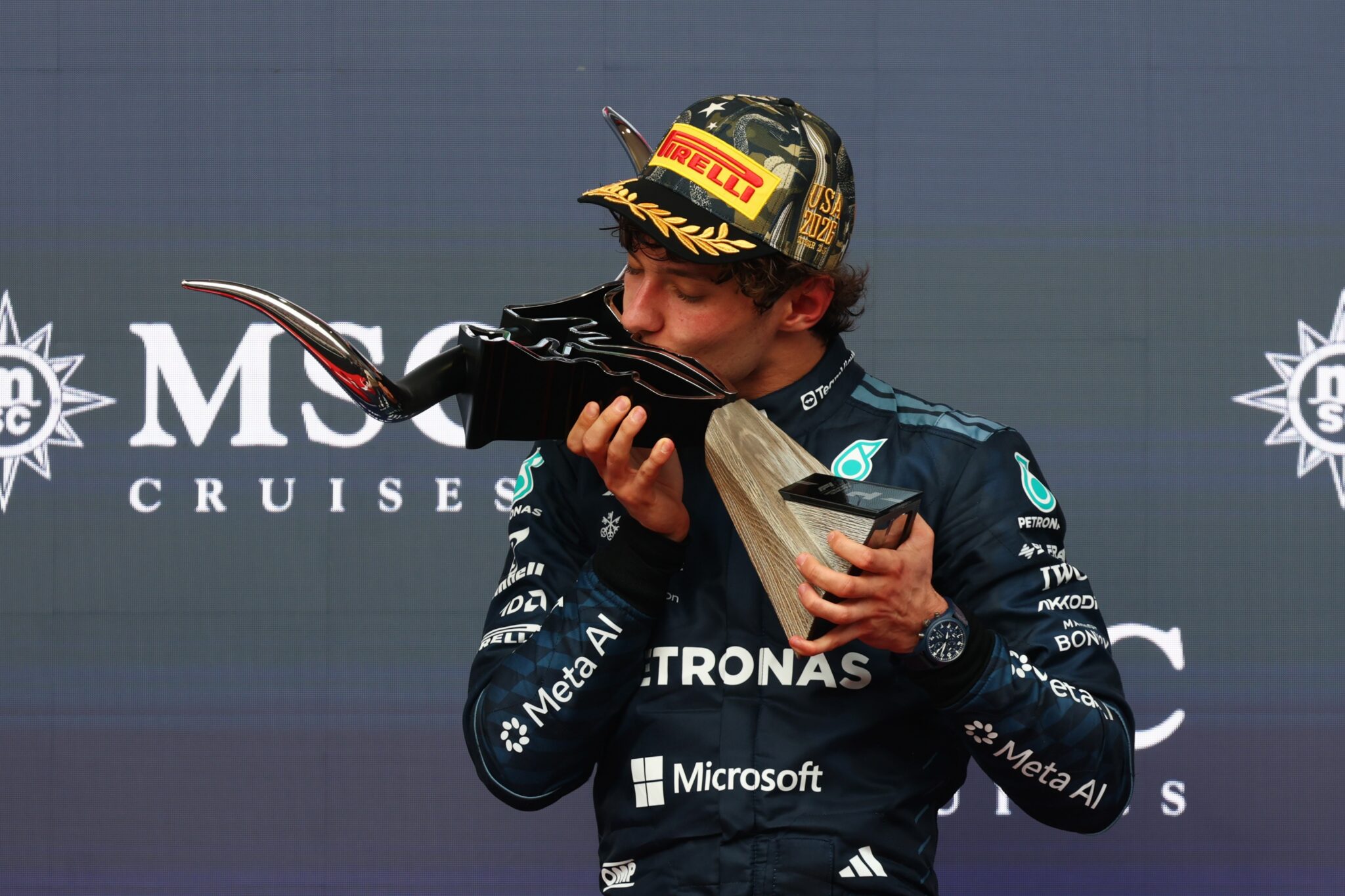

Soon, Antonelli will be F1’s youngest champion.
Credit:
Clive Rose/Getty Images
Soon, Antonelli will be F1’s youngest champion.
Credit:
Clive Rose/Getty Images
The race itself was not one of the season’s more compelling contests. Antonelli scored pole on Saturday and built a comfortable lead on Sunday to win, extending his advantage. George Russell must score 23 more points than Antonelli in Mexico City to remain in title contention, while Lewis Hamilton must score 24 more points than Antonelli to keep a mathematical chance alive. Neither is likely to do so, and we will almost certainly see Antonelli seal the deal next time out.
Also Read
- New iPad Mini Debuting Nov. 6 Features OLED Display, IP67 Water Resistance, and Updated Design
- Claude AI Aided High-Risk Bird Flu Research, Anthropic Report Reveals
- Aiven Unveils LLM Gateway Strategy to Slash Enterprise AI Token Costs by 80%
- The Mold Gold Cape: A 3,900-Year-Old Bronze Age Masterpiece of Prehistoric Goldwork


