


![British Court Set to Deliver Landmark Ruling on Trinidad’s Colonial-Era Anti-LGBTQ+ Laws]](https://i3.wp.com/s.abcnews.com/images/US/abc_news_default_2000x2000_update_16x9_992.jpg?w=1024&resize=1024,1024&ssl=1 "British Court Set to Deliver Landmark Ruling on Trinidad’s Colonial-Era Anti-LGBTQ+ Laws]")





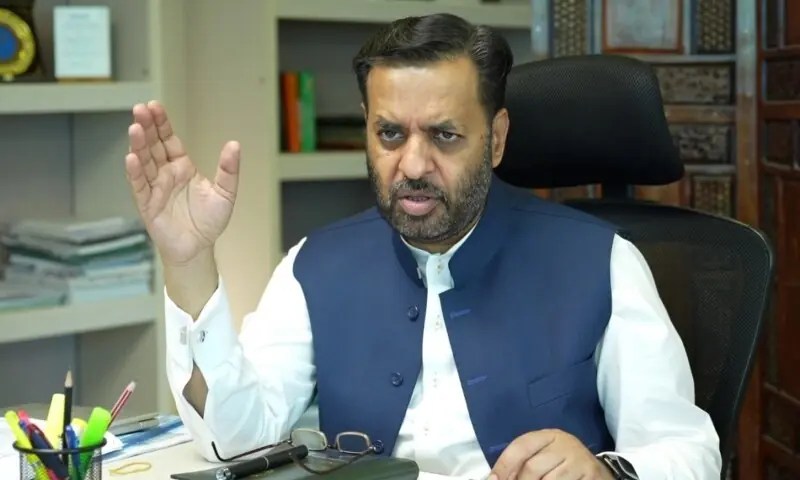
ISLAMABAD: Federal Health Minister Mustafa Kamal stated on Tuesday that local governments are best positioned to tackle the majority of issues facing the federal capital and the provinces.
While inaugurating the Phase‑I upgrade of the Pakistan Institute of Medical Sciences (PIMS) Cardiac Centre, he also urged strengthening primary healthcare to alleviate the disease burden.
Mr. Kamal emphasized that the true goal of decentralization is to resolve public concerns swiftly at the Union Council level, reiterating that a robust, efficient, and empowered local‑government framework is essential for sustained public‑health gains and equitable access to quality healthcare nationwide.
The minister clarified that he does not oppose the 18th Constitutional Amendment, but he worries about its partial implementation. He pointed out that although finances have moved from the federal to the provincial level, a reliable channel for channeling those funds down to districts and local administrations is still missing. He noted that roughly Rs 8.848 trillion was allocated to the four provinces in the last fiscal year, yet the absence of a strong local‑government structure hampers effective use of these resources at the grassroots.
He argued that directing resources straight to neighborhoods and local authorities would markedly improve essential services—safe drinking water, sanitation, sewerage, and other basic civic amenities—thereby substantially lowering disease prevalence. He reiterated that the genuine remedy for Pakistan’s health challenges extends beyond hospital construction to disease prevention via a strong, effective local‑government system.
Mr. Kamal observed that the lack of an effective local‑government system also hinders public awareness and trust in polio and other immunization initiatives. He noted that locally elected councillors, being residents of the communities they serve and directly answerable to constituents, enjoy greater credibility.
“This allows health programs to be carried out more effectively at the community level and bolsters public confidence in vaccination efforts,” he added.
He also remarked that the present administrative setup depends on only a few hundred bureaucrats to oversee the entire governance structure, whereas a vigorous local‑government system would vastly broaden governance reach and service delivery by mobilizing millions at the grassroots.
At PIMS, the minister also launched the Patient Facilitation Assistant Service in the Emergency Department to enhance patient navigation and service delivery.
He noted that PIMS serves as the largest referral hospital for patients not only from Islamabad but also from Azad Jammu and Kashmir, Gilgit‑Baltistan, a sizable portion of Khyber Pakhtunkhwa, and other remote regions of the country.
“PIMS sees roughly 7,000 to 9,000 patients each day; including attendants and family members, that translates to 30,000 to 40,000 individuals benefiting daily—comparable to a large public gathering every day—underscoring both the profound trust the public places in PIMS and the tremendous strain on the facility,” he remarked.
The minister observed that the overwhelming patient influx at Pakistan’s public teaching and tertiary‑care hospitals stems largely from the shortcomings of the national primary‑healthcare system.
Published in Dawn, July 8th, 2026
Also Read
- British Court Set to Deliver Landmark Ruling on Trinidad’s Colonial-Era Anti-LGBTQ+ Laws]
- FDA Grants Accelerated Approval to Vera Therapeutics’ TRUTAKNA for Treating Primary IgA Nephropathy
- TotalEnergies CEO Discusses Offshore Exploration in Syria Amid Ongoing Security Concerns
- 99% of people on Earth will get sunlight at the same time this Wednesday


