




History abounds with lost treasures, from Aztec gold concealed during the Spanish conquest to the Ark of the Covenant, which vanished during the destruction of Jerusalem more than 2,500 years ago. In his book The Museum of Lost Things: True Tales of Fabled Treasures, Legendary Cities, and Mythical Creatures That Vanished From History (National Geographic Partners, LLC, 2026), writer Sam Kean examines the myriad artifacts, places, and secrets swallowed by time. In this excerpt, he explores how the tomb of Genghis Khan — arguably history’s most successful ruler — has remained hidden for nearly eight centuries.
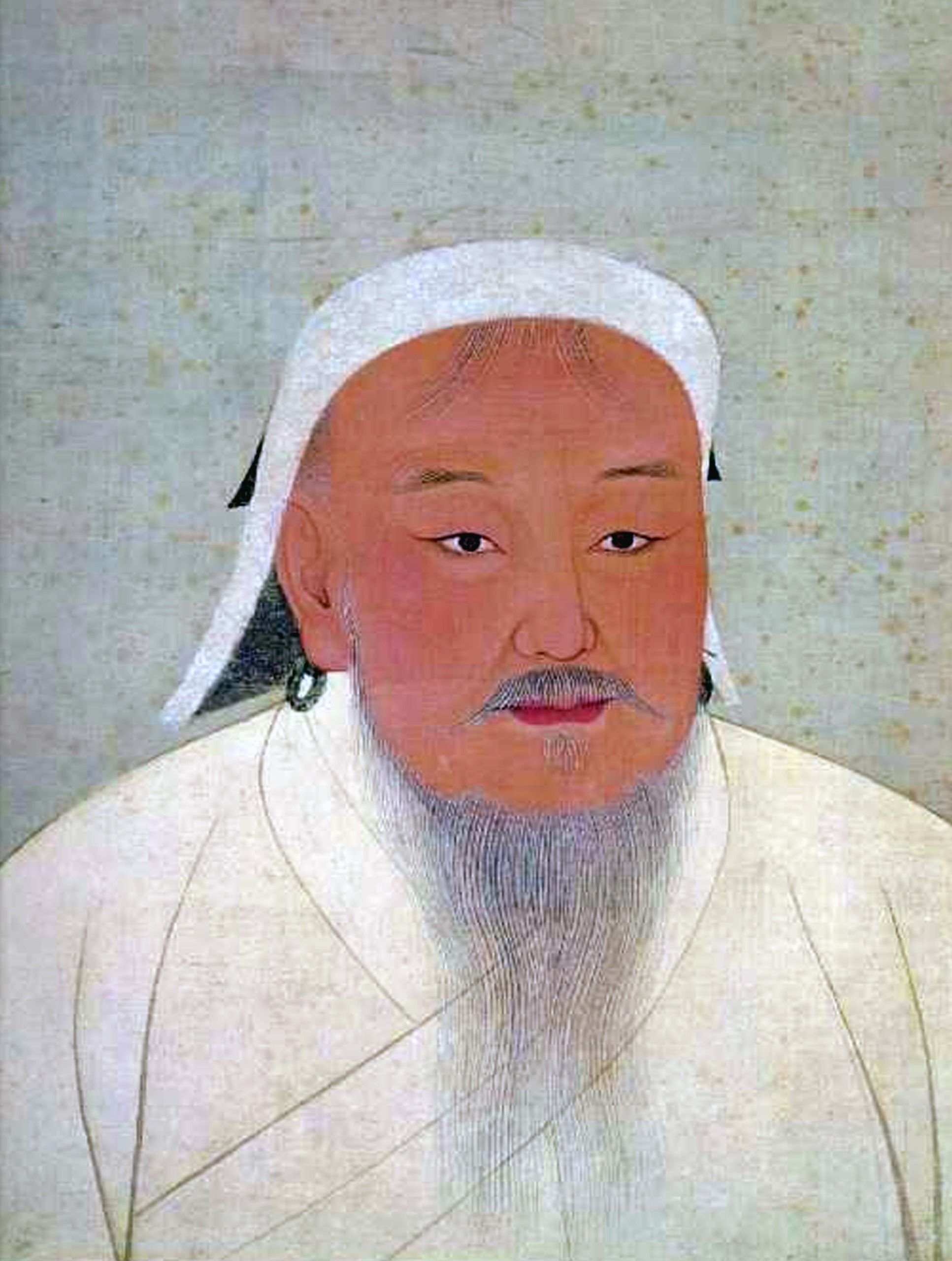
If archaeologists could vote on the lost grave they would most like to discover, Genghis Khan’s would undoubtedly rank near the top — partly to verify the gruesome legends surrounding his burial. Born in Mongolia around 1162 as Temüjin, he supposedly entered the world clutching a clot of blood in his fist. His early life offered little promise of greatness. At age nine, his father, a tribal nobleman, was poisoned by rivals, and his own clan abandoned the family on the unforgiving steppes to starve. Contemporary accounts describe the young Temüjin as unusually sensitive, fearful of dogs, and prone to tears.
Yet he matured with ruthless speed. Before adolescence, he had endured enslavement — engineering his own escape — and killed his older half-brother. As a young man, he discovered an aptitude for warfare and systematically eliminated rival nomadic leaders until his coronation as Genghis Khan, the “Universal Ruler,” in 1206. Another epithet, the “Disturber of the Universe,” captured the scale of his impact. His warriors, battle-hardened and bold, proved unstoppable once they ceased fighting among themselves and turned their attention outward.
The Mongols favored blitzkrieg tactics, sweeping across the plains on horseback while raining arrows upon their enemies. They could also be remarkably patient, perfecting the art of siege warfare. One notorious siege targeted Merv, in present-day Turkmenistan — a desert oasis renowned as the “Alexandria of its day,” teeming with gardens, libraries, famous silks, and refreshing melons. The Mongols could not resist it. After the terrified inhabitants surrendered within six days, a massacre ensued. “It was a memorable day for shrieking and weeping,” recorded one chronicle. After burning the city, Genghis Khan ordered his troops to count the dead: 700,000 corpses. Yet paradoxically, life under Mongol rule offered distinct benefits. Genghis Khan permitted religious freedom — a rarity — introduced diplomatic immunity to facilitate negotiations, and outlawed torture during interrogations. He promoted free trade and established history’s first international postal system.
Over time, his empire disseminated pivotal technologies — the compass, abacus, printing press, and paper currency — alongside social innovations such as universal education for children. No ruler was more ruthless in conquest, yet if the vanquished surrendered and swore fealty, their lives generally improved. Genghis Khan’s realm stretched from Korea to the Caspian Sea, encompassing an area twice the size of the Roman Empire (his successors would expand it to the size of Africa). He achieved this with an army of roughly 100,000 warriors — fewer than the capacity of many modern stadiums.
Historian Jack Weatherford summarized his achievements vividly: imagine if the United States had been founded by an illiterate slave who, through sheer force of personality, liberated the nation, united its people, created an alphabet, wrote a constitution, established universal religious freedom, invented a new system of warfare, and marched an army from Canada to Brazil. Alexander, Julius Caesar, and Napoleon, Weatherford concluded, “weren’t fit to carry Genghis Khan’s saddle.” If anyone deserved a grand mausoleum, it was he.
Genghis Khan wanted the opposite. The Mongols, despite the rivers of blood they spilled, were strangely reticent about discussing death. Consequently, contemporary sources fall silent after 1227 regarding the circumstances of his demise, and rumors proliferated. One account claims he died after falling from a horse; others cite a lightning strike or an arrow to the knee during battle — at age 65. A particularly lurid tale asserts he was assassinated by a conquered queen who concealed a blade inside her body.
Regardless of the truth, his longtime wife Yesui dressed his body in a white robe, wrapped it in white felt with fragrant sandalwood sticks, and fastened the shroud with golden straps. What followed, according to lore, may constitute the most extraordinary funeral in history. A thousand soldiers rode off to bury him atop a mountain, but the procession devolved into a slaughter. To conceal their destination, the troops reportedly killed every person — and in some accounts, every animal — they encountered during the 40-day journey, often shouting, “Go to the other world to serve our lord!” Based on other Mongol burials, they likely interred him 20 yards deep, oriented north-south with his head facing east, accompanied by treasures — gilded saddles, gold rings, pearls wrapped in silk — as well as slaves, concubines, and horses. One tale even describes a live baby camel buried with him, either to serve as a funeral dirge or so its grieving mother could lead mourners back to the site.
After filling the grave, the soldiers either diverted a river to cover it or trampled the ground with a thousand horses to erase all traces. The return journey continued the carnage, with the soldiers butchering any hunter or merchant they encountered. In a final guarantee of secrecy, the thousand soldiers were themselves slaughtered upon reaching home — and then their executioners were also killed, to ensure absolute silence.
Genghis Khan took privacy seriously. How much of this is factual remains unknowable, but the elaborate concealment has only intensified the search. Four nations — Mongolia, China, Kazakhstan, and Russia — have claimed his remains lie within their borders. The strongest case points to Burkhan Khaldun (God Mountain) in northeastern Mongolia. Genghis Khan was born nearby, hunted there regularly, and worshipped the sky god Tengri on its slopes. He once took refuge there while fleeing enemies and escaped miraculously; the mountain seemed charmed to him, and he reportedly mused during his life that it would make an ideal final resting place.
Supporting this theory, later Mongol rulers declared the area around the peak a forbidden zone, guarded by the Darkhad — a clan tasked with murdering anyone who approached. In exchange, the Darkhad were exempt from taxes and military service. Incredibly, they maintained this vigil for 700 years, until the founding of the communist Mongolian People’s Republic in 1924. The Soviet-backed regime held a conflicted view of the “Disturber of the Universe.” They admired his ruthlessness and coveted the territory he had conquered, yet feared his memory would ignite nationalist sentiment and revolt against communist rule.
To suppress this, the Mongolian government banned the very mention of Genghis Khan’s name. To prevent Burkhan Khaldun from becoming a rallying point, officials fenced off a “highly restricted area” of 3,900 square miles — twice the size of Delaware — and stationed a tank base at its entrance. The ban eased somewhat after Stalin’s death in 1953. In 1962, one Mongolian official commemorated Genghis Khan’s 800th birthday by issuing a postage stamp bearing his likeness. Moscow responded by ordering the official’s arrest and execution by axe. After the republic collapsed in 1992, the restricted zone became a nature reserve with limited public access. Yet the terrain near Burkhan Khaldun remains forbidding — one of the most desolate places on Earth, with minimal roads and a population density comparable to Greenland’s.
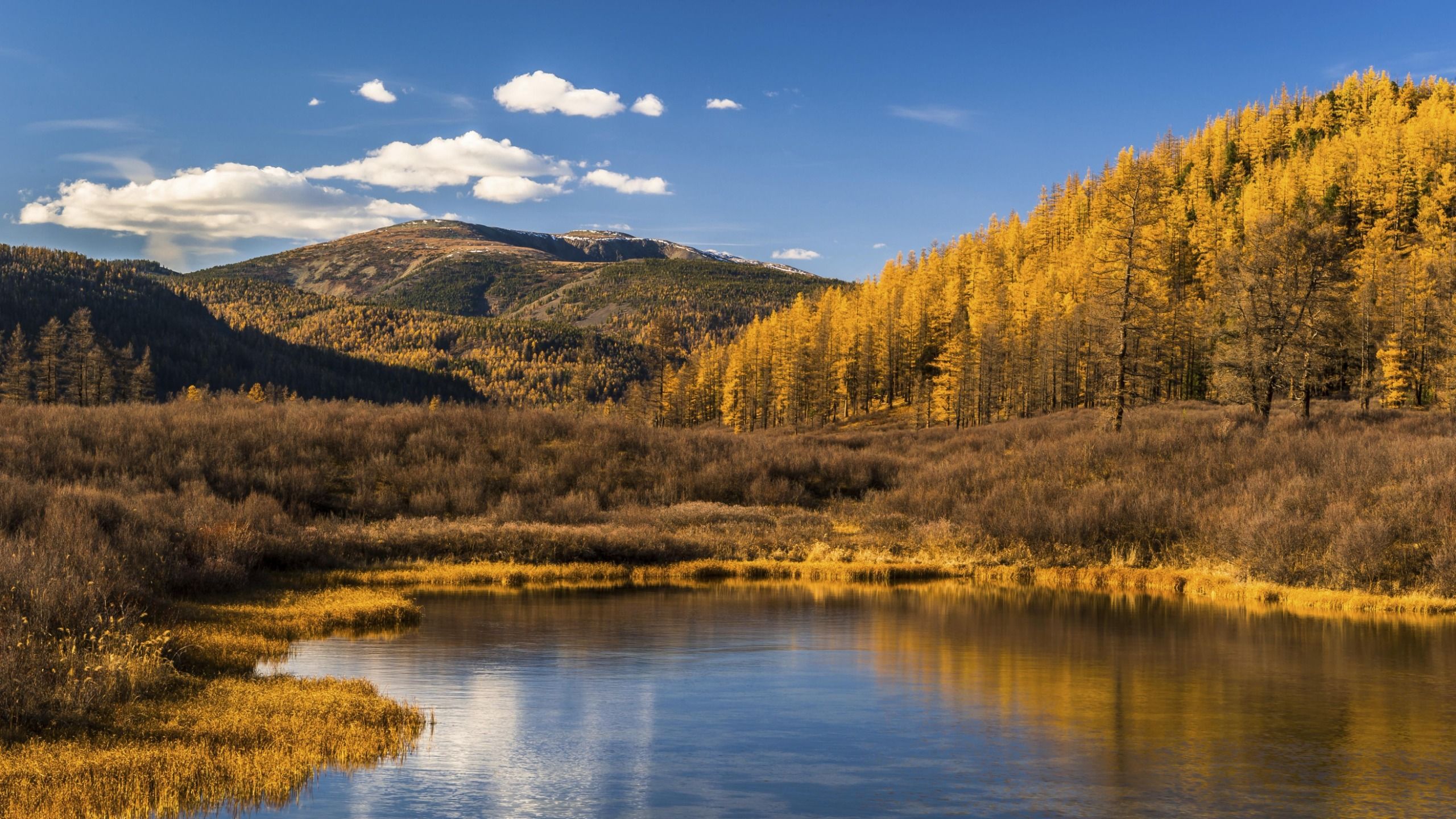
Centuries of vegetation have choked many areas, while exposed sections are prone to flash floods. Temperatures swing from 100°F (38°C) in summer to -50°F (-46°C) in winter — cold enough to kill yaks. None of this has deterred those obsessed with finding the grave. Searchers have endured snakebites, frostbite, and vehicle accidents on treacherous cliffs. One man spent 40 years crisscrossing the slopes and died without discovering a trace.
In 2010, archaeologists adopted a novel approach. They posted satellite imagery of the Burkhan Khaldun region online and recruited volunteers to scan for anomalies — bumps, depressions, or other features suggesting burial sites. Ten thousand participants devoted approximately 30,000 hours (3.4 collective years) examining 2,300 square miles (5,950 square kilometers). They flagged over a hundred locations warranting investigation. While several proved inaccessible due to terrain, 55 legitimate archaeological sites emerged, including megaliths, Bronze Age burial mounds, and an ancient city.
Yet there was zero trace of Genghis Khan. One archaeologist likened the effort to searching for a needle in a haystack when you do not know what the needle looks like. Call it Genghis Khan’s final victory. The diverted river, the trampling horses, and the slaughter of all potential witnesses have successfully concealed him for most of a millennium. His victims lie scattered across Eurasia, their skeletons long since reduced to dust. But the bones of history’s greatest warrior remain at peace.
Excerpted from The Museum of Lost Things by Sam Kean, published by National Geographic Partners, LLC. Copyright © 2026. All rights reserved.
Also Read
- Harvest Moon 2026: See the first full moon of autumn rise alongside Saturn tonight
- The Enduring Mystery of Lithium: Why This Simple Element Remains the Gold Standard for Bipolar Disorder
- The Amflow TL Carbon e-SUV e-Bike: A Versatile Adventure Companion?
- Saturday September 26 NYT Mini Crossword Solutions