






In a wooded area, two Ukrainian soldiers — a technician and an electrician — affix wings to a large black enclosure. The device is the HX-2 combat drone produced by German firm Helsing, featuring artificial intelligence.
The Bavarian company is delivering thousands of these units to the Ukrainian military, funded by the German government. The German armed forces have also awarded Helsing a multimillion‑euro contract.
Earlier this year, critical coverage of the drones appeared in Western outlets, including German publications. These reports cited Ukrainian soldiers who noted technical problems during prior test deployments. One article in The World indicated that many drones were not flight‑ready and suffered crashes shortly after launch, resulting in a low success rate. The piece quoted front‑line soldiers in eastern Ukraine.
Helsing, however, disputed these claims. A company spokesperson told DW in late January that Ukrainian service members are evaluating the HX-2 alongside Helsing engineers on the front lines, and that the initial test outcomes were “encouraging.”
Ukrainian Drone Operators Sustain the Frontline Near Pokrovsk
To view this video please enable JavaScript, and consider upgrading to a web browser that supports HTML5 video
Frontline Drone Operations Near Pokrovsk
Soldiers monitor a tree‑mounted detector that tracks incoming Russian drones.
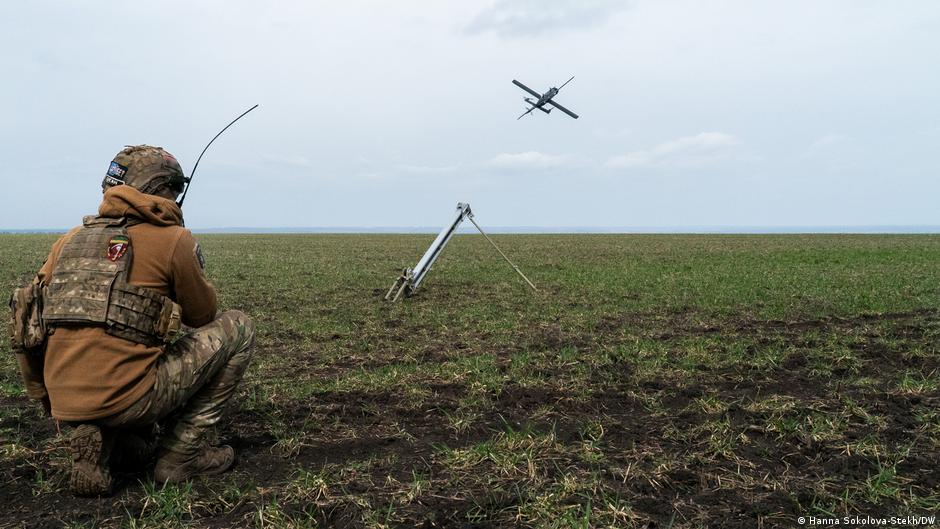
Inside a shelter, a pilot and a navigator prepare to launch the German drone. They power up laptops and monitors and arrange a string of lights to set the mood. The team operates in the frontline zone of Ukraine’s eastern Donbas coal region as Russian forces advance.
“Our mission is to disrupt their logistics networks,” says the pilot and commander, known by the call sign Black.
Helsing previously delivered its simpler HF-1 model, co‑developed with a Ukrainian partner. The initial order comprised 4,000 units; in early 2025 the company announced an additional 6,000 deliveries of the upgraded HX-2. Black’s crew, now operating the HX-2, had previously used the HF-1. The HX-2 is noted for its speed and agility. “It provides us a significant aerial advantage — making it harder for the enemy to intercept,” Black explains.
Target acquisition relies on artificial intelligence. “Typically we steer toward a target indicated by reconnaissance drone pilots, but the HX-2 can autonomously identify targets. Nevertheless, it cannot determine whether a target has already been destroyed,” Black adds.
After the pilot validates the AI‑selected target, the drone proceeds autonomously. Black notes that, like most drones, the HX-2 is susceptible to electronic warfare.
Ukrainian military personnel interviewed by DW have identified several undisclosed shortcomings of the drones. “The manufacturer’s representatives will soon investigate these issues; we maintain a support chat with them,” the commander states.
In response to a DW inquiry, Helsing noted that the HX-2 drones have not yet been deployed in sufficient numbers to permit a comprehensive assessment of performance under combat conditions. The company added that the systems are being adapted to frontline environments, especially to the evolving electronic warfare tactics employed by opposing forces.
Helsing did not reply to DW’s request made in late April concerning the current hit rate of the HX-2.
Challenges During Launch
The crew selected a day with favorable wind speed, precipitation and cloud cover. Conditions were clear, and the drone was scheduled to travel dozens of kilometers into the Russian‑occupied area of Donetsk.
Hours later, the crew receives the launch command. The drone fails to ignite its motor, the electrician reports over the radio.
Together with the technician, they retry and the drone eventually takes off. Initially, it experienced difficulty establishing a connection with the ground station — a known occasional issue with this drone type, explains Oleksandr Karpyuk, senior sergeant of the unit.
Putin Acknowledges Ukraine’s Drone Impact on Russia’s Economy
To view this video please enable JavaScript, and consider upgrading to a web browser that supports HTML5 video
Successful Strike in Improved Conditions
Although the forecast predicted clear skies, conditions have turned overcast, complicating navigation for the drone pilot. The test is aborted.
During a subsequent deployment, conducted after the DW reporter had left, the crew successfully targeted a truck. The operation was captured by a reconnaissance drone, and personnel reviewed the footage, attributing the hit to improved weather compared with the earlier attempt.
Karpyuk notes that the earlier HF-1 model initially underperformed, but after manufacturer feedback and refinements, it now achieves a hit rate exceeding 50% on the Pokrovsk front.
When questioned about continuing use of the drone, Karpyuk affirms he will. He argues that Russian forces lack a comparable system to the HX-2, referencing the Russian “kamikaze” Lancet drone as an example.
“In the Lancet, the motor is positioned at the rear — a pusher configuration. The wings are also mounted rearward, controlling the drone. Only Helsing employs four forward‑facing motors, which enhances maneuverability and speed,” Karpyuk explains.
This article was originally published in Ukrainian.
Also Read
- Iran Begins Public Mourning for Former Supreme Leader Khamenei Following US-Israel Strikes
- Assault Details Against Senator Lidia Thorpe Revealed Following Court Order
- Pakistan’s Interior Minister Dispatches Envoy to Iran for Late Supreme Leader Khamenei’s Funeral
- At least 24 killed as passenger bus falls into ravine near Balochistan-KP border: official


