






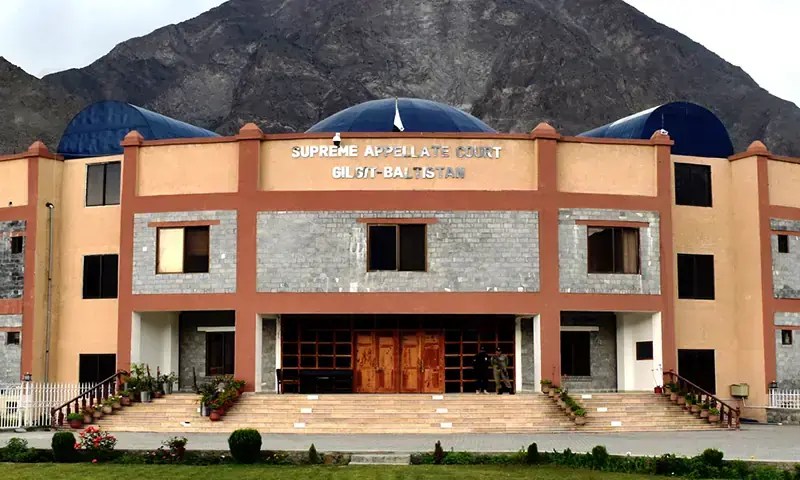
The Gilgit-Baltistan Supreme Appellate Court on Thursday disqualified PPP candidate Fida Muhammad Nashad for concealing assets in his election nomination papers, overturning a prior decision by the GB Chief Court that had permitted him to contest the polls.
Nashad’s nomination applications were initially rejected by the returning officer (RO), prompting him to challenge the ruling through an election tribunal, which upheld the RO’s decision. He later secured a stay from the GB Chief Court, which allowed him to participate in the June 7 elections. However, his opponent, Zakir Hussain, filed a petition challenging Nashad’s eligibility before the apex court.
Following the June general elections, Nashad was declared victor in constituency GBA-09 Skardu-III via Form 47 submitted by the GB Election Commission. On June 19, the Supreme Appellate Court temporarily suspended the election results pending review. After hearing arguments, the court formally disqualified Nashad, citing violations of Article 62(1)(f) of the Pakistan Constitution for asset concealment and statutory breaches.
The court nullified the GB Chief Court’s May 25 order, upheld the election tribunal’s decision, and directed the GB Election Commissioner to pursue legal action. The ruling underscores rigorous adherence to electoral transparency norms.
The PPP secured 12 of 24 assembly seats in the June polls but faced potential governance complications following Nashad’s disqualification. The party had previously announced plans to form a government with PML-N support, though the PML-N would occupy the opposition benches. Earlier this week, PPP-nominated Advocate Amjad Hussain was sworn in as GB’s chief minister.
Also Read
- African Investment Drive Aims to Eliminate Poverty and Foster Self‑Sufficiency
- UK Endures Third Consecutive Heatwave as Western Europe Braces for Climate Impact Costs
- Portuguese rapper jailed in Germany for drug trafficking deported to Portugal
- Citadel’s Ken Griffin Challenges Socialist Policies as Wall Street Migrates to Business-Friendly States


