



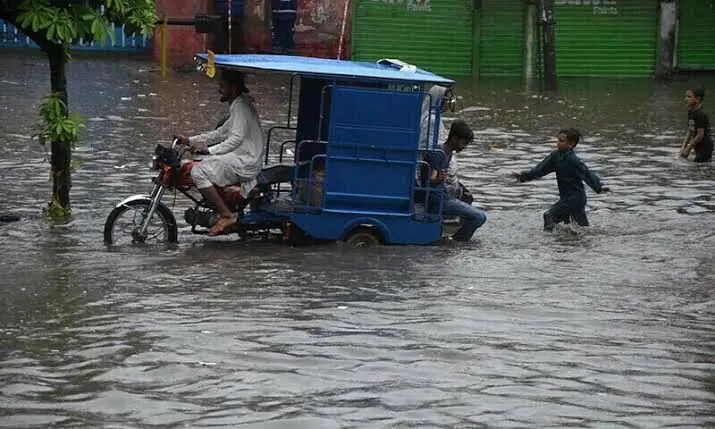
[h3]Heavy Rains Disable Lahore’s Infrastructure Amid Systemic Drainage Failures[/h3]
LAHORE: Prolonged monsoon downpours have plunged the provincial capital into chaos, with streets submerged under 2-4 feet of water and transit gridlocked by mobilized floodwaters. Emergency services confirmed relentless rainfall delivered
343mm of precipitation over 48 hours, triggering urban flooding alerts. According to PDMA officials, low-lying neighborhoods like DHA Phases 1-5 saw two-foot-deep inundation from Defence Mor to A Block Checkpost, paralyzing key routes including Maldabad Boulevard and the Masjid Chowk to Ghazi Chowk corridor.
Critical infrastructure failures amplified the crisis: Three massive sinkholes collapsed across Canal Road and Johar Town, while 154 flood-related injuries were reported. Over 21 monsoon relief camps remain operational as Wasa teams deployed 200+ surveillance cameras and real-time monitoring systems to prioritize drainage operations.
Over 130 identified water-logged sites triggered road closures, notably at Z Block interchanges and near frozen Creek lanes. Residents in Mall Road, Cooper Road, and Chouburji Chowk lobbed complaints about stagnant waters entering homes despite “round-the-clock” drainage claims. Social media footage documented submerged police barricades at Bheki Wala Chowk junction before authorities sealed half-mile cracked road segments.
Traffic Director Raheem Sherazi deployed emergency diversions through Z Block corridors while National Highways and Motorways Police blocked pedestrian access to flood-prone canal crossings. “This isn’t rain management—it’s urban collapse,” residents protested as Khayaban-i-Firdousi sinkhole barriers turned primary routes into detours.
Officials at Wasa control centers defended 21 operational monitoring stations, citing 30-second response protocols to 100mm+ disruptors. However, mortality data reveals 15 lightning fatalities and 3 electrocution deaths amid recorded 154 trauma cases across Punjab’s districts. Civil engineering audits show compromised gullies and 14-year-old sewer blockages as root causes of repetitive crises.
[‘h3’=’Heavy Rains Disable Lahore’s Infrastructure Amid Systemic Drainage Failures’,’p’=’LAHORE: Prolonged monsoon downpours have plunged the provincial capital into chaos, with streets submerged under 2-4 feet of water and transit gridlocked by mobilized floodwaters. Emergency services confirmed relentless rainfall delivered343mm of precipitation over 48 hours, triggering urban flooding alerts. According to PDMA officials, low-lying neighborhoods like DHA Phases 1-5 saw two-foot-deep inundation from Defence Mor to A Block Checkpost, paralyzing key routes including Maldabad Boulevard and the Masjid Chowk to Ghazi Chowk corridor.’,figure(data-original-src=’https://www.youtube.com/shorts/2EZEw_zcYy8′),’p’=’Critical infrastructure failures amplified the crisis: Three massive sinkholes collapsed across Canal Road and Johar Town, while 154 flood-related injuries were reported. Over 21 monsoon relief camps remain operational as Wasa teams deployed 200+ surveillance cameras and real-time monitoring systems to prioritize drainage operations.’,figure(data-original-src=’https://www.dawn.com/news/2016628′), ‘p’=’Over 130 identified water-logged sites triggered road closures, notably at Z Block interchanges and near frozen Creek lanes. Residents in Mall Road, Cooper Road, and Chouburji Chowk lobbed complaints about stagnant waters entering homes despite “round-the-clock” drainage claims. Social media footage documented submerged police barricades at Bheki Wala Chowk junction before authorities sealed half-mile cracked road segments.’,figure(data-original-src=’https://x.com/DCLahore/status/2080270159621836901′), ‘p’=’Traffic Director Raheem Sherazi deployed emergency diversions through Z Block corridors while National Highways and Motorways Police blocked pedestrian access to flood-prone canal crossings. “This isn’t rain management—it’s urban collapse,” residents protested as Khayaban-i-Firdousi sinkhole barriers turned primary routes into detours.’, ‘p’=’Officials at Wasa control centers defended 21 operational monitoring stations, citing 30-second response protocols to 100mm+ disruptors. However, mortality data reveals 15 lightning fatalities and 3 electrocution deaths amid recorded 154 trauma cases across Punjab’s districts. Civil engineering audits show compromised gullies and 14-year-old sewer blockages as root causes of repetitive crises.’]Also Read
- Heavy Rainfall Causes Widespread Travel Disruptions and Flood Damage in Gilgit‑Baltistan
- Africa: Xenophobia – Reps to Probe Nigerians’ Losses in South Africa
- Guidance on Seeking MODREC Approval for Human Research Studies
- Federal Prosecutors Face Hurdles Converting Noncitizen Voting Allegations Into Convictions