






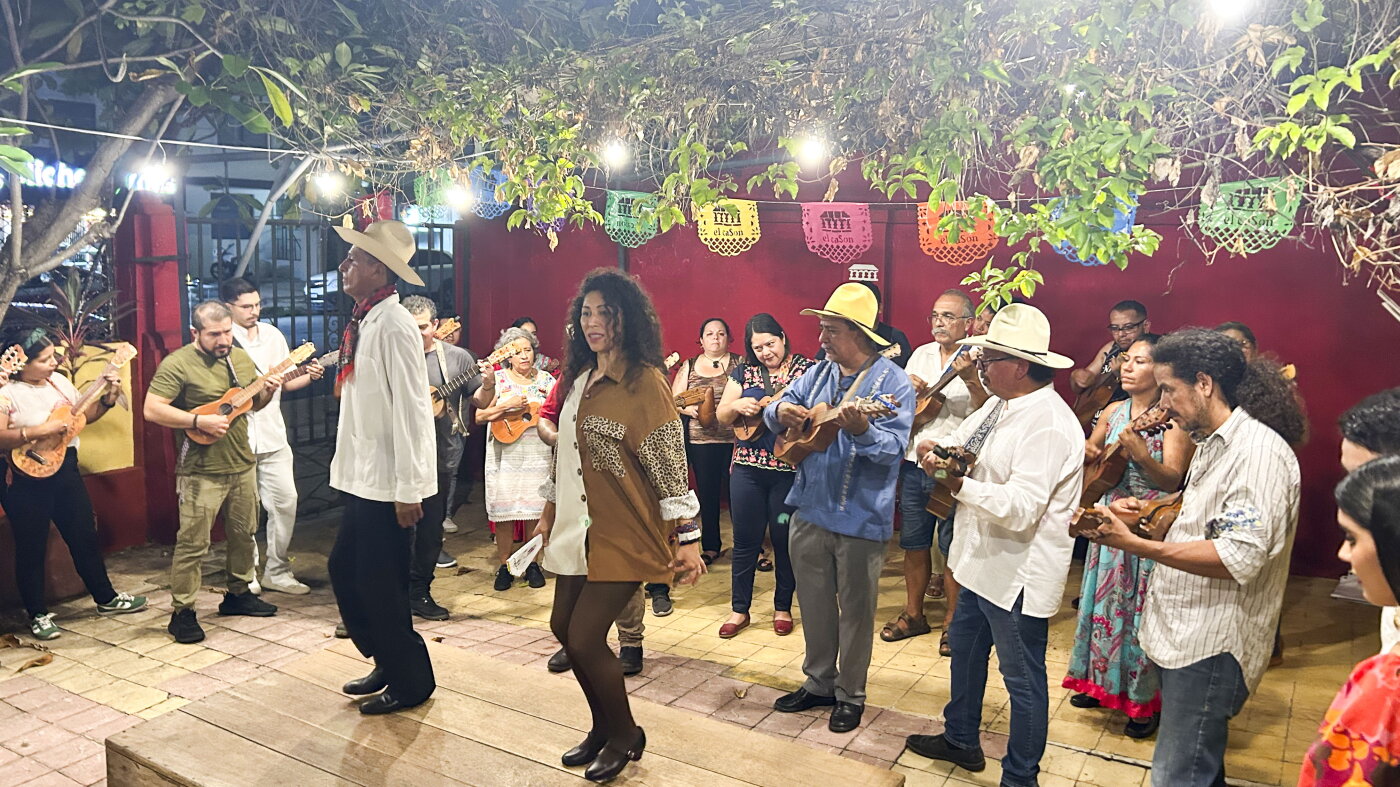

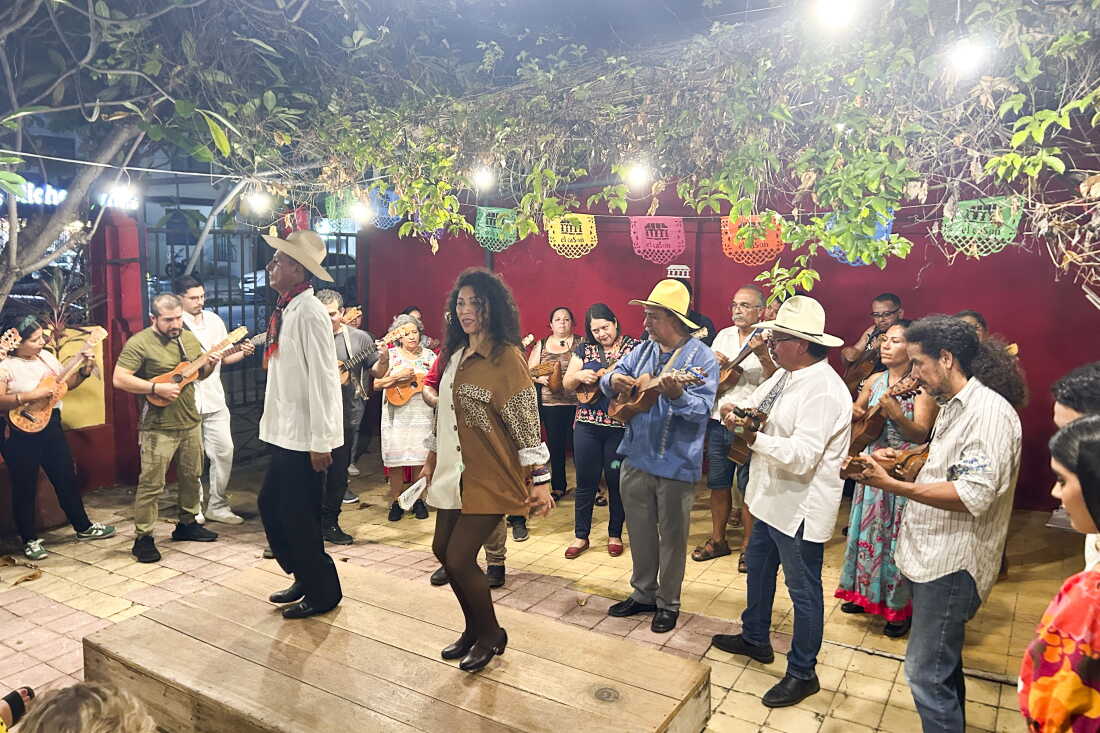
Jarana players join a lively jam session at a Veracruz fandango, where dancers pound rhythmic patterns with their heels on a wooden tarima.
John Burnett for NPR
hide caption
toggle caption
John Burnett for NPR
VERACRUZ, Mexico — The historic Gulf‑coast city of Veracruz takes pride in its musical heritage, marked by the hourly chime of “La Bamba” from the central plaza’s clock tower. This is not Ritchie Valens’ 1958 rock hit, but a centuries‑old melody that has echoed through the city’s sultry streets.
“It’s our hymn,” a longtime local musician observed.
“La Bamba” is the flagship tune of son jarocho, the traditional music of Veracruz. Performed at festive community gatherings known as fandangos—unrelated to the streaming service—these celebrations trace their roots to the diverse population that formed along the Gulf Coast after Hernán Cortés founded Veracruz as Mexico’s first port in the early 1500s.
The syncopated, exuberant folk style blends European, Caribbean, and Indigenous elements. While fandangos—where participants play instruments, sing, and dance—have existed for over three centuries, the genre is gaining traction worldwide.
For an authentic experience, however, one must travel to Veracruz.
Saturday night in mid‑August, the coastal heat still lingers. A couple dances on a wooden platform: the woman in a flowing floral dress, her skirt flaring with each heel strike; the man wears a traditional jarocho straw hat and a sweat‑drenched tropical shirt. Nearby, a man in a black T‑shirt and shades plays a quijada— a donkey’s jawbone—scraping its teeth and striking the mandible to create a rattling percussion.
Patrons sip ice‑cold Mexican beer and savor tamales wrapped in banana leaves. As the evening progresses, audience members join the original trio of musicians, turning the gathering into a sprawling jam session. The instruments include a diminutive, eight‑string guitar unique to the region known as a jarana.
Soon, two dozen jarana players are strumming the melody, and the three‑chord song continues in a trance‑like state for roughly fifteen minutes.
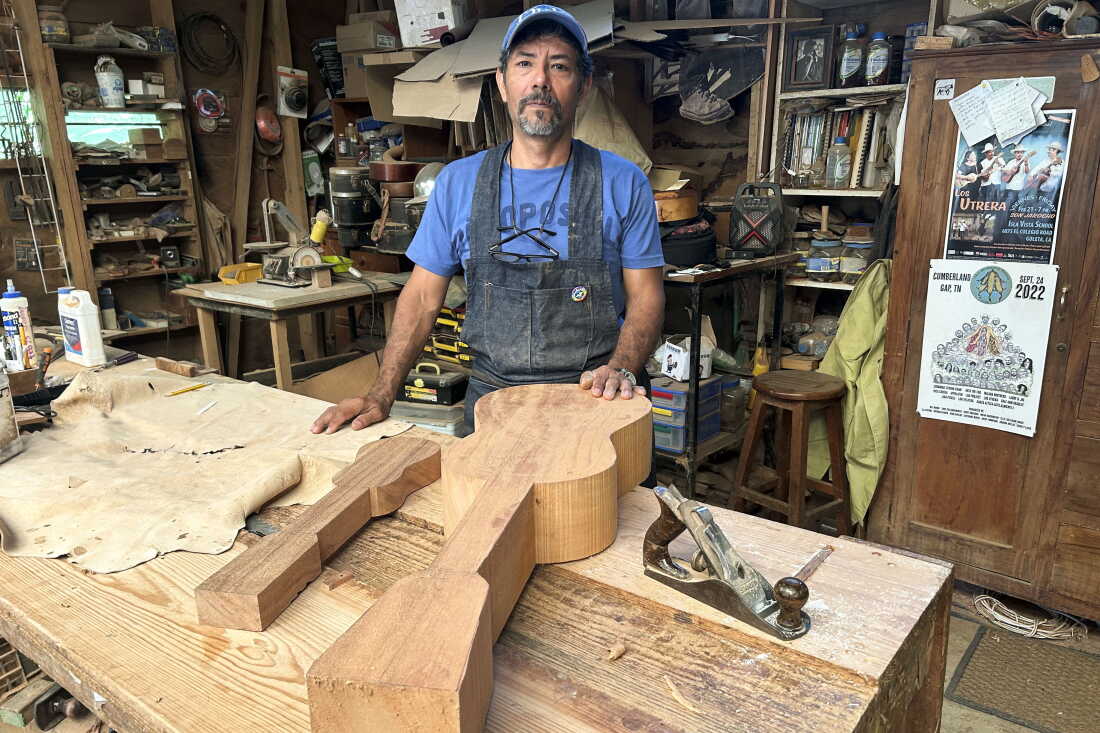
Tacho Utrera is a Grammy‑winning jarocho musician and a celebrated luthier. He crafts the region’s iconic eight‑string jarana from a single block of Spanish cedar, preserving centuries‑old techniques.
John Burnett for NPR
hide caption
toggle caption
John Burnett for NPR
“Fifteen minutes is nothing,” said Tacho Utrera, a Grammy‑winning jarocho musician and instrument maker. “In Tlacotalpan, where the largest fandangos I’ve witnessed can feature up to 80 musicians, La Bamba and the dancing can continue for an hour. The performance and the changing dancers create an endless, immersive experience.”
During the 1960s and 1970s, son jarocho and its associated fandangos fell out of favor, regarded as low‑brow music akin to delta blues played in Mississippi juke joints.
“Even then, fandangos persisted but as small family gatherings,” recalled Gilberto Gutierrez, a luminary of son jarocho and co‑founder of the influential group Mono Blanco. “People described son jarocho as the music of drunkards; many of us either set aside our instruments or headed to Mexico City for work.”
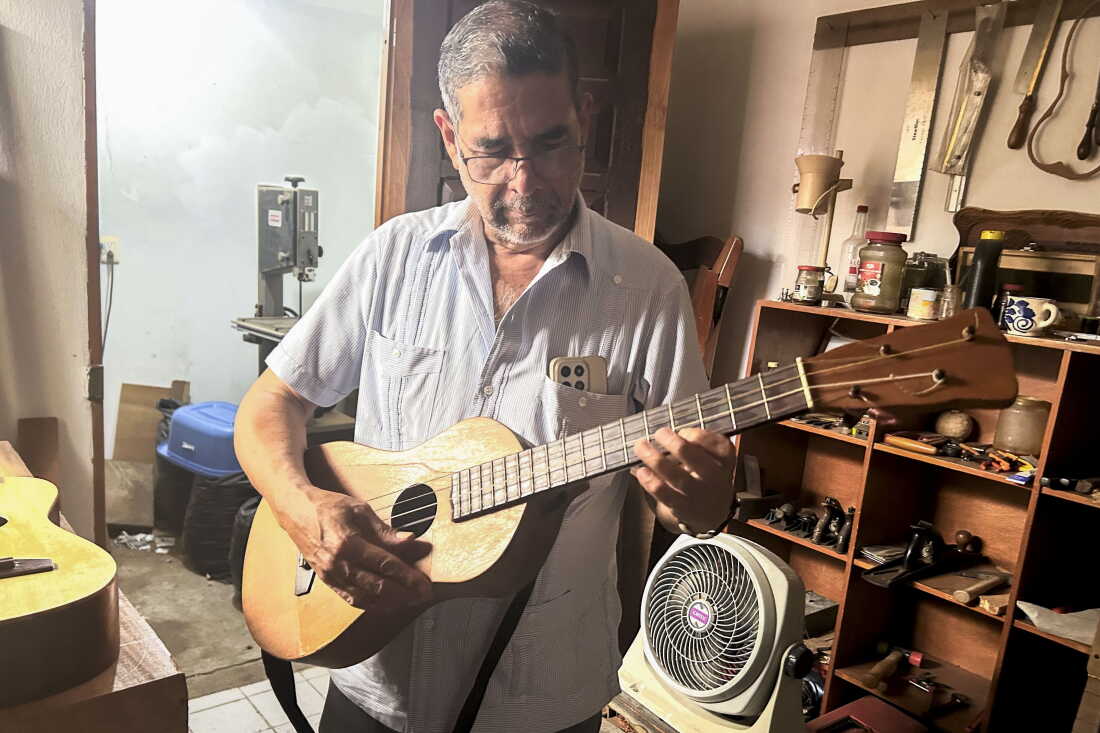
In his Veracruz workshop, Gilberto Gutierrez stands as a towering figure in son jarocho, renowned for crafting instruments and for founding the El caSon Cultural Center.
John Burnett for NPR
hide caption
toggle caption
John Burnett for NPR
Today, as societies worldwide seek authenticity, originality, and cultural soul, son jarocho flourishes. In Veracruz, fandangos are staged every weekend for baptisms, birthdays, wakes, saint’s festivals, and simply to celebrate life itself.
The Saturday night fandango, organized monthly by the El caSon Cultural Center—marking its 25th anniversary this year—is a legacy project founded by Gilberto Gutierrez.
“Fandangos thrive because they bring together musicians, dancers, singers, and cooks who share a communal spirit,” explained Gutierrez. “Humanity craves connection; we all need to belong to something. That is why fandangos have spread far and wide.”
Today, son jarocho resonates far beyond Veracruz, performed in Mexico City, Buenos Aires, Madrid, Helsinki, Berlin, Zurich, Copenhagen, Paris, Tokyo, Toronto, and U.S. cities with sizable Latino communities such as Los Angeles and New York.
A crucial element of the tradition is el zapateo, the percussive footwork that serves both as a performance art and as rhythmic accompaniment for the string players. The wooden platform on which dancing occurs is known as a taríma.
“Stepping onto a taríma is an act of respect and mastery—you must know how to dance,” said Ada Veronica, a high‑school teacher from Puebla with two decades of experience. “One should not ascend without proper skill.”
The jarocho music and dance workshops at El caSon fill quickly. Even as young Mexicans gravitate toward genre‑blending sounds such as reggaeton and corridos tumbados, they are also flocking to fandangos.
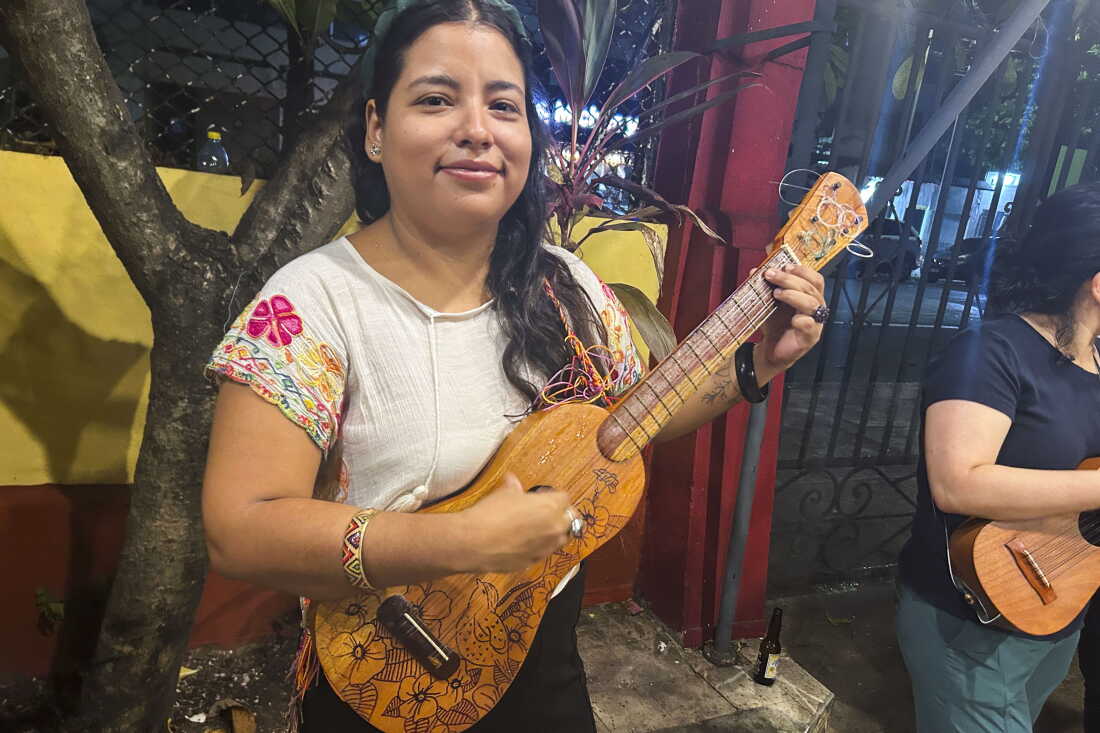
Paloma Rizo, an amateur jarana player, describes the fandango: “You simply feel it, you live it.”
John Burnett for NPR
hide caption
toggle caption
John Burnett for NPR
“You simply feel it, you live it,” said Paloma Rizo, a 28‑year‑old teacher who picked up the jarana earlier this year. She was at the fandango, playing with great passion.
“Even if people are unfamiliar with fandango,” she continued, “they still want to join. Watching the dance and the music calls you and invites you in.”
Several Veracruzanos describe the atmosphere of a fandango as convivencia. While literally meaning “coexistence,” in this context it conveys “being alive together.”
“To dance La Bamba, to dance La Bamba you need a little grace, a little more grace and another thing, and up and up…
Also Read
- Forget High Potential, Hulu Is Officially Adding 5-Part Detective Series Adaptation At The Perfect Time
- Saturday Night Live UK Parodies Oasis as Russian Spies in Andy Burnham Sketch
- Documentary on Beyond Legend Wong Ka Kui to Headline U.K.’s Odyssey Film Festival
- ‘Big Boys’ Creator Jack Rooke Sparks Excitement with Upcoming Spice Girls Comedy Biopic


