







The written word is one of humanity’s most vital information technologies. Without it, mathematical and scientific discoveries would be lost to the ages. Yet, writing can also lock ideas in place long after they have ceased to make sense. So, does writing speed up cultural change or slow it down?
Russell Gray, a professor in the Department of Linguistic and Cultural Evolution at the Max Planck Institute for Evolutionary Anthropology in Germany, heads a research project investigating how writing affects the way languages change. His team uses methods borrowed from evolutionary biology to trace languages through family trees—similar to the way biologists trace species.
Language is one element of culture that researchers can measure to determine whether writing speeds up or slows down cultural change. “The obvious answer,” Gray said, is that writing slows culture down because writing “is all codified and specified and people get trained in it.” Gray doesn’t think the obvious answer is necessarily the right one. But other researchers agree that writing can lock in ways of thinking.
“Writing can lead to what learning psychologists sometimes call ‘canalization,'” Charles Perreault, an associate professor in the School of Human Evolution and Social Change at Arizona State University, told Live Science in an email. “It can narrow the range of ways people think about a problem. When a rule, method, or story is written down, people may come to see it as the correct version … and may not even consider that a better or different way could exist.”
Religious texts and legal codes are prime examples. In both cases, the interpretation of rules written hundreds—or even thousands—of years ago shapes the way things are done, long after the circumstances that produced them have changed.

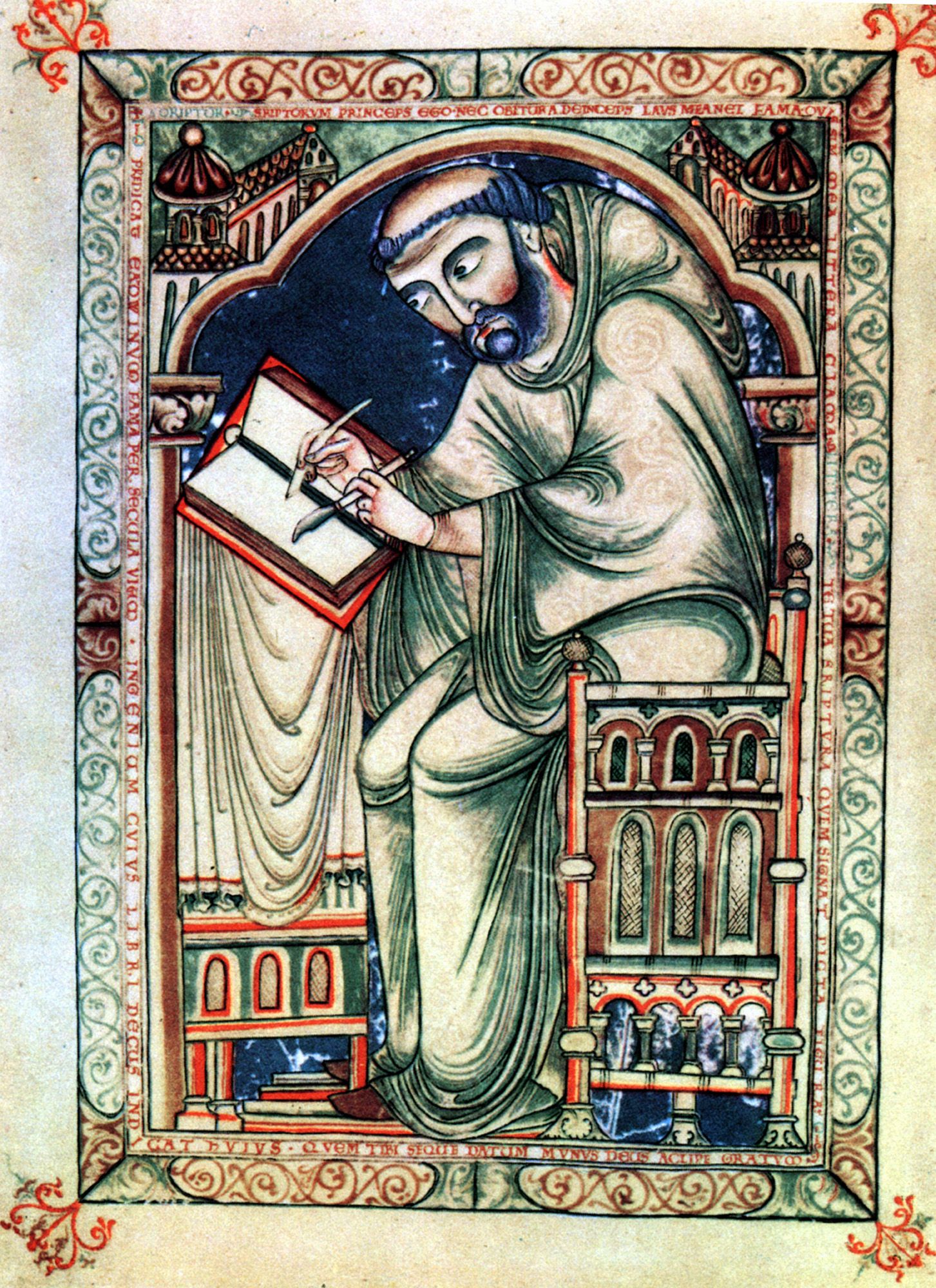
This idea shows up in artistic expression, too: A 2017 analysis by ethnomusicologist Patrick Savage looked at more than 4,000 British-American ballads from the 16th through 20th centuries and found that written melodies changed less than those shared through oral tradition.
But there are also ways that writing may speed up cultural change. “Before writing, much cultural knowledge had to be stored in people’s brains,” Perreault said. “That has obvious limits.” People forget things they don’t study routinely, and when people die, their knowledge often dies with them. Because writing moves information storage beyond the human brain, it can reduce those losses, Perreault said.
“If writing prevents knowledge from being lost, and if it also helps information spread through a society, as with the printing press, then it could accelerate the ratchet effect of cumulative cultural evolution,” Perreault said. “But this remains, to some extent, a hypothesis.”
By the book
One reason the question of whether written language speeds or slows cultural evolution is that writing is hard to separate from everything that comes with it. Writing has been separately invented only around four times in human history—although “some people argue there’s a fifth in India,” Gray said—which means nearly every writing system on Earth descends from that handful. Those systems spread through contact; trade, war, religion and the other ways humans intermingle had their own effects on cultural change that are hard to untangle from the effects of writing.
Also, “mass literacy is quite recent,” Gray said. “If you’ve got these written varieties that are just used by, often, religious elites, that’s potentially going to have much less impact.”
So which force wins? Both experts think writing speeds up cultural change, though neither can prove it yet. “I would say that writing probably speeds up cultural change overall,” Perreault said. Gray agreed, though he acknowledged that most people would guess the opposite. Still, Perreault cautioned, “these are empirical questions that have yet to be answered empirically.”
Also Read
- 2026 Singapore Grand Prix: Complete Viewing Guide for F1’s Historic Night Sprint Weekend
- Elon Musk escalates feud with Mukesh Ambani over Starlink’s India rollout
- US Kindergarten MMR Coverage Slides Below Herd Immunity Threshold Amid Record Exemption Rates
- All Blacks Host Wallabies in 2026 Bledisloe Cup Opener at Eden Park


