



On November 4, 1956, Soviet troops and tanks entered Hungary, crushing a popular anti‑Communist uprising. The invasion ushered in a period of authoritarian rule sustained by a repressive secret police.
The events of Nov. 4 this year mark a long‑overdue reckoning with that dark chapter in Hungarian history.
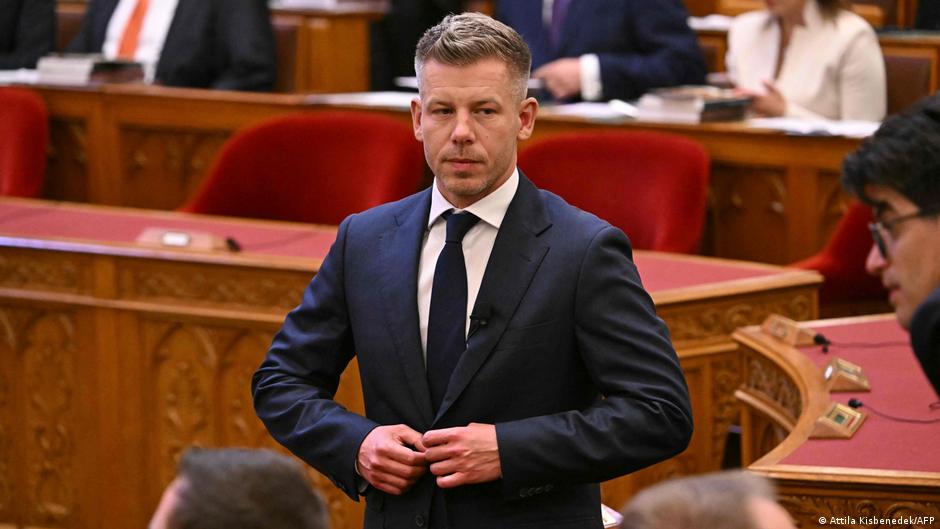
Prime Minister Péter Magyar’s government has ordered the full disclosure of the secret police’s “agent files,” which list the names of informants who either volunteered or were unwittingly used by the state security service.
Magyar and his Tisza party had pledged to make the files public if elected. Their release represents a historic break after more than three decades of debate, and is expected to reignite discussion about responsibility for Communist‑era actions.
Release opposed for years
Civil‑rights activists and smaller parties have demanded the files’ release for years. Since the fall of the Berlin Wall in 1989 and the end of Soviet domination, calls for transparency have been repeated throughout the ensuing decades.
However, Hungary’s first post‑Communist prime minister, József Antall, and later Viktor Orbán’s Fidesz party opposed the move. Fidesz voted against opening the files more than 30 times after 2010, according to the Hungarian news outlet Telex.
A limited set of files was made available in the 1990s after Parliament passed the “agents law” in 1994. The legislation required government officials, legislators and certain civil servants to undergo background checks to determine if they had served in the former state security apparatus.
Since 1997, Hungarian citizens could inspect their own records, and permissions were broadened in 2003. Nonetheless, the names of other informants remained hidden from the public.
The law’s wording allowed broad interpretation, enabling agencies such as the Ministry of the Interior to block transfers of secret‑police records to the Hungarian State Security Historical Archives (ABTL) if they judged it a threat to national security.
These selective releases not only kept the truth about the secret service from Hungarian society but also allowed the files to be weaponised in political battles, for instance by leaking compromising information about politicians.
Political fallout expected
Magyar’s government is ending that secrecy. Starting Nov. 4, comprehensive databases containing names and key details of informants will be accessible online.
Additional databases are also being prepared, including one of the largest collections of individuals recruited by the Hungarian state security agency. Confidentiality clauses from the old “agents law” have been relaxed, meaning many more files are likely to become available in the future.
The forthcoming release of data on up to 60,000 of an estimated 150,000 informants could have major political repercussions. ABTL director Bendegúz Gergő Cseh warned, however, that “you can’t believe everything the state security agencies and their files claim.” He noted that many documents were incomplete, unreliable, and that several files had been destroyed.
Historian János M. Rainer, an expert on Hungary’s dictatorship, told Telex that publishing the files immediately after the regime’s collapse would have been more meaningful. He described the current release as largely symbolic.
In contrast, historian Krisztián Ungváry, who has studied the secret‑police archives extensively, welcomed the move. He said it will enable new scholarly research and fresh public debate, arguing that “societal lies inevitably strain the relationship with politics, and the price we paid for that was 16 years of Fidesz rule.”
Political reckoning
For Magyar, making the files public is a matter of profound importance. He frequently emphasizes the need to confront the legacy of the past, particularly the years of Orbán’s rule.
When Parliament amended the law governing the files in mid‑September, Magyar posted on Facebook: “After a 36‑year delay, the Hungarian parliament today decided, at the initiative of Tisza, to make the ‘agent files’ public. Fidesz did not support the motion. I wonder why?”
The remark alluded to the fact that many senior Fidesz figures and members of Orbán’s inner circle were former members of the Hungarian Communist Party or the secret police.
The most prominent example is József Horváth, a former full‑time operative in the department that suppressed domestic opposition.
During Orbán’s tenure Horváth served as an intelligence officer and security adviser. In 2024 he became research director of Orbán’s Sovereignty Protection Office, an agency that targeted perceived enemies as “foreign agents.”
Also Read
- US Midterms Deliver a Divided Verdict: Five Takeaways on Democracy, Party Futures, and Global Impact
- Wayfair sales jump 10% as furniture retailer says it’s winning share of sluggish market
- Bodycam Footage Captures Deadly Russian Double-Tap Strike on Ukrainian Village
- Democratic Midterm Victory Ushers in Uncertain Era for U.S.-Israel Relations