






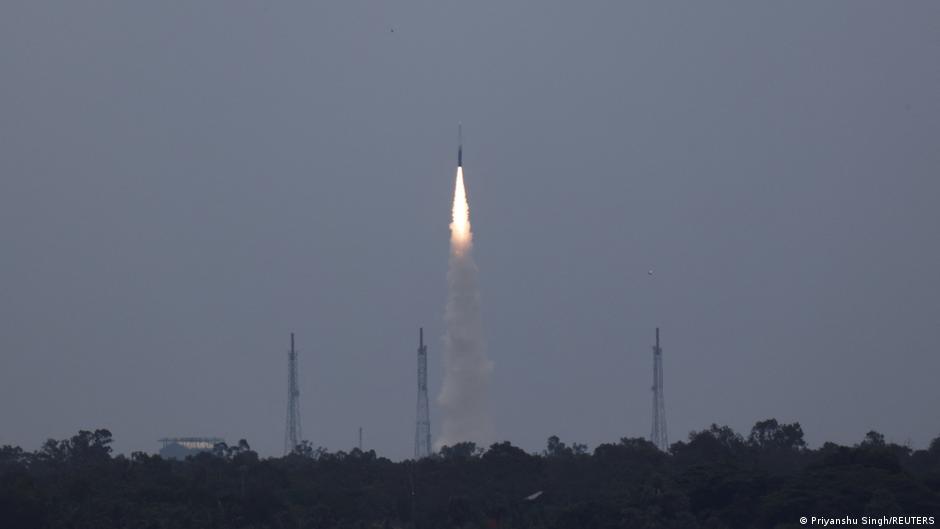
India’s first privately developed orbital rocket lifted off on Saturday, a feat Prime Minister Narendra Modi praised as “opening new frontiers and accelerating innovation.”
The South Asian nation becomes the third country—after the United States and China—to reach this milestone, following a surge of investment in the space sector since the pandemic and the emergence of more than 400 startups.
What happened?
Skyroot Aerospace, the builder of the Vikram‑1, said the rocket launched from the Satish Dhawan Space Centre on Sriharikota island in Andhra Pradesh.
The launch, named “Mission Aagaman” after the Hindi word for “arrival,” took place at 06:35 UTC (11:05 a.m. local time).
“Hello space, we have arrived!” the company posted on X. “Vikram‑1’s Test Flight‑1 has completed its mission. The first‑ever Indian private‑sector launch has been successfully completed.”
In a separate statement, Skyroot called the launch a “grand success,” adding that additional test flights will precede routine commercial operations.
The Vikram‑1 stands about 22 metres (72 feet) tall and can lift payloads of up to 350 kilograms (711 pounds) into low‑Earth orbit.
Skyroot said the rocket carried several experimental payloads from Indian and international customers, including a lab‑grown diamond and robotic arms designed to remove space debris.
The mission aimed to validate the rocket’s propulsion, avionics, telemetry and guidance systems in flight while gathering data for future commercial launches.
Modi congratulated the team on X, describing the event as a “defining moment in India’s space journey.”
“The growing participation of our private sector is opening new frontiers and accelerating innovation. This achievement will inspire countless youngsters to dream bigger and innovate fearlessly,” he added.
A smaller predecessor, Vikram‑S, completed its first sub‑orbital flight in 2022.
Yogita Shah’s journey from a small Indian town to NASA
To view this video please enable JavaScript, and consider upgrading to a web browser that supports HTML5 video
India’s growing role in private space sector
India opened its space sector to private investment in 2020, allowing startups to develop rockets, satellites and launch services.
These activities were previously the sole domain of the government’s ISRO space agency.
In August 2023 India became only the fourth nation to land an unmanned spacecraft on the Moon, after Russia, the United States and China.
The government aims to increase its share of the global space economy fivefold from the current 2 % to reach a valuation of $44 billion by 2033, according to the agency IN‑SPACe.
Skyroot is one of hundreds of Indian space startups that have attracted global funding; earlier this year the Hyderabad‑based firm became the first in the country’s space sector to achieve a $1 billion valuation.
ISRO meanwhile reported concerns this week about a brain drain of scientists moving from the state agency to private companies.
The global private‑space race is intensifying, with governments across Europe and Asia seeking a share of the market dominated by Elon Musk’s SpaceX.
Competitors include China, Japan, South Korea, Germany, France and the Netherlands.
Edited by: Saim Dushan Inayatullah


