


-(1).jpeg?w=1024&resize=1024,1024&ssl=1 "McCullum Prioritizes Ben Stokes’ Well-being Amid Captaincy Uncertainty")





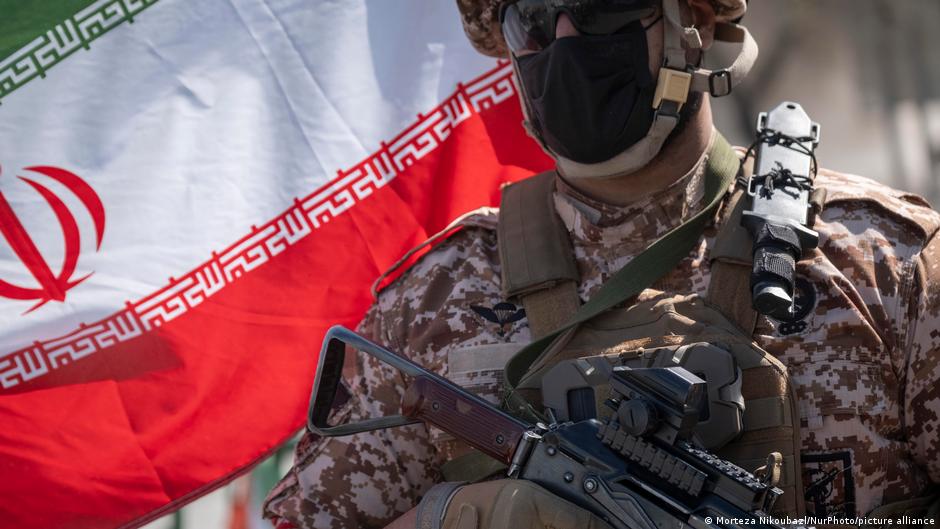
Iran analysts are intensifying debates over whether the Islamic Republic is approaching a pivotal shift—from a theocratic regime to a state where military forces wield decisive authority.
The Islamic Revolutionary Guard Corps (IRGC), initially formed in 1979 to safeguard the Islamic revolution, has evolved into a multifaceted economic and political powerhouse over time.
Through its affiliated entities, the IRGC controls approximately half of Iran’s oil revenues, as per estimates, alongside extensive holdings in construction, telecommunications, and export sectors valued in billions of dollars.
The shift has progressed over decades, though the ongoing Iran war has expedited its acceleration since February 28, 2026.
“Amid the state of emergency triggered by the war’s onset on February 28, 2026, the country’s strategic and operational command has officially transferred to war headquarters and senior generals,” stated Faraj Sarkohi, a political analyst based in Germany.
Sarkohi clarified that this does not equate to a strict military dictatorship, as the Islamic Republic’s foundation remains rooted in Velayat-e Faqih doctrine and clerical oversight.
Mojtaba’s Appointment: A Symbolic or Strategic Power Move?
Following the death of Supreme Leader Ali Khamenei in an Israeli strike on February 28, Iran’s Assembly of Experts, under perceived IRGC influence, selected his son Mojtaba as the new supreme leader.
Iran elects Khamenei’s son as supreme leader
To view this video please enable JavaScript, and consider upgrading to a web browser that supports HTML5 video
Observers interpret this decision as a consolidation of power within security institutions.
Damon Golriz, a researcher at The Hague Institute for Geopolitics, views Mojtaba’s appointment as a definitive moment in Iran’s political realignment.
“The elevation of Mojtaba Khamenei as supreme leader underscores that political arithmetic and power dynamics—rather than religious legitimacy—now dominate Iran’s governance,” Golriz emphasized.
Mojtaba Khamenei, a 56-year-old cleric with limited senior religious or electoral experience, represents a calculated choice rather than a grassroots mandate.
“His selection prioritizes connections over qualifications,” Golriz noted. “He may hold the title of leader, but in practice, he is undermining the office’s substantive role.”
The IRGC’s Deep-Rooted Network of Control
Mojtaba Khamenei’s links to the security establishment began in 1987 when he joined the Revolutionary Guard during the Iran-Iraq War, serving in the Habib Ibn Mazahir Battalion under the IRGC’s 27th Mohammad Rasoul Ollah Division.
This unit became the foundation for a network that over decades evolved into the IRGC’s core intelligence and leadership cadre.
This barracks-centric network has operated as an extended branch of the Supreme Leader’s Office for two decades.
Golriz highlighted that since 2009, Mojtaba has directly managed commanders and mobilized the Basij militia—a paramilitary group within the Revolutionary Guards that suppressed mass protests—thereby strengthening ties with power centers.
“While President Masoud Pezeshkian holds formal executive authority, real influence resides with Mojtaba Khamenei and a new generation of military-security figures,” Golriz asserted.
“Under a clerical veneer, power has shifted from theological institutions to military bases. Mojtaba provides ideological justification, while the Revolutionary Guard executes governance.”
Economic Straits Spark Fresh Unrest
Simultaneously, Iran’s economic crisis threatens to fuel mass protests, regardless of structural changes to the ruling system.
The International Monetary Fund forecasts a 6% economic contraction in 2026 alongside 68.9% inflation—a combination that has drastically eroded the living standards of workers and wage earners.
“The regime has lost its ideological grip for years,” Sarkohi remarked, stressing the growing societal divide between leadership and the population.
Golriz reinforced this with quantitative analysis.
“Around 80% of Iranians reject this system. Today’s Iran, with a median age under 35, is a post-revolutionary society that has spent over a decade resisting this political order,” Golriz stated.
“The unprecedented violence against peaceful protesters in January 2026 has irreparably fractured any remaining social compact between rulers and citizens.”
Sarkohi warned of an “inevitable resurgence of spontaneous uprisings,” noting that the regime’s state institutions themselves anticipate renewed civil unrest.
He further identified organized social movements—including teachers, laborers, students, and women’s groups—as potential catalysts for change.
Repression vs. Political Realignment
Both analysts concur that the regime’s new military-religious hybrid model cannot sustain its previous governance practices.
Sarkohi forecasts that even a temporary détente with the U.S. would compel the regime to concede on social policies like the hijab mandate while maintaining repression against dissent.
Golriz envisions a distant but possible scenario involving national reconciliation.
“A genuine civilizational reevaluation—a transparent dialogue aiming to transition Iran from revolutionary utopianism to normalcy—could bring peace to both its populace and international relations,” Golriz suggested.
However, he acknowledges the path’s challenges, citing the absence of a unified, credible opposition representing broad societal demands.
Golriz concludes that the Islamic Republic’s outdated model—marked by corruption, repression, and ideological coercion—is becoming obsolete.
“The mullahs won’t vanish overnight, but their political relevance is inexorably declining,” Golriz concluded.”
Also Read
- Pakistan Stock Exchange Hosts Gong Ceremony Celebrating CPEC Milestones and SLM IPO Success
- FIFA plans to organize match between Israel, Palestine during September U-15 tournament – report
- Germany Thrashes Curaçao 7-0 in World Cup Debut Match
- Fox Acquires Roku in $22 Billion Deal: Key Details for Investors


