






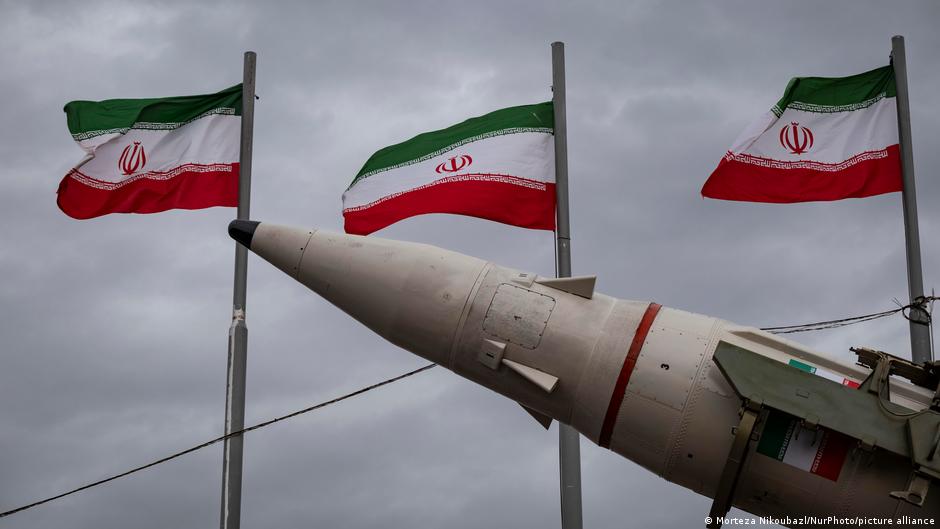
Iran’s nuclear program is currently navigating one of the most volatile and critical chapters in its history.
Deepening uncertainties surround Tehran’s stockpile of uranium enriched to 60% and the International Atomic Energy Agency’s (IAEA) increasingly restricted oversight of Iranian nuclear facilities. Nevertheless, diplomatic avenues still appear to remain on the table.
In a recent interview with US broadcaster Fox News, Iranian President Masoud Pezeshkian indicated that Tehran might be willing to dilute its enriched uranium stockpile and open its nuclear program to international inspections, provided a comprehensive deal is finalized under the auspices of international law and the landmark Treaty on the Non-Proliferation of Nuclear Weapons (NPT).
Conflicting signals from Tehran
Despite Pezeshkian’s diplomatic rhetoric, statements from military and political figures in Tehran suggest a far more confrontational trajectory.
Mohsen Rezaei, secretary of Iran’s Supreme National Security Council, stated that hostile actions by the US and Israel have created legitimate grounds for Iran to withdraw from the NPT, though he emphasized that no final decision has been made, according to Press TV, the Iranian government’s primary English-language broadcaster.
On September 19, British newspaper The Daily Telegraph, citing satellite imagery, reported that Iran was actively constructing new facilities and rebuilding those previously damaged.
These sites include “Taleghan 2” at the Parchin complex southeast of Tehran, as well as a subterranean complex burrowed beneath Pickaxe Mountain near Iran’s nuclear facility in Natanz.
Both locations were previously targeted in airstrikes during the US-Israel war with Iran, a conflict designated as Operation Epic Fury by the Pentagon and Operation Roaring Lion by Israel.
Their reported reconstruction has intensified speculation that critical equipment and enriched uranium may have been relocated deeper underground.
Washington has maintained an unyielding position. Speaking at the UN General Assembly on September 22, US President Donald Trump declared: “I will never allow Iran to have a nuclear weapon.”
Can diplomacy still succeed?
Access to military sites and the scope of IAEA inspections have long stood as among the most contentious obstacles in negotiations over Iran’s nuclear program.
The 2015 nuclear agreement, known as the Joint Comprehensive Plan of Action (JCPOA), imposed stringent restrictions on Iran in exchange for sanctions relief, aiming to prevent the development of nuclear weapons.
However, provisions allowing inspections of military sites faced persistent criticism from opponents in Washington—a backlash that ultimately contributed to the US withdrawal from the JCPOA under Donald Trump in 2018.
John Bolton, former US national security adviser and former US ambassador to the UN, told DW that diplomatic efforts and past agreements on Iran’s nuclear program are merely a “cover for an unalterable strategy pursued by Tehran.”
Arguing that Iran’s weapons program was “never” truly halted, Bolton highlighted the structural limitations of international institutions, noting that “the IAEA never had access to Iran’s military bases, where critical components related to weaponization take place.”
Regarding the legal implications of a potential Iranian withdrawal from the Non-Proliferation Treaty, Bolton argued that Iran has been in violation of the NPT for more than three decades, rendering a formal withdrawal largely symbolic in practical terms.
“The only long-term path to achieving peace and security in the Middle East,” Bolton emphasized, “is the overthrow of the regime in Tehran.”
Conflict hardens Tehran’s nuclear stance
Amid the US-Israel war with Iran and the subsequent restructuring of Tehran’s command structure following the death of former Supreme Leader Ali Khamenei, fresh developments have emerged.
Trump threatens to ‘annihilate’ Iran if no deal is reached
To view this video please enable JavaScript, and consider upgrading to a web browser that supports HTML5 video
The IAEA Board of Governors referred Iran to the UN Security Council on September 9 over alleged breaches of its non-proliferation obligations.
Meanwhile, the 60-day period for technical talks with the United States under the so-called Islamabad Memorandum of Understanding, which extended a ceasefire between the two sides, expired in mid-August.
Damon Golriz, a political analyst and lecturer at The Hague University of Applied Sciences, argues that, contrary to Donald Trump’s view of his legacy in dismantling Iran’s nuclear capabilities, a nuclear-armed Iran would ultimately prove to be “the greatest foreign policy legacy of Donald Trump’s presidency.”
Reflecting on the military developments of 2026 and the killing of Khamenei in an Israeli air strike, Golriz said: “In February 2026 Tehran faced an existential war.”
“The campaign entombed its nuclear facilities and decapitated its key weapons scientists, along with at least five tiers of Iran’s top military and security establishment,” Golriz added.
“Israel’s killing of the supreme leader settled a fundamental security question: Has Ayatollah Khamenei as the main constraint on Iran’s nuclear bomb become obsolete?”
Golriz suggests that it was specifically the audacity shown in the targeting of Iran’s leadership that upended the country’s national security thinking, thereby “strengthening calls to reassess its nuclear doctrine.”
Testing Tehran’s religious rhetoric on nukes
The official religious decree, or fatwa, banning the production and stockpiling of nuclear weapons has long served as a cornerstone of Tehran’s diplomatic rhetoric, underpinning its claims that the nuclear program is peaceful in nature.
First cited by Iranian officials in the mid-2000s, the fatwa was reaffirmed by Khamenei in 2019, when he declared that the production and stockpiling of nuclear weapons is forbidden.
Has Iran war harmed nuclear nonproliferation efforts?
To view this video please enable JavaScript, and consider upgrading to a web browser that supports HTML5 video
However, amid political developments in Tehran and Mojtaba Khamenei’s silence on reaffirming this fatwa since becoming the new supreme leader, questions have been raised as to whether this religious red line remains intact or has given way to new security considerations.
Thim Bosch, CEO of the Birdwatcher Group and a former senior intelligence officer with the Dutch General Intelligence and Security Service (AIVD), pointed to the significance of this silence alongside rhetoric from military figures in Tehran.
Bosch told DW that there is no definitive proof of a formal change in Tehran’s nuclear doctrine.
“However, those opposed to acquiring nuclear weapons in Tehran are now far weaker, and given Mojtaba Khamenei’s silence in reiterating his father’s fatwa, this observation carries significant weight,” he said.
In December 2024, the IAEA assessed that Iran was the only country without a nuclear bomb to possess uranium enriched to 60%, while warning Tehran was “dramatically accelerating” enrichment. A purity of 90% is needed to produce nuclear weapons.
However, with the IAEA barred from inspections, it is anyone’s guess as to how far along Iran currently is.
“If the world’s nuclear watchdog cannot observe enriched uranium, no intelligence agency can honestly claim to know whether Iran has made the final decision to build a bomb,” Bosch said.
“Those who claim with absolute certainty that ‘they have made their decision’ are either bluffing or mostly advancing their own political agendas: hardliners in Iran on one side, and hardliners in Israel and the United States on the other,” he added.
Edited by: Keith Walker
Also Read
- Midday Market Movers: Rogers Earnings Beat, United Therapeutics Patent Win, Moderna Downgrade Among Notable Shifts
- 7 Critical Physical Risks Every Brick-and-Mortar Business Owner Must Prepare For Before Opening Day
- UK Government Scraps France Migrant Return Agreement in Shift from Small Boat Policy
- Stocks Climb on Signs of Lower Inflation and Stronger US Growth


