






Has the fragile US-Iran ceasefire collapsed?
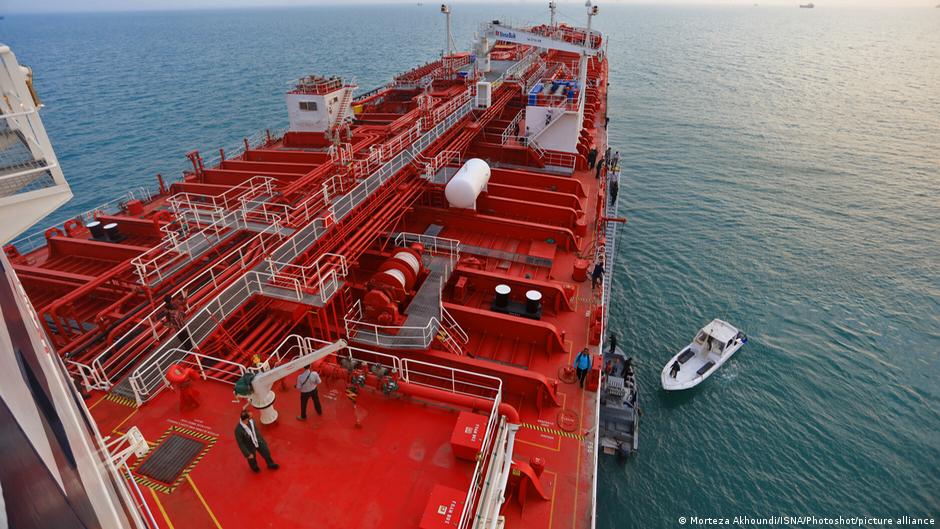
Recent hostilities have reignited tensions following Iran’s attacks on multiple commercial vessels in the strategically vital Strait of Hormuz, according to coordinated US and maritime intelligence reports.
The incidents, targeting a Saudi oil carrier and a Qatari liquefied natural gas transport ship, led the United States to terminate a temporary sanctions exemption previously granted to Iranian petroleum exports.
This pivotal reversal of the March 2026 memorandum of understanding deprived Tehran of its ability to resume oil exports that had been suspended under a US military blockade.
In direct retaliation, US Central Command (CENTCOM) announced a series of precision strikes against Iranian military infrastructure, including air defense networks, surveillance systems, and over sixty IRGC-launched coastal vessels engaged in maritime harassment operations.
CENTCOM emphasized its intent to “inflict significant consequences for attacks targeting civilian shipping in internationally protected waters.”
Iran retaliated by executing coordinated missile assaults against Gulf Cooperation Council states on Wednesday, with confirmed impacts reported in Bahrain’s capital Muscat and Kuwait’s coastal regions.
Maritime security analytics firm MARISKS issued a critical advisory Wednesday, characterizing the renewed hostilities as “a decisive shift toward open military engagement.”
Addressing the escalating crisis ahead of the NATO summit in Turkey, US President Donald Trump declared the Iran nuclear agreement “defunct,” stating, “It’s fundamentally a transactional relationship that shouldn’t be sustained.”
China and Kuwait have jointly urged immediate de-escalation measures, while German Defense Minister Boris Pistorius explicitly called on Tehran to suspend violent actions against commercial vessels.
Why is Iran again focusing on Hormuz?
Iran maintains that controlling the Strait of Hormuz – which handles approximately 20% of global oil and gas trade – is essential for regional influence and economic stability.
The crisis re-emerged after February 28’s US-Israeli strikes that eliminated key Iranian military figures, including Supreme Leader Ali Khamenei. Iran responded with a series of maritime attacks before diplomatic talks temporarily reestablished a fragile equilibrium.
Despite ongoing negotiations, critical issues remain unresolved, particularly concerning permanent US sanctions relief and Tehran’s nuclear development trajectory.
Historically, Iran has weaponized Hormuz as a negotiation tool during diplomatic stalemates, extending its tactics to target Gulf states like Saudi Arabia, the United Arab Emirates, and Qatar.
What strategic leverage does Iran actually possess?
While suffering significant military losses from US-Israeli strikes, Iran has pivoted to asymmetric warfare tactics. Its naval capabilities, though diminished, include maneuverable fast-attack craft, coastal missile systems, and unmanned aerial platforms deployed strategically along Hormuz’s northern approaches.
The regime controls key territorial chokepoints along the Strait’s coastline and strategically positioned islands, enabling persistent maritime surveillance. This geographical advantage allows interception and harassment capabilities against passing commercial traffic.
Tehran has also implemented controversial “payment for passage” schemes, reportedly demanding up to $2 million per vessel for perceived “safe passage” – a tactic condemned by international maritime law experts as both unenforceable and destabilizing.
However, Iran’s leverage is counterbalanced by US naval presence. The reinstated blockade effectively halts Iranian oil exports, cutting a critical revenue stream vital for sustaining its military and economic operations.
According to the Washington-based Foundation for Defense of Democracies, Iran has incurred $144 billion in war-related damages alongside substantial oil revenue losses during the blockade period.
The Iranian currency, the rial, has depreciated to extreme levels (~1.7 million rials per US dollar), while inflation has soared to 88%, creating severe domestic economic pressures.
What is the current trajectory?
MARISKS analysis warns that revoking the sanctions waiver “undermines the psychological basis of the agreement” and diminishes incentives for Tehran to maintain cautious behavior.
The crisis has intensified uncertainty, with oil prices surging 5% following Wednesday’s attacks. Analysts suggest further US military action may not alter Iran’s strategic calculus.
“Instead of deterring Iran, strikes risk accelerating mutual estrangement,” warned Dennis Citrinowicz of the Atlantic Council, who analyzed the situation on social media platforms.
While US negotiators maintain they will continue earnest efforts, the regime appears resolute. Parliament Speaker Mohammad Bagher Qalibaf declared on X: “The era of coercion has ended. Our position is unyielding.”
Also Read
- Dignified Commemoration: Over 5,000 Participants Join Bosnian Peace March Honoring Srebrenica Victims
- Pakistan Equities Drop Over 4,600 Points as Middle East Tensions Spike Investor Anxiety
- Kennedy Center’s Bid to Restore Trump’s Name Denied by Federal Court
- Hydration Breaks in World Cup: Do They Adequately Protect Players From Heat Stress?


