






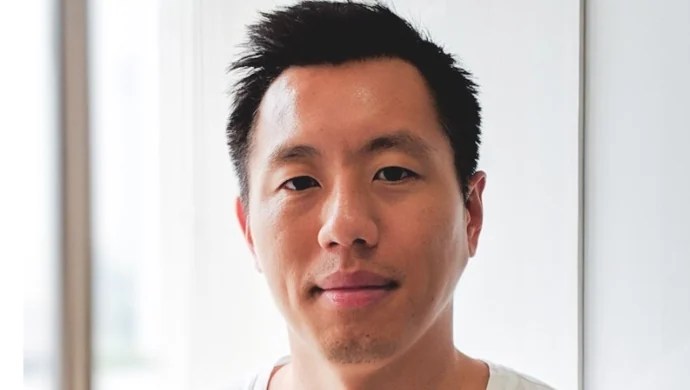


Hsu Ken Ooi
For six years, Iterative built its identity around a single proposition: a Y Combinator-style accelerator designed specifically for Southeast Asia. That proposition has now run its course.
The Singapore-based early-stage investor will not run a Winter 2027 batch of its core programme. Instead, it is launching a “SEA to SF” programme that brings regional founders to San Francisco for a month, alongside a broader mandate to back startups outside Southeast Asia. Co-founder and Managing Partner Hsu Ken Ooi announced the change on LinkedIn.
The cheque size remains familiar, at US$150,000 to US$500,000. The geography does not. And the rationale Ooi offers reads less like a routine strategy update than a candid assessment of where Southeast Asia stands in the AI race.
From leaving San Francisco to needing it
When Ooi and Brian Ma launched Iterative in early 2020, the prevailing mood in tech pointed the other way. Remote work was expanding, founders were said to be leaving the Bay Area, and capital was flowing toward emerging markets. Iterative introduced its first cohort of eight startups that June, and Southeast Asian startups went on to raise a record US$25.7 billion in 2021, according to Ooi’s count.
The firm benefited from that surge. It closed a US$10 million debut fund in late 2021 to back 50 seed-stage companies, then raised a US$55 million Fund II a year later. Ooi says Iterative has since run 13 batches and backed more than 190 companies.
The tide has since receded. Ooi says Southeast Asian startups raised only about a quarter of their 2021 total last year, and that the funding squeeze comes up in nearly every conversation his team has with founders.
This year does not look much better beneath the headline numbers. The region raised US$7.25 billion in the first half of 2026, but DayOne’s US$4.5 billion data-centre round alone accounted for 62 per cent of it. Early-stage deal count fell to 195, down 11 per cent year on year and 63 per cent below the H1 2022 peak.
The frontier theory behind the pivot
Ooi describes the shift as a two-phase cycle. In a “frontier” phase, a sufficiently important technology arrives and its building blocks, which he calls primitives, are developed in a handful of leading ecosystems. Talent and capital concentrate there.
In a “distribution” phase, those building blocks become widely available, and founders anywhere can build on top of them. Iterative, he argues, was born in a distribution phase, when a founder in Jakarta or Ho Chi Minh City could build a credible company on mobile and cloud infrastructure designed elsewhere.
AI has pulled the world back into a frontier phase, with San Francisco and China as its two centres of gravity. Ooi notes that 79 per cent of AI funding in 2025 went to US companies, and more than three-quarters of that went to the Bay Area.
“That doesn’t mean founders elsewhere can’t participate, but there’s now a significant cost to being away from the center,” he wrote.
It is a striking admission from a firm whose identity rested on the opposite bet. It also fits a broader pattern of concentration: frontier AI investors are becoming more selective, while within the region, Singapore now captures 78 per cent of startup funding.
One month in San Francisco, plus a cheque
The SEA to SF programme, targeted for early 2027, combines an Iterative investment with a one-month hosted stay in San Francisco. Founders continue building their startups while the firm hosts dinners and introduces them to people in the Bay Area.
Founders who have already applied for the Winter 2027 batch will automatically be considered for the new programme. Existing portfolio companies are promised the same commitment as before, plus additional San Francisco-focused support, beginning with a roadshow to meet Bay Area investors.
Separately, Iterative will invest in startups outside Southeast Asia, independent of any programme, at the same early stage and cheque size. That quietly turns a regional specialist into a generalist seed investor, competing in a far more crowded field.
A thinner pre-seed bench for the region
The retreat leaves a gap in the region’s already thin pre-seed layer. Rivals such as Antler, Entrepreneur First and 500 Global still run programmes here, while Y Combinator has long admitted Southeast Asian founders into its own San Francisco batches. Iterative is, in effect, moving toward the YC model it once localised, without YC’s brand or scale.
Its cheques also look small next to the market. Median seed rounds in the region reached US$3.7 million in H1 2026, according to Kickstart Ventures and DealStreetAsia data, which leaves a US$500,000 ticket as a starting point rather than a runway.
Then there is the question of what a month can achieve. Four weeks is a short window to build the networks Ooi describes, and it does nothing about US visas, Bay Area salaries, or the fact that many of these founders sell to customers in Manila, Jakarta or Hanoi. e27 has already highlighted the structural weakness in the region’s accelerators: programmes that sharpen pitches but cannot guarantee follow-on capital. A San Francisco roadshow may help with the money. It will not fix the market.
A brain-drain risk sits underneath it all. If the region’s sharpest AI founders are encouraged to plug into San Francisco, how many will come back? Ooi’s own framework implies they eventually will, once AI moves into its distribution phase. Nobody, including Iterative, knows how long the frontier lasts.
Homecoming or retreat?
Ooi frames the move as a return to the founders’ roots. Before Iterative, he and Ma built companies in Seattle and San Francisco: they co-founded Decide.com, later acquired by eBay, and then Weave (YC S14). Ma went on to co-found Divvy Homes.
“When we started Iterative, the idea was to bring that way of building to Southeast Asia,” Ooi wrote. Thirteen batches later, he argues, “the most useful thing we can do is bring founders to where we learned it.”
Read generously, this is an investor being honest about where the leverage lies, rather than selling founders a regional story he no longer believes. Read sceptically, it is another sign that Southeast Asia’s early-stage ecosystem is losing institutions it took a decade to build, just as AI rewrites the rules.
Either way, the message to founders is blunt. One of the investors who knew this ecosystem best has concluded that, for now, the most important room in tech is not in Southeast Asia.
Also Read
- Pakistan Stocks Extend Slide as KSE-100 Sheds 1,223 Points to Close at 176,294
- Clashes Erupt Across Bangladesh as Thousands of Garment Workers Rally for Higher Minimum Wages
- India lodges complaint against Palestinian footballer after under-17 match
- Trump Arrives in Shenzhen as Xi Hosts High-Stakes APEC Summit


