






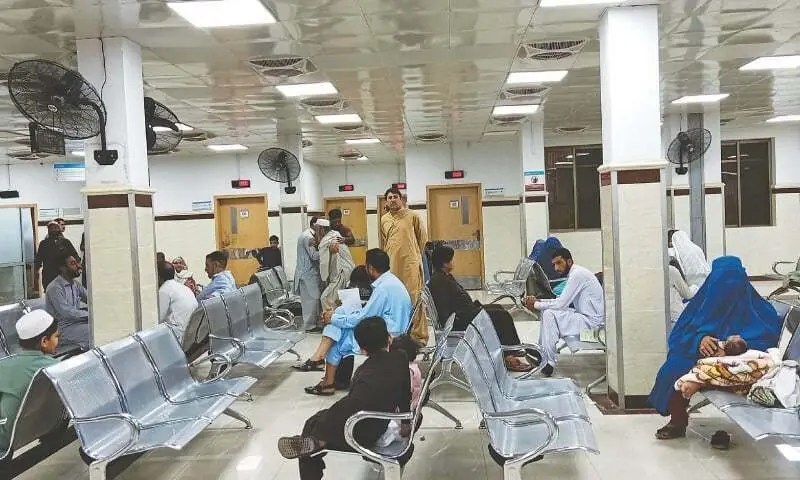
PESHAWAR: The Khyber Pakhtunkhwa health department has directed all provincial hospitals to set up dedicated heat‑wave emergency units for the timely treatment of sun‑stroke victims as temperatures continue to climb.
The advisory, addressed to district health officers, medical superintendents and directors of teaching hospitals, warns that extreme weather and rising global temperatures are driving a sharp increase in heat‑related illnesses, posing a serious public‑health threat to the elderly, children, pregnant women, athletes, infants and people with pre‑existing conditions.
Without prompt and proper care, heat stroke can lead to death, permanent organ damage or long‑term disability. Hospitals are therefore required to establish wards equipped with essential medicines, intravenous fluids, cooling devices and other supplies needed to manage heat‑related emergencies.
Facilities must maintain round‑the‑clock readiness throughout the peak summer months, as climate‑induced spikes in morbidity and mortality demand immediate preventive and treatment measures.
Rising temperatures have led to significant increase in heat‑related illnesses
Recent severe heat waves have caused considerable illness and death, especially in rural and underserved areas, challenging the healthcare system’s capacity to respond.
The directive urges health authorities to adopt timely and appropriate actions for heat‑stroke preparedness and prevention. Heat stroke is a medical emergency characterized by a sudden, dangerous rise in body temperature, loss of sweating ability and failure of the body’s cooling mechanisms.
Normally, the body dissipates heat through radiation from the skin and evaporation of sweat. In high temperatures, humidity, or vigorous activity under the sun, these processes may be insufficient, leading to dangerous overheating. Dehydration can also impede sweating, further raising body temperature.
Typical symptoms include excessive or absent sweating, hot flushed skin, weakness, lethargy, chills, throbbing headache, high temperature, hallucinations, confusion, dizziness and slurred speech.
“If heat‑stroke is suspected, immediate medical treatment is essential. Move the person to shade, remove unnecessary clothing, and apply cool tepid water to the skin while soaking remaining clothes,” the advisory advises.
Cases must be reported to emergency services promptly, as severe patients often require hospitalization and intravenous re‑hydration. “Promote evaporative cooling with fans and place ice packs under the armpits and groin. If the patient can drink, provide plenty of cool, non‑alcoholic, caffeine‑free fluids.”
Intravenous fluids should be continued, and patients should remain under observation. “Monitor temperature with a thermometer and keep cooling until it falls to 101 °F–102 °F (38.3 °C–38.9 °C).”
Once the temperature drops to 101 °F or lower, antipyretics may be administered. Soft, sugary or caffeinated drinks should be avoided, as they can hinder fluid absorption and worsen dehydration.
Published in Dawn, June 18th, 2026
Also Read
- SpaceX Elevates Elon Musk to Trillionaire Status: Can Its Stock Make You a Millionaire?
- US and Iran Sign Interim Agreement, Tehran Conditions Hormuz Passage Fees After 60 Days
- NATO Summit Preparations and EU Budget Priorities: Key Issues in Focus as Leaders Gather in Brussels
- Makerfield By-Election Intensifies Pressure on Starmer as Burnham Emerges as Labour’s Likely Successor


