






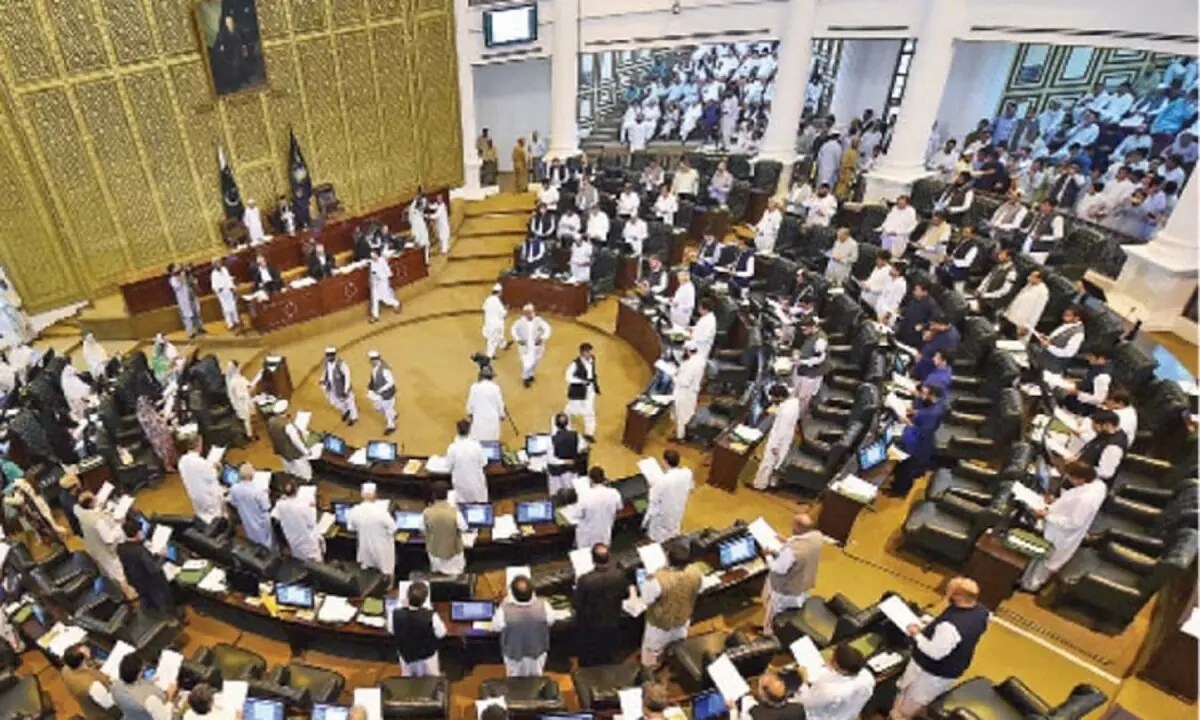
KPK Lawmakers Vow Protest Over New Taxes on Tribal Districts, Demand Fulfillment of Tax-Free Pledge
PESHAWAR: Members of the Khyber Pakhtunkhwa (KP) Assembly condemned the federal government’s decision to impose taxes on residents of tribal districts and Malakand division, vowing protests if the policy is enforced. Nearly all lawmakers representing these regions emphasized that the Swat State historically enjoyed a century-long tax exemption after merging with Pakistan and accused the federal government of violating this agreement. They asserted that tax obligations should only follow the fulfillment of a Rs100 billion annual development commitment promised to the region.
During a KP Assembly session on the supplementary budget, Housing Minister Dr. Amjad Ali—representing Swat district—revealed that taxes were approved for former Federally Administered Tribal Areas (FATA) and Provincially Administered Tribal Areas (PATA) without prior deliberation in the National Economic Council (NEC). He stressed that instead of taxing calamity- and militancy-affected areas, the government should prioritize their relief and development. “Taxing these communities contradicts the 25th Amendment, which ensured their merger under the principle of tax immunity,” he added.
KP Assembly speaker apologises for allowing outsider to enter the house
Opposition lawmaker Fazal Hakim (Swat) warned that taxes would deter industry investments, resulting in job losses and economic stagnation. Leader of the Opposition Dr. Ibadullah (Shangla) noted that even during the 1990s, the tax proposal was withdrawn due to opposition pressure. PML-N’s Jalal Khan pledged to petition Federal Minister Amir Muaqam to exclude tribal districts and Malakand from taxation, citing unequal treatment by federal and provincial authorities.
ANP’s Mohammad Nisar of Bajaur criticized the tax imposition as a failure to honor the Rs100 billion annual allocation promised by the Sartaj Aziz Commission. He highlighted KP’s financial mismanagement, stating that the province surrenders Rs109 billion to the federal government despite rejecting defense funds. “The government owes the region, yet they demand taxes without justice,” he declared.
Treasury MPA Humayun Khan (Dir) argued that tribal areas already contribute indirect taxes, while MPA Anwarzeb Khan (Bajaur) accused the federal government of neglecting the NFC’s revenue-sharing clause for tribal districts. Khyber’s Abdul Ghani explicitly threatened protests at Parliament House, Islamabad, if taxes proceed.
Amidst the debate, Speaker Babar Saleem Swati apologized for permitting a security official (the CM’s guard) to chant slogans supporting former PM Imran Khan, violating parliamentary decorum. Leader of Opposition Dr. Ibadullah condemned this breach, urging stricter enforcement of the Assembly’s privileges.
JUI-F’s Maulana Lutfur Rehman advocated for a robust supplementary budget to address KP’s financial gaps, citing delays in completing the Chashma Lift Canal under prior administrations.
Correspondent from Bajaur: Civil society, traders, and opposition lawmakers decried the tax policy as “devastating” for historically neglected regions. PML-N’s Israruddin Khan, ANP’s Gul Afzal Khan, and PTI’s Guldad Khan emphasized that the areas lack infrastructure and opportunities, making taxation unjust. They urged PM Shehbaz Sharif to revoke the decision and fulfill promises under the Sartaj Aziz Commission’s framework.
Legal Concerns: Delegates argued the federal government lacks authority to tax tribal districts before 2028, as per the Sartaj Aziz Commission’s 2018 recommendations. They warned of widespread public backlash if the policy persists, urging immediate reviews.
Published in Dawn, June 28th, 2026


