






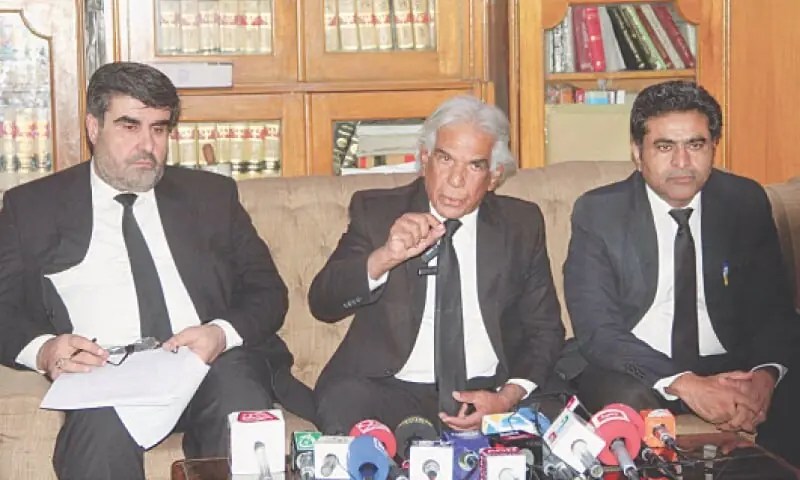
ISLAMABAD: The Lawyers Action Committee (LAC) has condemned the Judicial Commission of Pakistan’s (JCP) process for appointing high court judges, calling it “horse trading” and a “deeply concerning” practice.
“As the 26th and 27th constitutional amendments continue to destabilize Pakistan’s judicial system, the current appointment mechanism has become a shocking example of politicized governance,” the committee stated in a resolution passed in Islamabad.
To address these issues, the LAC has nominated renowned lawyer and former Supreme Court Bar Association president Ali Ahmed Kurd to spearhead a nationwide movement targeting systemic flaws in the justice sector.
“I’ve accepted this leadership with profound concern, driven by my colleagues’ insistence,” Kurd said during an appearance at the Supreme Court, emphasizing that public trust in the judiciary has eroded significantly.
Accompanied by senior advocates Hamid Khan, Salahuddin Ahmed, and Abid Shahid Zuberi, Kurd previously led the 2007 lawyers’ movement against then-president Pervez Musharraf’s unconstitutional removal of Chief Justice Iftikhar Muhammad Chaudhry.
The movement aims to mobilize public participation, positioning the people as the primary stakeholders in reforming the justice system.
The LAC’s resolution urges JCP members with ethical concerns to boycott the appointment process, which it frames as a “horse-trading farce.”
The resolution argues that high court appointments now resemble Senate nominations, often tied to political loyalty or financial inducements rather than merit or integrity.
“When judges are selected based on political maneuvering rather than qualifications, Pakistan’s judicial future is at severe risk,” the resolution warned.
It also criticized the interview process as a “sham,” claiming interviews were conducted privately while key JCP members were excluded, allowing “unqualified candidates” to advance.
The committee raised alarms about security crises in Balochistan, where terrorist attacks have resulted in numerous deaths. It linked the region’s instability to a “hardline state” approach alienating local populations and exacerbating long-standing grievances.
The resolution called for a fact-finding commission to address conflicts in troubled regions through public consultations and solutions.
The document also highlighted concerns over the prolonged detention of lawyers Imaan Mazari and Hadi Ali Chattha, along with political figures like former Prime Minister Imran Khan, Dr. Yasmin Rashid, Mahrang Baloch, and Ali Wazir, calling it indicative of systemic failure to address dissent.
The LAC accused the judiciary, legal fraternity, and political parties of “complicity” in perpetuating “blatant injustice,” warning that the status quo could lead to irreversible societal collapse.
The resolution condemned the Pakistan Bar Council and provincial bar councils for allegedly sabotaging bar association elections due to unfavourable outcomes. It demanded timely, law-compliant elections with Nadra verification.
Additionally, the LAC called for the removal of advocates with fraudulent qualifications or dual memberships and emphasized support for the Babarlo sit-in in Sindh over the disappearance of Priya Kumari and others, urging the Sindh government to uphold minority rights and address their concerns.
Also Read
- GRID Fund’s 0.56% Expense Provides Access to AI Power Infrastructure Overlooked by Broad ETFs
- Two U.S. Service Members Killed, One Missing Following Iranian Missile and Drone Strikes in Jordan
- Hungarian Leader Sulyok Yields to Parliamentary Vote and Resigns Ahead of Deadline
- Nvidia Maintains AI Leadership Through Strategic Innovation and Forward-Thinking Vision


