






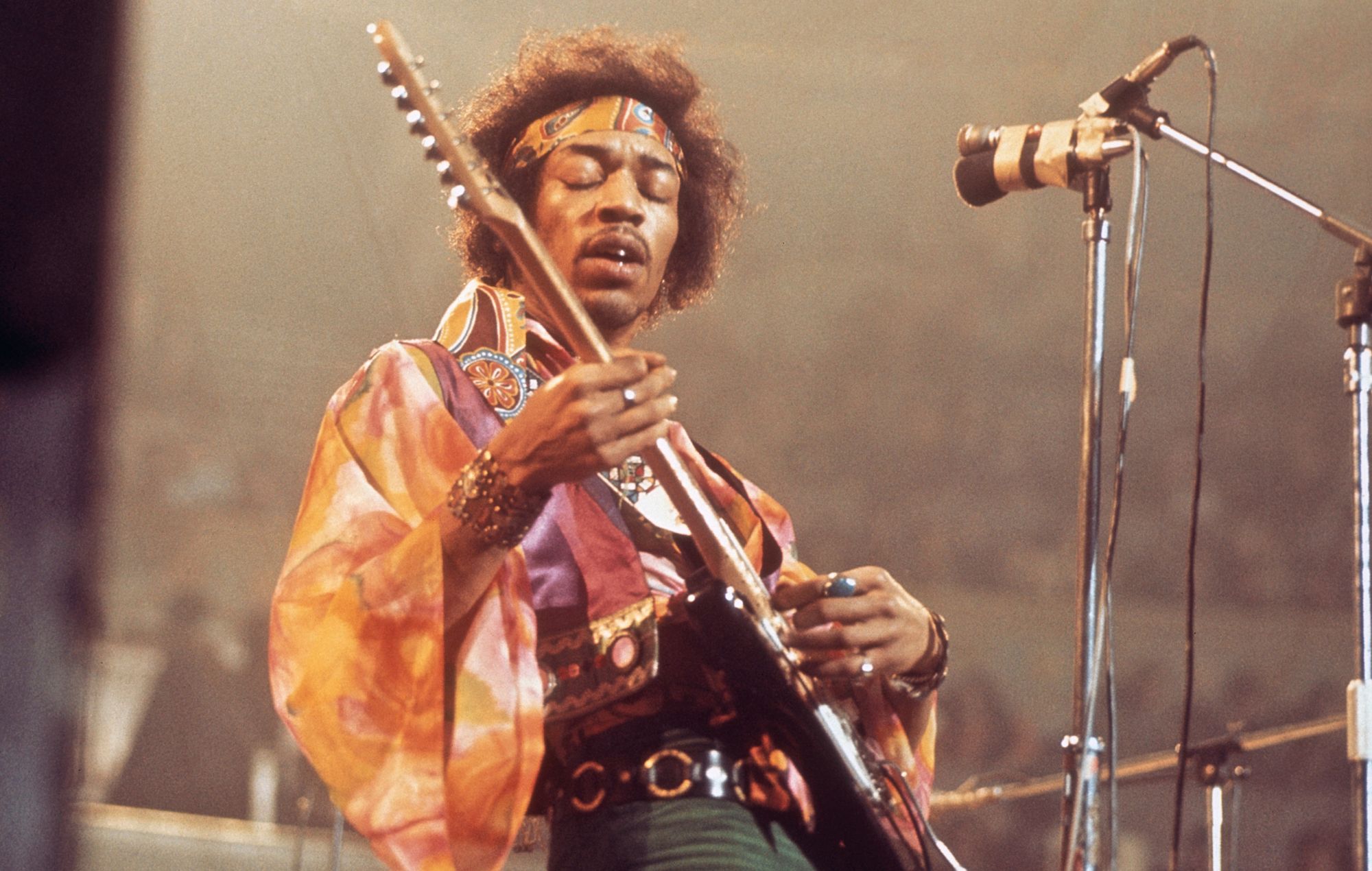
Rare footage from Jimi Hendrix’s legendary Woodstock performance has resurfaced, captured by a drama student who managed to film from the stage itself. The iconic festival took place in Bethel, New York, in August 1969, where Hendrix closed the event with his newly assembled group, Gypsy Sun and Rainbows—often referred to as Band of Gypsys. The lineup featured bassist Billy Cox, guitarist Larry Lee, percussionists Juma Sultan and Jerry Velez, and drummer Mitch Mitchell, the latter a holdover from The Jimi Hendrix Experience.
As the 55th anniversary of the festival approaches, a new documentary titled Jimi Hendrix: Live at Woodstock — A Second Look has premiered, showcasing this previously unseen material. Central to the release is film shot by 22-year-old Albert Goodman, who gained stage access by hiding behind a friend carrying a guitar. Mistaken for a member of the official film crew, Goodman positioned himself behind percussionist Juma Sultan, placing him a mere 15 feet from Hendrix. Using two open-reel videotapes, he documented performances of “Purple Haze,” “Voodoo Child,” “Message To Love,” “Hear My Train a Comin’,” and the guitarist’s seminal rendition of “The Star-Spangled Banner.”

The story behind the footage’s recovery is nearly as remarkable as the performance itself. In the days following the festival, Goodman went hitchhiking and, by chance, was picked up by a driver connected to Hendrix’s inner circle. Upon learning of the student’s recordings, the driver arranged a private screening for Hendrix. After holding onto the reels for three decades, Goodman finally entrusted them to the guitarist’s estate. The restored footage is now a centerpiece of Live at Woodstock — A Second Look, which debuted on YouTube on August 18.
Also Read
- Indie Studio Sekai Secures Rights to Launch ‘Naruto’s First Official Digital Card Game After Years of Persistence
- Chocolate Shelf Life: How Long It Lasts, What Bloom Means, and When to Toss It
- Live-Action Naruto Movie Casts Bad Boys Star as Kakashi Hatake
- L’Rain’s Fata Morgana: Taja Cheek Redraws Experimental Pop’s Boundaries


