






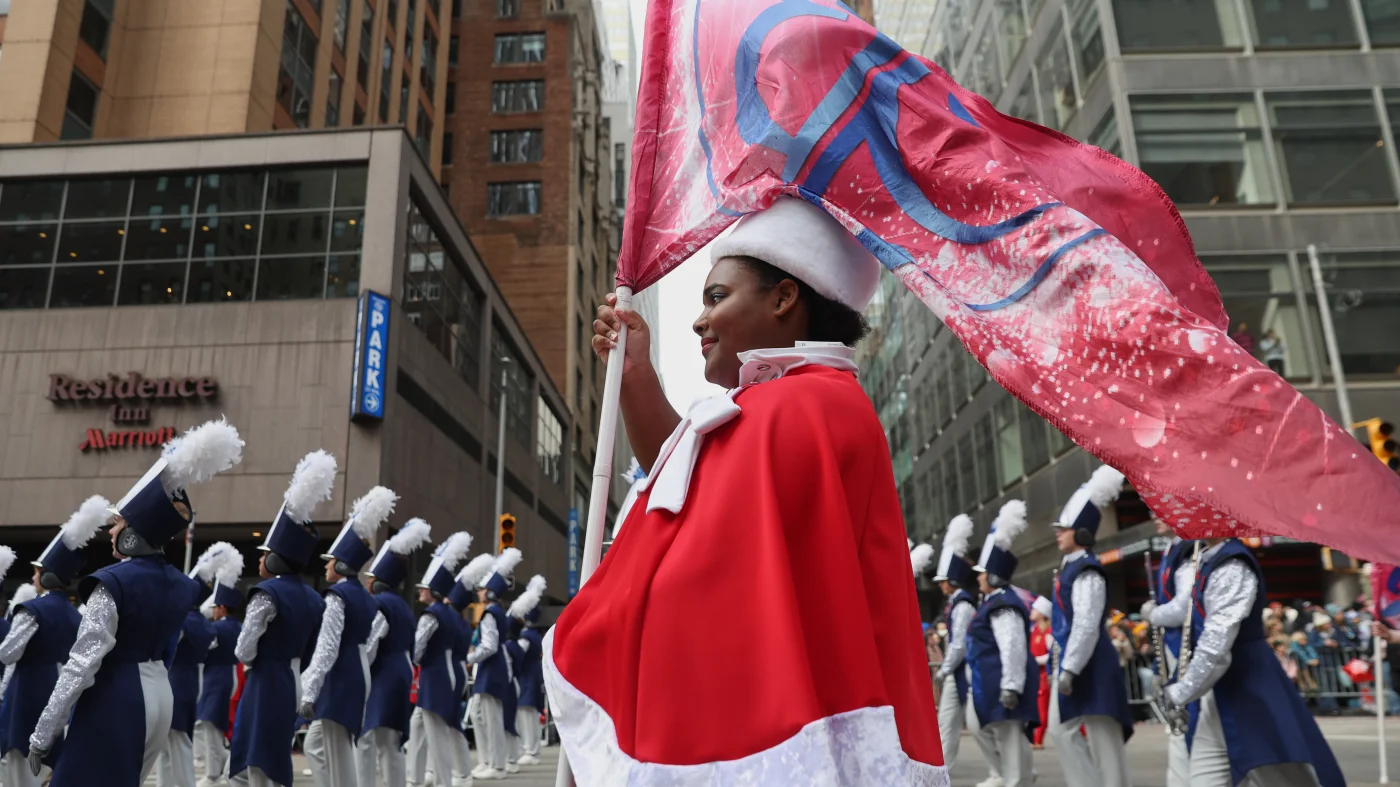
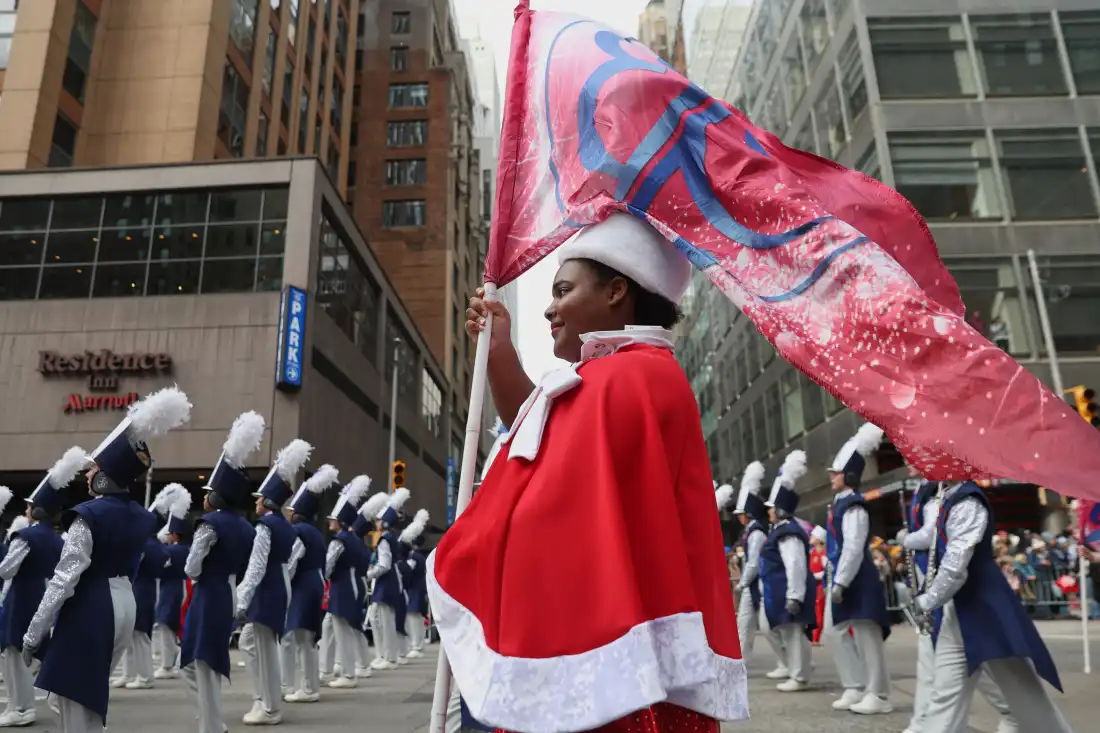

James F. Byrnes band makes their way down from Central Park West during the Macy’s Thanksgiving Day Parade in New York, Saturday, Nov. 28, 2026.
Heather Khalifa/AP
Heather Khalifa/AP
NEW YORK — When officials postponed the 100th Macy’s Thanksgiving Day Parade, hundreds of student musicians faced an urgent challenge: covering two additional days in one of the most expensive cities in the United States. Within roughly 48 hours, donors had contributed more than $1 million.
Citing safety concerns during a powerful storm system that struck the city on Thursday, city officials, the NYPD, and Macy’s announced the parade would be rescheduled for Saturday. It marked the first postponement in the event’s century-long history.
For marching bands with hundreds of members, the delay created an immediate financial scramble for extra lodging, meals, and transportation. The University of Alabama’s Million Dollar Band was among seven groups that withdrew, while other individual performers dropped out because they could not adjust their plans on short notice.
Community Support Exceeds Goals
The groups that remained turned to public fundraising to cover the unexpected costs.
The University of Illinois Marching Illini, scheduled for only their second appearance in the parade, announced Thursday that they needed $175,000 to support their 410 student performers. By Friday, the band had surpassed that goal, ultimately raising more than $350,000.
Other organizations raised even larger sums. Pearland High School’s marching band from Texas reported collecting about $350,000 to keep its roughly 500 members in New York.
According to reporting by the New York Post, four bands — Pearland High, the Hawaii All-State Marching Band, Tennessee’s Dobyns-Bennett High School, and South Carolina’s James F. Byrnes Rebel Regiment — raised a combined $1.2 million to stay for the parade.
Corporate partners also provided assistance. Bradford Yamamoto, executive director of the Nā Koa Aliʻi Hawaiʻi All-State Marching Band, told NPR: “We met our goal because of our community and the help of companies like Alaska/Hawaiian Airlines, the Macy’s Foundation, and American Savings Bank. It was really the grassroots support of everyday people donating an average of $65 that made this possible. This immense effort ensured we could stay, march, and return home.”
Hawaiian Airlines helped with travel logistics. A spokesperson for the carrier told NPR that Hawaiian and Alaska Airlines added a Saturday evening flight from New York’s JFK airport to Seattle to bring back more than 200 members and supporters of the Nā Koa Aliʻi Hawaiʻi All-State Marching Band.
The storm that forced the postponement knocked out power for hundreds of thousands of households across the Northeast on Thursday. On a cool, cloudy Saturday morning, the parade traveled through Manhattan from the Upper West Side to Macy’s flagship Herald Square store. The procession featured a record 100 inflatables, including new balloons of Bluey from the animated children’s series, Hello Kitty, and Sorcerer’s Apprentice Mickey, a wizard-themed version of Mickey Mouse.
Despite the last-minute disruption, seven marching bands from schools across the country performed, according to the official lineup on the Macy’s event website.
Also Read
- Riding Along With Devo at Macy’s 100th Thanksgiving Day Parade
- Danny Trejo Says Daily Wire Threatened Legal Action to Keep Him in Pro-ICE Film
- New Avengers: Doomsday Fan Art Gives Chris Evans’ Steve Rogers a Captain America Suit and Shield
- Emergency Readiness Guide: The Most Dependable Bug-Out Bags and Survival Kits


