







A metal detectorist in western Germany has discovered one of the largest hoards of Roman silver coins ever found in the country, dating back to the reign of Emperor Hadrian.
The spectacular find includes more than 900 silver denarii—the standard currency of the early Roman Empire—with a total weight of nearly 7 pounds (3.1 kilograms).
The treasure was unearthed roughly a year ago in a field near the town of Wesseling, just south of Cologne, according to a statement from the Rhineland regional government. The hoard is now on display at the Rhineland Regional Museum in Bonn (LVR-Landesmuseum Bonn).
Archaeologists believe the hoard was buried during the reign of Hadrian, who ruled from A.D. 117 to 138, as the most recent coin in the collection was minted in either A.D. 124 or 125.
Despite its relatively late deposition, the coins span more than three centuries of Roman history. The oldest coin dates back to 148 B.C. during the Roman Republic, while the majority of the hoard consists of coins minted during the Flavian dynasty—under emperors Vespasian, Titus, and Domitian—from A.D. 69 to 96.

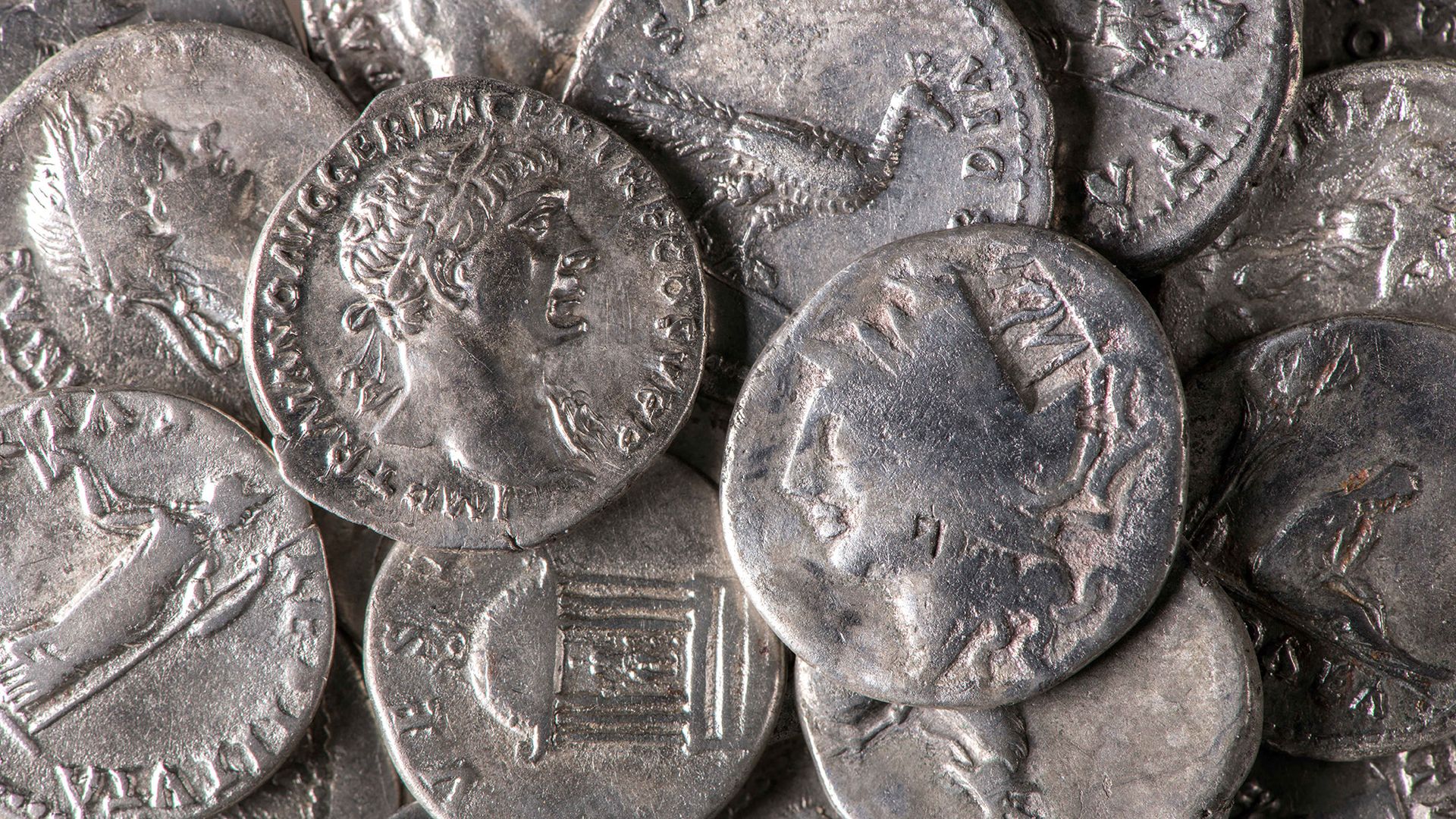
Silver signal
The discovery is credited to Oliver Riedl, a licensed metal detectorist trained by regional archaeological authorities. After initially unearthing just 15 coins, Riedl’s device signaled that a much larger deposit lay beneath the soil.
“It was clear to me that there was something bigger in the ground here,” Riedl stated. He immediately reported the find to the proper authorities, recognizing its archaeological significance.
Upon receiving the report, archaeologists from the Rhineland regional government conducted a careful excavation, retrieving the entire hoard of 934 Roman silver coins. To preserve the context, the block of earth containing the coins was removed intact and X-rayed before being opened in the lab.
Erich Claßen, the head of archaeology for the Rhineland regional government, noted that while the owner likely began collecting these coins around A.D. 100, they were not buried until Hadrian’s era. “We can only speculate about the motives, but very likely someone wanted to keep this money safe,” Claßen remarked. At the time, financial institutions as we know them did not exist, making buried caches one of the few ways to safeguard wealth.
Tragically, the original owner never returned to retrieve their savings. “It is possible that the owner died beforehand without being able to pass on the knowledge of the coins,” Claßen suggested.
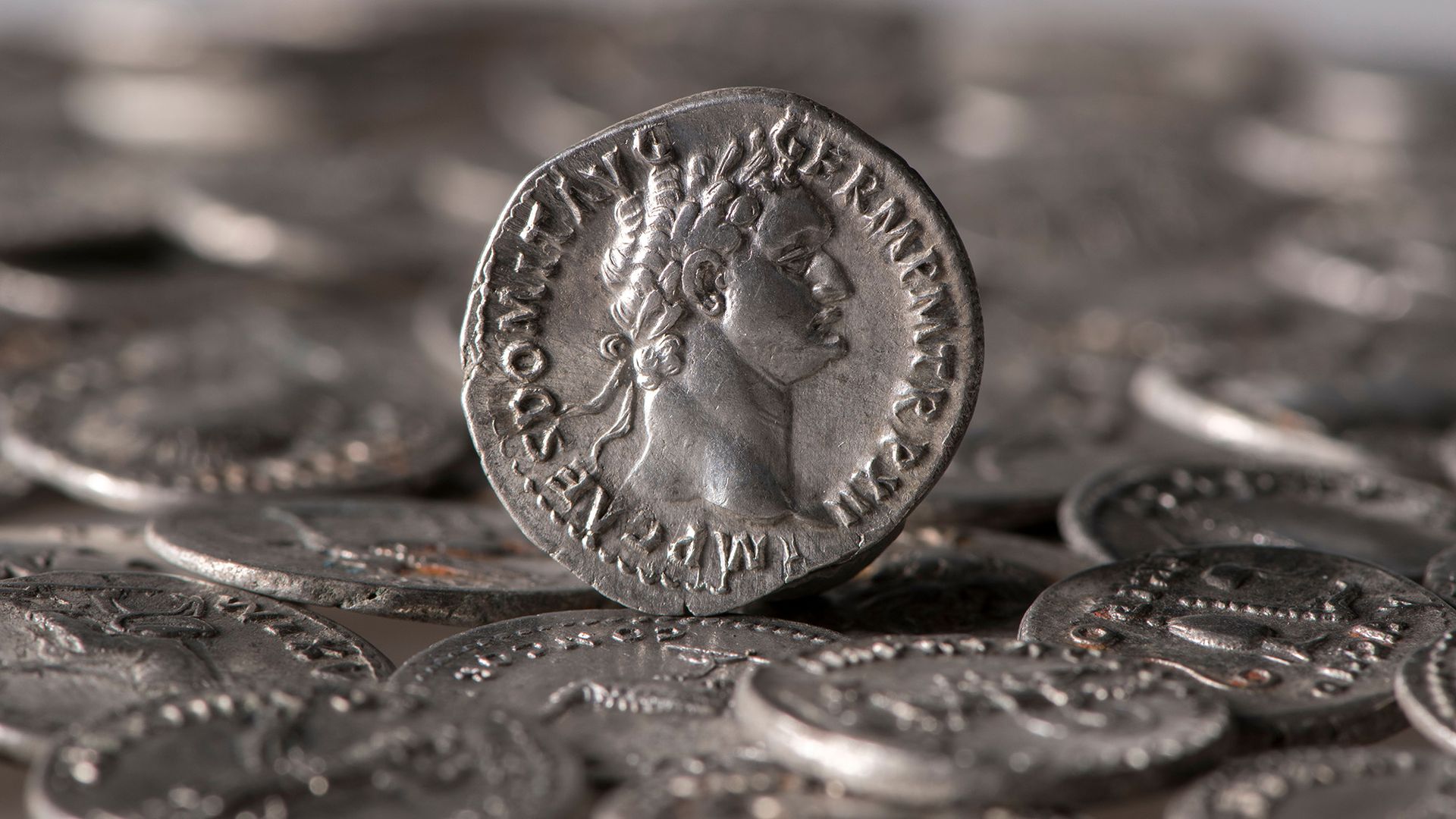
Buried treasure
The location of the find—situated just inside the northern frontier of the Roman Empire, near the Roman *limes* that ran along the Rhine—provides important clues. Marjanko Pilekić, a numismatist at the German Historical Museum in Berlin who was not involved in the excavation, noted that finding the hoard within the empire’s borders suggests it was buried shortly after the most recent coin was minted. In contrast, hoards found outside the empire in the “Barbaricum” are often buried much later.
While historically priceless, the monetary value of the hoard in the second century A.D. would have been immense. Rahel Otte, the regional archaeologist who led the excavation, explained that 300 denarii represented the annual salary of a Roman legionary during Hadrian’s reign, with roughly half deducted for food and equipment.
This means a legionary “would have had to save all his available money for about six years to accumulate the Wesseling treasure find,” she noted. The identity of the person who buried the hoard remains unknown, though they likely resided on one of the local Roman estates.
Also Read
- Apple weighs its first server since the Xserve, and as always, Nvidia may hold the key
- Rabbit Launches Standalone AI Agent That Runs Without R1 Hardware
- Ancient Peace Treaty Fragment Discovered in Turkish Excavation Links Past and Present
- How to Claim Your Cut of Apple’s $250 Million Siri Settlement


.jpg?w=1024&resize=1024,1024&ssl=1 "How to Claim Your Cut of Apple’s 0 Million Siri Settlement")


