






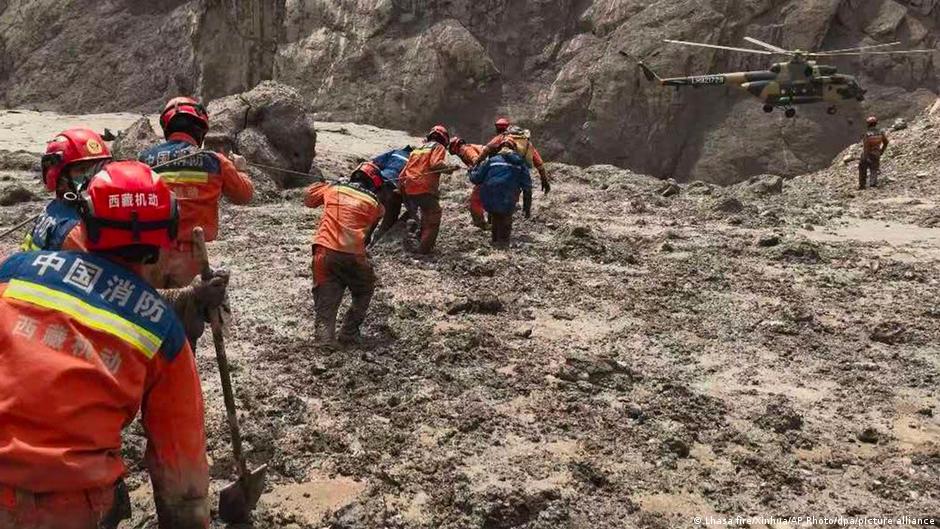
The combined death toll from the devastating floods in Nepal and Tibet climbed to 750 on Sunday, with more than 3,000 people still unaccounted for, according to local authorities.
A new flood alert was issued after river levels surged once again, while Tibetan officials warned of a potential barrier lake forming behind landslide debris.
Scientists suspect a glacier collapse in the Himalayas may have triggered the catastrophe on Wednesday, unleashing massive amounts of water into a river valley.
Nepal flood survivors still searching for some 3,000 missing
To view this video please enable JavaScript, and consider upgrading to a web browser that supports HTML5 video
Latest Developments in the Flood Aftermath
Nepal’s disaster authority reported 734 fatalities on its side of the border, while Chinese state media confirmed 16 deaths in Tibet, China’s autonomous region.
Chinese authorities stated that among the deceased were over 100 Nepalis and individuals from more than a dozen other nations.
The Nepalese disaster management agency issued a renewed flood warning on Sunday, urging residents along the Bhotekoshi River to remain vigilant as water levels continued to rise.
Flood alerts were dispatched directly to residents’ mobile phones, advising immediate evacuation to elevated areas.
In Tibet, Chinese state media reported that surveillance drones detected a newly formed lake on Saturday night, caused by a landslide blocking a waterway near the Gyirong border crossing.
Due to concerns that the natural dam could fail suddenly, rescue personnel in the area were relocated to safer locations.
Trapped Hydropower Workers Await Rescue
Nepalese rescue teams are working to reach over 100 hydropower employees believed to be trapped—and still alive—in tunnels filled with flood debris.
Operations are centered around multiple hydropower facilities along the Trishuli River, where over 900 workers went missing during the initial flooding.
At one site on Saturday night, military units deployed drilling equipment to breach the upper section of a mud-filled tunnel, aiming to pump in oxygen and insert cameras for assessment.
Nepal’s prime minister’s office acknowledged that rescue crews were contending with ongoing rainfall and challenging terrain but emphasized that teams worked through the night to locate and extract anyone still trapped underground.
Regional Support Bolsters Rescue Operations
International assistance has been mobilized, with specialized rescue units from India and China joining forces alongside Nepal’s own mountain rescue team, which regularly supports high-altitude climbers on peaks like Mount Everest.
Nepal’s Foreign Ministry spokesperson, Lok Bahadur Chhetri, highlighted the urgent need for expertise in tunnel excavation, forensic DNA analysis, and victim identification processes.
The U.S. State Department announced on X that it will allocate $3.6 million ($3.1 million) in emergency humanitarian aid to Nepal, comprising up to three months of food assistance for approximately 10,000 affected households.
The Red Cross estimates that over 90,000 people have likely been impacted by the disaster.
Edited by: Natalie Muller
Also Read
- North Korea Appoints New Defense Minister and Revives Senior Military Strategist
- Warren Buffett’s Successor, Greg Abel, Keeps Buying This Incredible Artificial Intelligence (AI) Stock That Buffett Also Loved
- UK arts sector report reveals pervasive gender and age bias against women, with AI recruitment tools worsening inequities
- Postal Service Rule Could Bar Millions From Voting By Mail


