






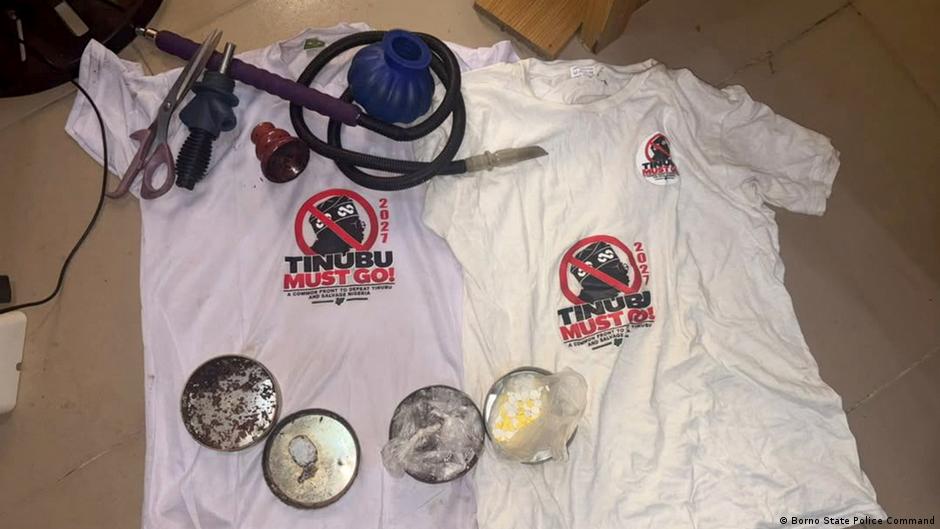
T-shirts emblazoned with the slogan “Tinubu Must Go!”—a direct challenge to Nigerian President Bola Tinubu—are at the heart of an intensifying government crackdown on dissent in Nigeria’s northern regions.
In a recent escalation, five men aged 21 to 44 were detained in Borno State last month for allegedly wearing the shirts. Authorities charged them with criminal conspiracy, public disturbance, and thuggery, claiming they intended to incite unrest. Police later cited the discovery of suspected illegal drugs during the arrests, though human rights advocates argue the detentions are politically motivated. Two weeks later, Kano State police preemptively blocked a planned gathering by the same activist group, citing public safety concerns.
The Cost of Dissent
These actions have reignited debates over the boundaries of free speech in Nigeria’s democracy. Critics question whether the government is conflating legitimate security concerns with suppression of opposition voices. Lawyer and activist Hassana Maina condemned the arrests as “despicable,” arguing that criminalizing political expression undermines democratic freedoms. Amnesty International confirmed the detainees are affiliated with the opposition African Democratic Congress (ADC).
Historical precedents highlight a pattern of governmental overreach. Abubakar Idris (known as Dadiyata), a vocal critic of Kano State’s former governor, disappeared in 2019 after being seized by armed men. Similarly, 18-year-old Hamdiyya Sharif was jailed for posting a TikTok video criticizing her state governor’s handling of security issues linked to banditry. She faced charges of “abusive language” and “inciting disturbance” in a Sharia court.
Beyond the slogan
The “Tinubu Must Go” movement targets President Tinubu ahead of the 2027 elections, but its grievances span broader systemic issues. Nigeria grapples with soaring inflation, extreme food shortages, and widespread insecurity. Over a decade of Boko Haram insurgency has devastated northern communities, displacing millions and crippling economic stability despite military interventions.
Amnesty International’s Isa Sanusi denounced the crackdown as an assault on democratic rights, emphasizing that mere wearing of a T-shirt should not warrant detention. “Freedom of expression is foundational to democracy,” Sanusi stated. “Arresting citizens for political dissent erodes trust in governance itself.”
Nigeria’s history of silencing dissent
As elections approach, civil society groups highlight the government’s systematic exclusion of opposition voices. Political gatherings are routinely denied permits, venues withdraw invitations, and even critical literature faces logistical barriers. Recently, a Kaduna research center canceled a book presentation deemed harmful to government interests, citing “operational glitches.”
“A democracy without robust opposition is a hollow institution,” argues activist Hassana Maina. “Opposing policies that harm our communities—whether economic mismanagement or insecurity—is inherently patriotic. Silencing such voices betrays the nation’s democratic promise.”
To view this video please enable JavaScript, and consider upgrading to a web browser that supports HTML5 video
To view this video please enable JavaScript, and consider upgrading to a web browser that supports HTML5 video
Also Read
- Georgia’s top court hears lawsuit to ban main opposition parties in latest crackdown on dissent
- Musk’s SpaceX stock gift is ‘tip of the iceberg’ for Trump Accounts, Altimeter’s Gerstner says
- COP17 in Yerevan: Urgent Calls to Bridge the Gap Between Biodiversity Promises and 2030 Targets
- Arab Voters Poised to Shape Israel’s Election Outcomes


