








Vouch Insurtech, founded earlier in 2018 by Yujun Chean and Prateek Jogani, operated a car‑insurance service with a cashback incentive in Singapore, having previously secured SGD 1 million (US$755,000) in seed funding as the parent of Thai insurtech FairDee. Eight years later, the duo returns with a substantially larger capital infusion amid a markedly competitive landscape.
Parallel Loop has entered the market with US$6.6 million in seed funding, spearheaded by Bengaluru‑based 3one4 Capital. Additional co‑investors included Picus Capital, Flourish Ventures, and Economic Development Innovations Singapore (EDIS), alongside three notable angels: Paytm founder and CEO Vijay Shekhar Sharma, CRED founder Kunal Shah, and Philip Yeo, former chairman of Singapore’s Economic Development Board and A*STAR.
“Our aim is to build a global AI company,” Chean said.
The gap it seeks to close stems from a reality common among enterprise leaders: AI tools empower individuals, yet converting that speed into organization‑wide capability remains difficult. Core rules, definitions and institutional knowledge are fragmented across disparate systems, meetings, email chains and chat platforms. A model lacking that contextual awareness is akin to a competent intern who missed a critical step during onboarding.
“Intelligence has become abundant. What many organisations lack is the context, systems and capability to turn this into tangible business outcomes,” said Jogani.
The challenge resonates across Southeast Asia, where much of the region’s constraint is less about initial AI adoption and more about scaling; most enterprise AI initiatives remain trapped in proof‑of‑concept mode.
Parallel Loop’s offering comprises three distinct components:
- AI Enablement collaborates with executive teams to uncover high‑value use cases and outline concrete roadmaps.
- The AI Stack delivers a modular platform that fuses a client’s existing infrastructure with organisational context, providing live dashboards and deterministic workflows—automations that consistently reproduce the desired outcome instead of the variable results typical of generative models.
- The Software Factory embeds forwards‑deployed engineers together with AI agents to modernize legacy systems and develop new applications. By placing vendor specialists directly within client teams, rather than merely handing over code and exiting, this approach creates lasting impact, echoing the methodology pioneered by Palantir.
The solution can run in a client’s private cloud or on‑premises, with data residency governed by the customer. It integrates with multiple model providers, including open‑weight models, and maintains detailed audit logs of prompts, responses, context changes and actions. These safeguards reflect the regional emphasis on sovereign AI, noting that security concerns often arise well before the model itself is chosen.
Chean and Jogani have collaborated for nearly a decade. After Qoala acquired FairDee in 2021, Jogani took the role of Group CTO while Chean served as Group COO of the Indonesian insurtech operation.
Qoala expanded into five markets, handling millions of policy transactions per month and amassing more than US$130 million in capital, including a US$65 million Series B round in 2022. Leveraging roughly two decades of technical experience, Jogani launched hands‑on AI programs for leadership teams in 2025, identifying that many organisations adopt AI tools yet fail to build the supporting systems required to sustain those gains.
“They are closing enterprise deals and scaling across multiple geographies with an outcome‑driven approach,” remarked Anurag Ramdasan, Partner at 3one4 Capital.
Parallel Loop enters a highly competitive arena. Global consultancies such as Accenture and Deloitte market AI transformation programmes to the same boardrooms, while AI laboratories like OpenAI operate dedicated forward‑deployed engineering squads, and Palantir continues to set the template. Locally, Singtel’s RE:AI partnership with the SIT‑NVIDIA centre illustrates the broader industry push toward enterprise AI deployment.
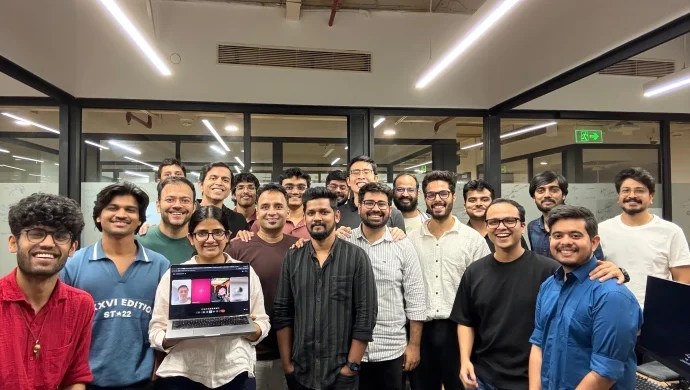
The model also carries inherent risks: forward‑deployed engineers consume significant budgets, and heavy reliance blunts the distinction between traditional consulting revenue streams and software margin expectations. Establishing thirty staff members to serve more than ten clients across five cities within four months illustrates rapid growth, raising the question of whether the AI Stack evolves into a reusable platform or produces bespoke engagements unique to each account.
While the team benefits from a strong network, substantial capital, and a multi‑country client base, the ultimate hurdle lies in convincing organizations that have been urged to halt broken process automation to invest in fixing the underlying workflow.


