



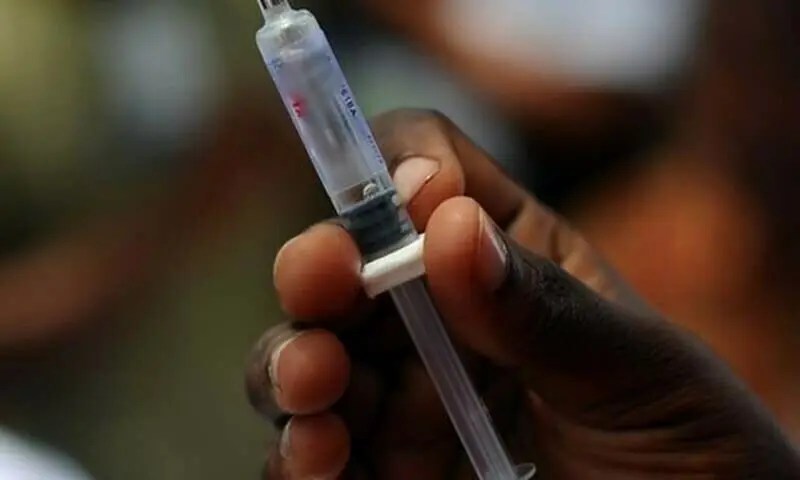
KARACHI – The Pakistan Paediatric Association (PPA) has urged the Drug Regulatory Authority of Pakistan (Drap) to consider an exemption or targeted exclusion for 10 cc conventional syringes in order to protect neonatal and pediatric care.
Following a surge in HIV cases linked to unsafe medical practices, including the alleged reuse of contaminated syringes, Drap announced a complete ban on conventional 1 cc (non‑insulin) disposable syringes effective December 31, 2026, and a prohibition on the retail sale of conventional 10 cc disposable syringes starting January 1, 2027.
In the letter, Dr Muhammad Khalid Shafi of the PPA told Drap’s CEO that Pakistan’s healthcare system is facing an unprecedented and alarming rise in pediatric HIV cases, making it essential for public‑health regulations to treat this as a top‑priority national emergency. He stressed that, while curbing transmission is vital, regulatory actions must be firmly evidence‑based, precisely targeted, and in line with clinical realities to avoid compromising patient outcomes.
Dr Shafi, who also chairs the National Immunisation Technical Advisory Group, acknowledges that Drap’s goal of ending syringe reuse through regulation is well‑intentioned, but notes that the blanket ban on conventional/manual syringes, particularly the 10 cc size, creates serious unintended risks for pediatric and neonatal care nationwide.
\”I urge the authority to reconsider the scope of this ban in light of the following critical clinical considerations: the 10 cc syringe is an indispensable tool needed for the accurate reconstitution, dilution, and precise volumetric delivery of essential intravenous pediatric medications.\”
\”In neonatal intensive care units and pediatric wards, 10 cc syringes are standard, non‑negotiable instruments used for enteral feeding through nasogastric or orogastric tubes in premature and critically ill infants.\”
\”Pediatricians routinely use needle‑less 10 cc syringes to accurately measure and safely administer oral liquid formulations and rehydration solutions to infants who are unable to swallow standard dosage forms,\” the letter states.
Dr Shafi argues that a sweeping ban on 10 cc syringes creates an immediate clinical bottleneck that threatens daily, life‑saving interventions in pediatric and neonatal wards. He emphasizes that regulatory steps aimed at curbing blood‑borne pathogens must be data‑driven, designed with clear, measurable clinical outcomes, and ensure that infection‑control measures do not unintentionally disrupt essential medical care.
On behalf of the PPA, he urged Drap to grant an immediate exemption or targeted exclusion for 10 cc conventional syringes to protect neonatal and pediatric clinical operations while safer, standardized alternatives are fully evaluated and integrated.
\”Convene a dedicated advisory panel comprising clinical experts, pediatric infectious‑disease specialists, and PPA representatives to review infection‑control strategies and develop evidence‑based guidelines that address the true drivers of syringe reuse,\” the letter says.
Published in Dawn, July 19th, 2026
Also Read
- Understanding the Gap: Why the Average 401(k) Balance Doesn’t Represent the Typical American Worker
- Spain’s Northern Region Engulfed in Wildfire as Emergency Teams Struggle to Contain Flames
- D‑Wave Quantum CEO Offloads 52,320 Shares – Investor Implications
- Antonelli Secures Belgian GP Victory, Extends Championship Lead to 45 Points