







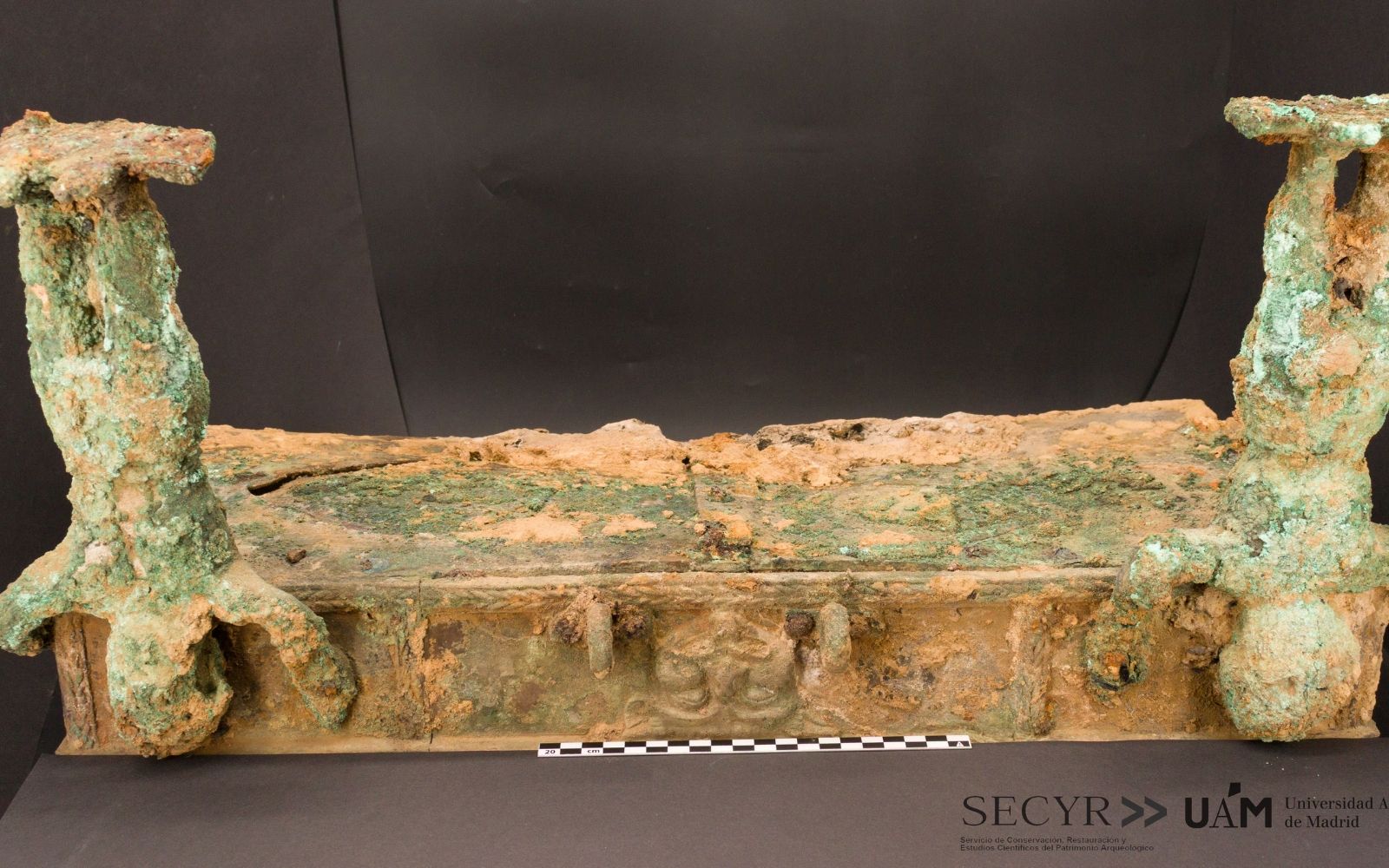
Archaeologists in Spain have uncovered a 2,400-year-old bronze chariot of unprecedented design at the Casas del Turuñuelo site in Badajoz province, near the Portuguese border. The artifact, measuring roughly 24 inches (60 centimeters) in length, features a flat, table-like surface that researchers believe served as an incense burner for divine offerings. The discovery has been described as “without known parallels” in the Iberian Peninsula.
The chariot’s decoration presents a striking iconographic program. One side bears a composite face sticking out its tongue—an unusual fusion of a gorgon, the protective emblem associated with Medusa, and Achelous, the shape-shifting river god of Greek mythology who could assume the form of a bull. Guiomar Pulido González, an archaeologist at the Mérida Institute of Archaeology (part of the Spanish National Research Council) and a doctoral researcher at the Autonomous University of Madrid, explained that both short ends of the chariot depict griffins—winged lions with eagle heads—creatures traditionally associated with safeguarding. “All the figurative parts of the chariots point to protective divinities,” Pulido noted, “though we are not sure what they are protecting—maybe the content of the chariot, or the viewers looking at them.”

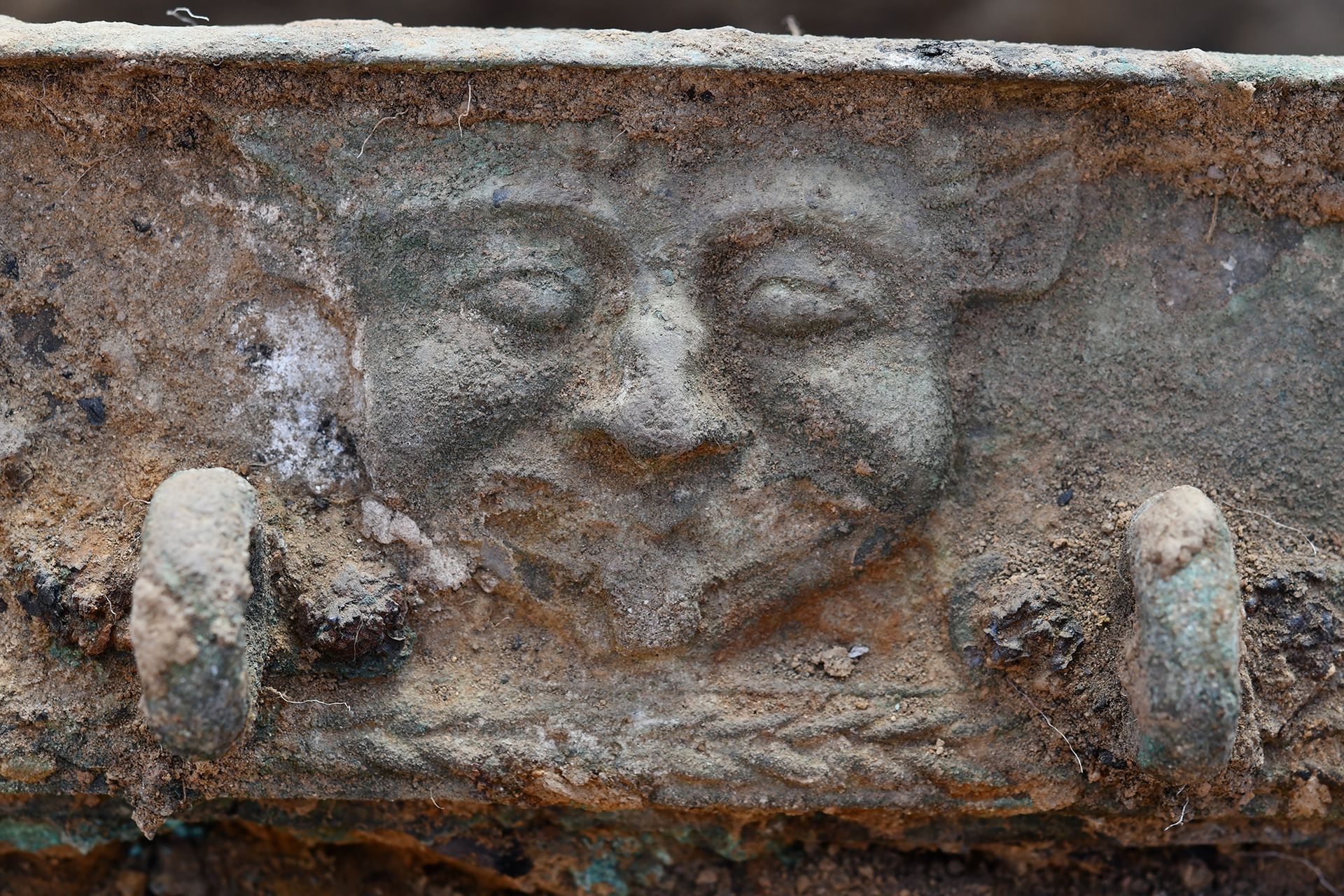
While similar chariots have been attributed to the Etruscans—the pre-Roman civilization that flourished in Italy from roughly 900 to 100 B.C.—this specimen represents the first example found in Iberia and the first to feature the gorgon-Achelous hybrid motif. The artifact was recovered in a deliberately fragmented state, halved and deposited among debris filling a burned structure. Restorers observed that the two anthropomorphic figures supporting the table wear skirts, a notable departure from the nude bronzes typical of Etruscan craftsmanship. Despite this anomaly, scholars hypothesize the piece was manufactured in Etruria and reached the Iberian Peninsula via Mediterranean trade networks.
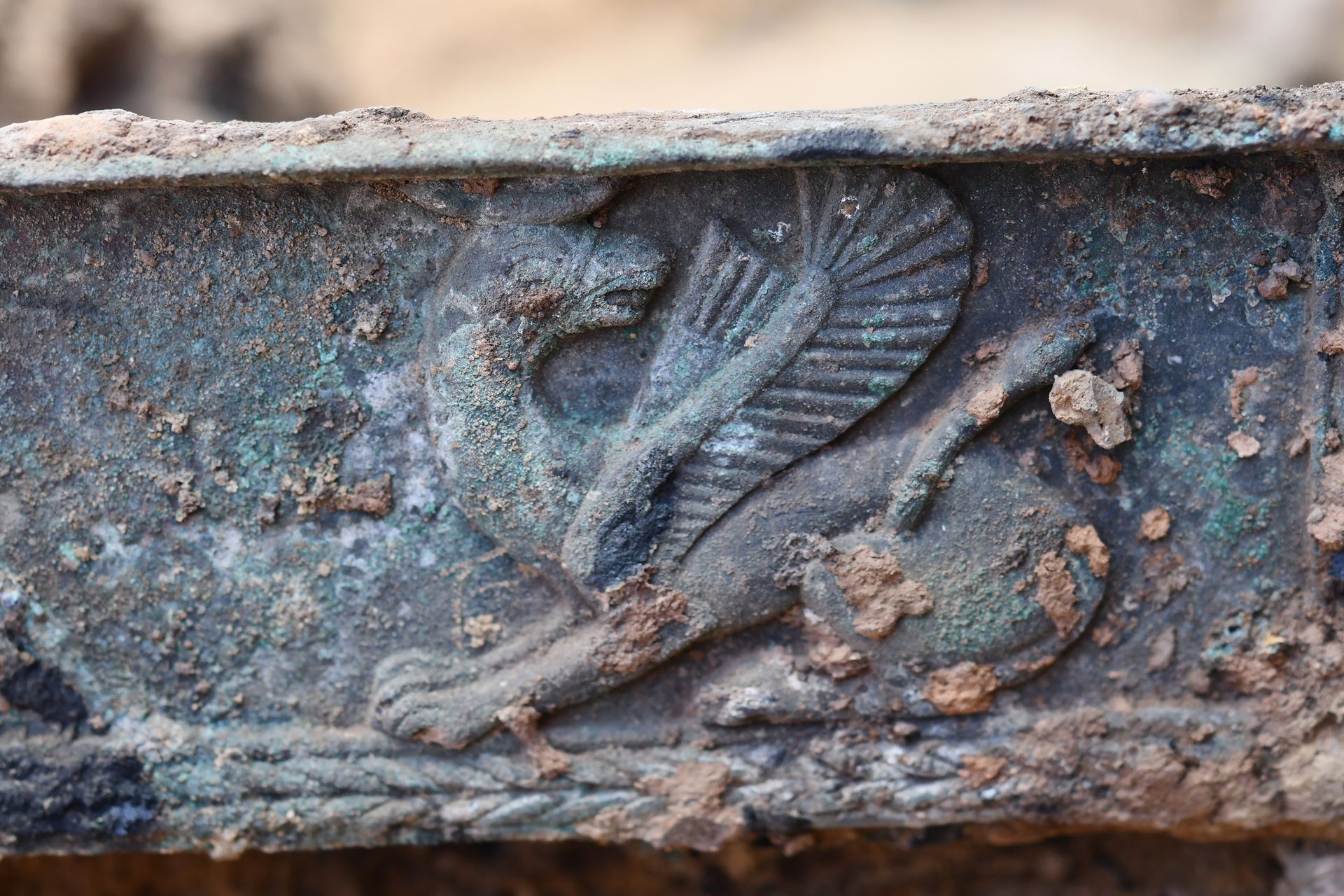
The chariot was found in a stratigraphic layer dating to the late fifth century B.C., though the iconography of the gorgon-Achelous face suggests the piece may have been crafted as early as the sixth century B.C. Casas del Turuñuelo belongs to a cluster of 14 sites in the Middle Guadiana River Valley associated with an enigmatic culture—likely local populations heavily influenced by or intermixed with the Tartessians, a civilization known for its writing system that settled the peninsula around the eighth century B.C. This culture vanished from the archaeological record around 400 B.C.
Each of the 14 sites exhibits the same pattern: buildings were intentionally burned, then filled with soil and fragmented objects. The deliberateness of this process argues against destruction by hostile forces. Instead, Pulido suggests it represents “a carefully planned ritual of closure, a symbolic farewell to buildings that were intentionally decommissioned.” Imported Greek pottery and other Etruscan bronzes found at these sites indicate that the elite of this society participated in far-reaching Mediterranean trade networks and possessed sufficient wealth to acquire luxury goods from abroad.
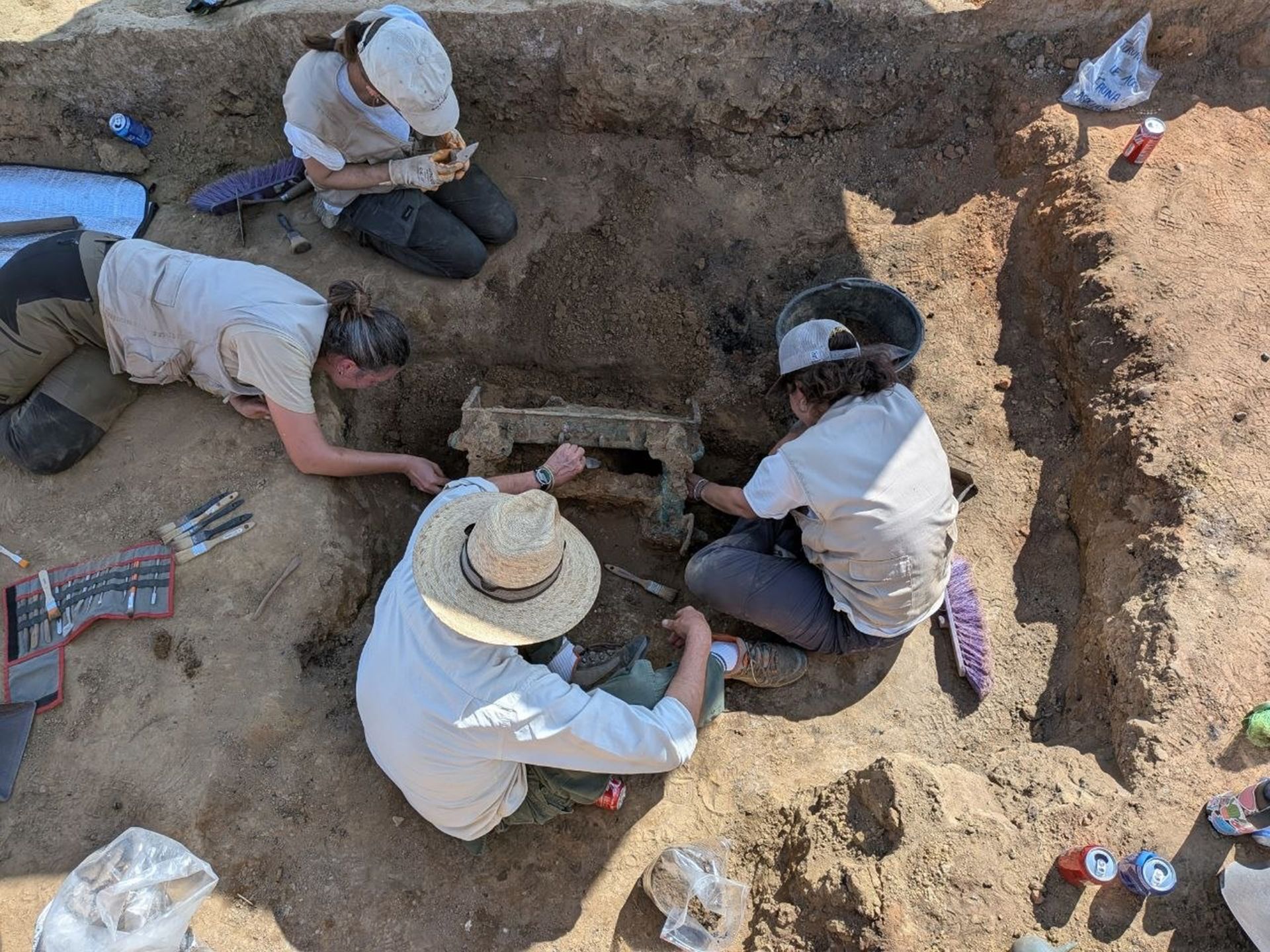
Excavators found the chariot at an archaeological site called Casas del Turuñuelo (Spanish for “Houses of Turuñuelo”) in southwestern Spain.
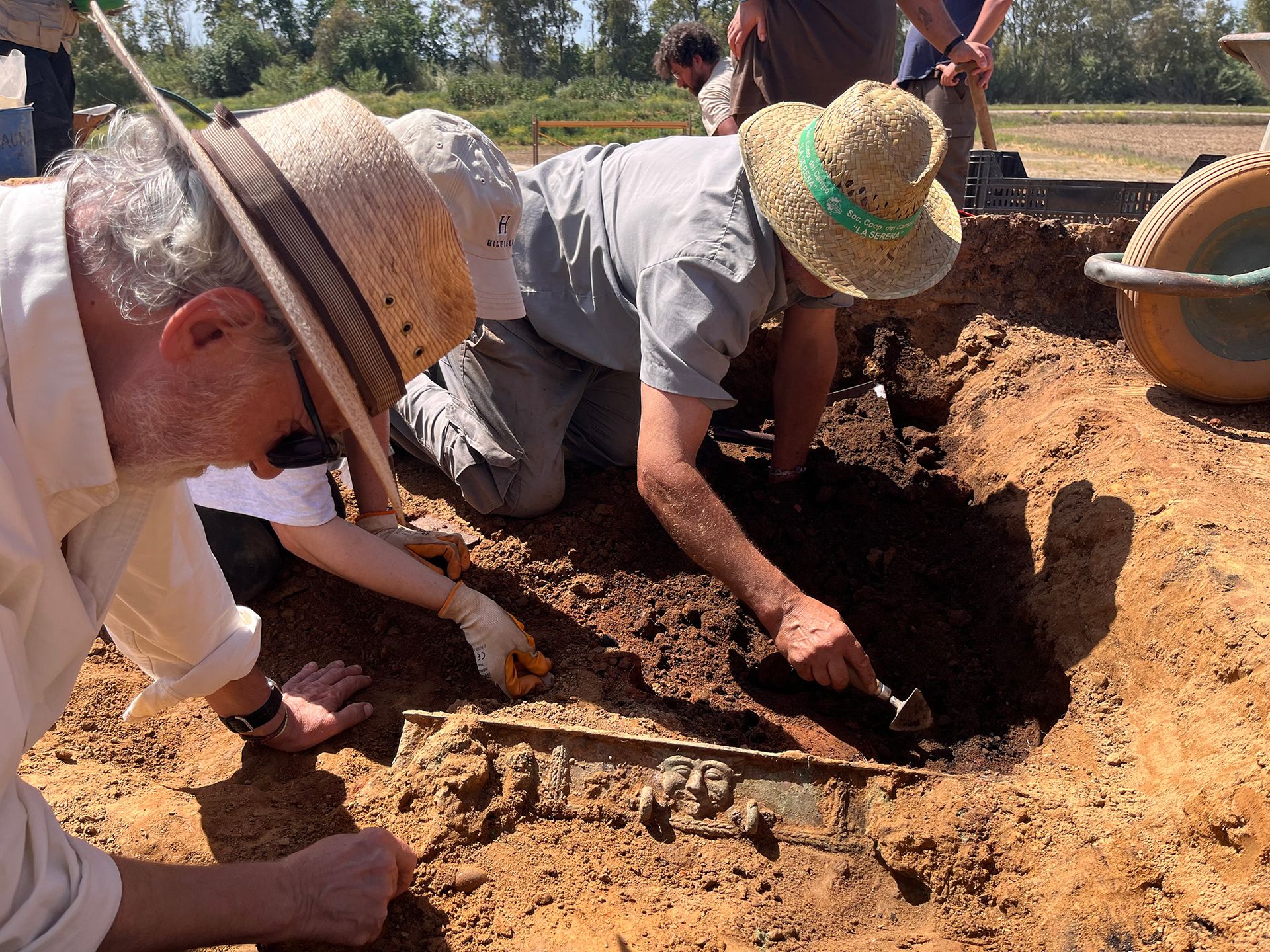
Researchers think that the chariot was made by the Etruscans, a pre-Roman civilization from what is now Italy, and that it ended up in Spain through trade.


