When picturing objects near the Sun, Mercury—the innermost planet—often springs to mind. Yet have any natural or artificial bodies ventured even closer? And what is the nearest approach an object has made while still managing to escape the Sun’s gravity?
Numerous bodies, ranging from asteroids and comets to spacecraft, have ventured far inside Mercury’s orbit, according to experts interviewed by Live Science.
At perihelion—the point of closest approach—Mercury lies about 29 million miles (47 million kilometers) from the Sun, NASA reports.
(Image credit: Marilyn Perkins / Future)
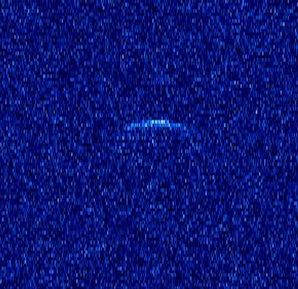
Several known asteroids venture even nearer. Scott Sheppard, an astronomer at Carnegie Science in Washington, D.C., explains that bodies whose orbits intersect Mercury’s are termed Mercury‑crossers. Their highly eccentric paths suggest they did not originate there but were likely flung inward from the main asteroid belt, he noted in an email to Live Science. A query of NASA’s Small‑Body Database identifies 2024 YL3 as the current record holder—a roughly 463‑foot (141‑meter) skyscraper‑sized rock whose perihelion lies at 6.4 million miles (10.3 million km).
Another class of hypothetical objects could surpass 2024 YL3. These proposed asteroids—nicknamed Vulcanoids after the long‑postulated planet Vulcan—are thought to travel in circular orbits inside Mercury’s path.
A rendering of the Mercury-crossing asteroid Icarus. Over longer timescales, such asteroids also turn out as “winners.” Sheppard said that because they are dynamically unstable, they will likely collide with the sun within a few million years, although they may instead crash into a planet or be ejected.
Martin Beech, professor emeritus of physics at the University of Regina, told Live Science via email that numerical models predict stable Vulcanoid orbits ranging from 5.58 million to 23.23 million miles (8.98 million to 37.39 million km) from the Sun’s centre. Consequently, some Vulcanoids could approach the Sun more closely than any Mercury‑crosser. The catch is that, like their namesake planet, Vulcanoids remain undetected; a 2013 survey found no evidence of their existence.
Some spacecraft have approached far more closely. NASA’s Parker Solar Probe, launched in 2018, was designed to study the Sun’s outer atmosphere, the corona. During the final three orbits of its primary mission, the probe followed an eccentric trajectory that brought it to a perihelion of just 4.5 million miles (7.3 million km) from the Sun’s centre. At that range, illustrated on the mission’s website, the spacecraft flew through the corona, protected by a carbon‑foam shield that tolerated the extreme heat.
“Sungrazers” and “sun-diving” comets
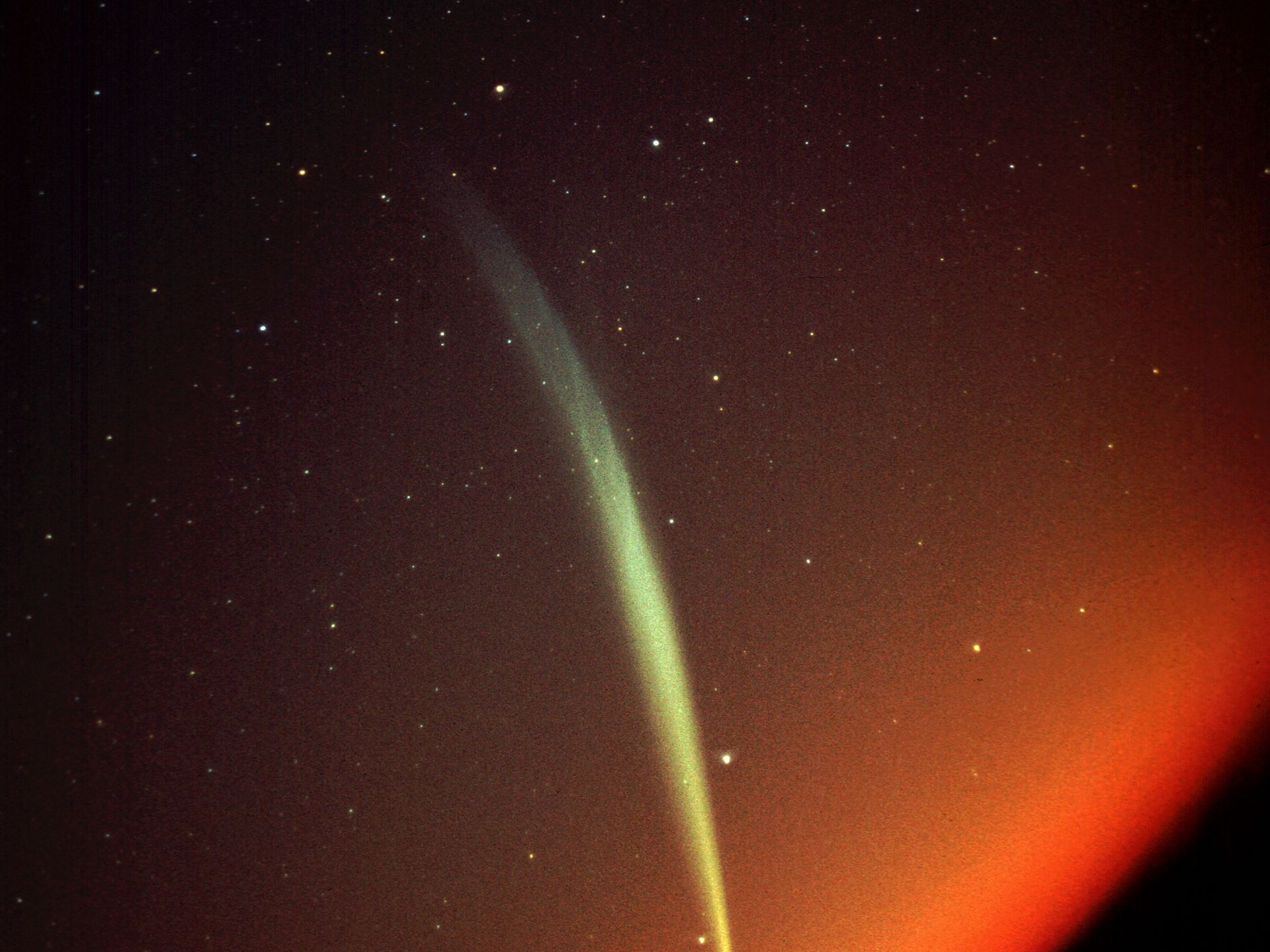
Sungrazing comets often become spectacularly bright as they approach perihelion.
(Image credit: Roger Lynds/NOIRLab/NSF/AURA/)
Another natural group, the sungrazing comets, ventures even nearer. A 2018 study indicated that these comets can pass within 1.49 million miles (2.39 million km) of the Sun’s centre, though their exact distance varies with orbital parameters.
Man‑To Hui of the Shanghai Astronomical Observatory explained to Live Science that tiny sungrazers—as small as 30 feet (10 meters)—can fracture as they rotate due to uneven heating, while the Sun’s gravity can tear apart larger bodies. Nevertheless, some survive intact; the closest observed example remains the Great Southern Comet of 1887, which passed within an astonishing 446,187 miles (718,070 km) of the Sun.
The true record‑setters, however, are the sundiving—or sunstriking—comets. These objects were likely common in the early Solar System but are exceedingly rare today. A sundiver would pierce the Sun’s visible surface, the photosphere, and plunge into the stellar interior. No such comet has been observed yet; the 2018 study calculated that a perihelion below the Sun’s radius—about 432,244 miles (695,630 km) from the centre—would be required. Because there is no outgoing leg, any sundiving comet is consumed upon entry.
Thus far, the closest confirmed approach belongs to the Great Southern Comet of 1887. Should a sundiving comet ever be detected, it would surpass that mark by roughly 13,943 miles (22,439 km).