



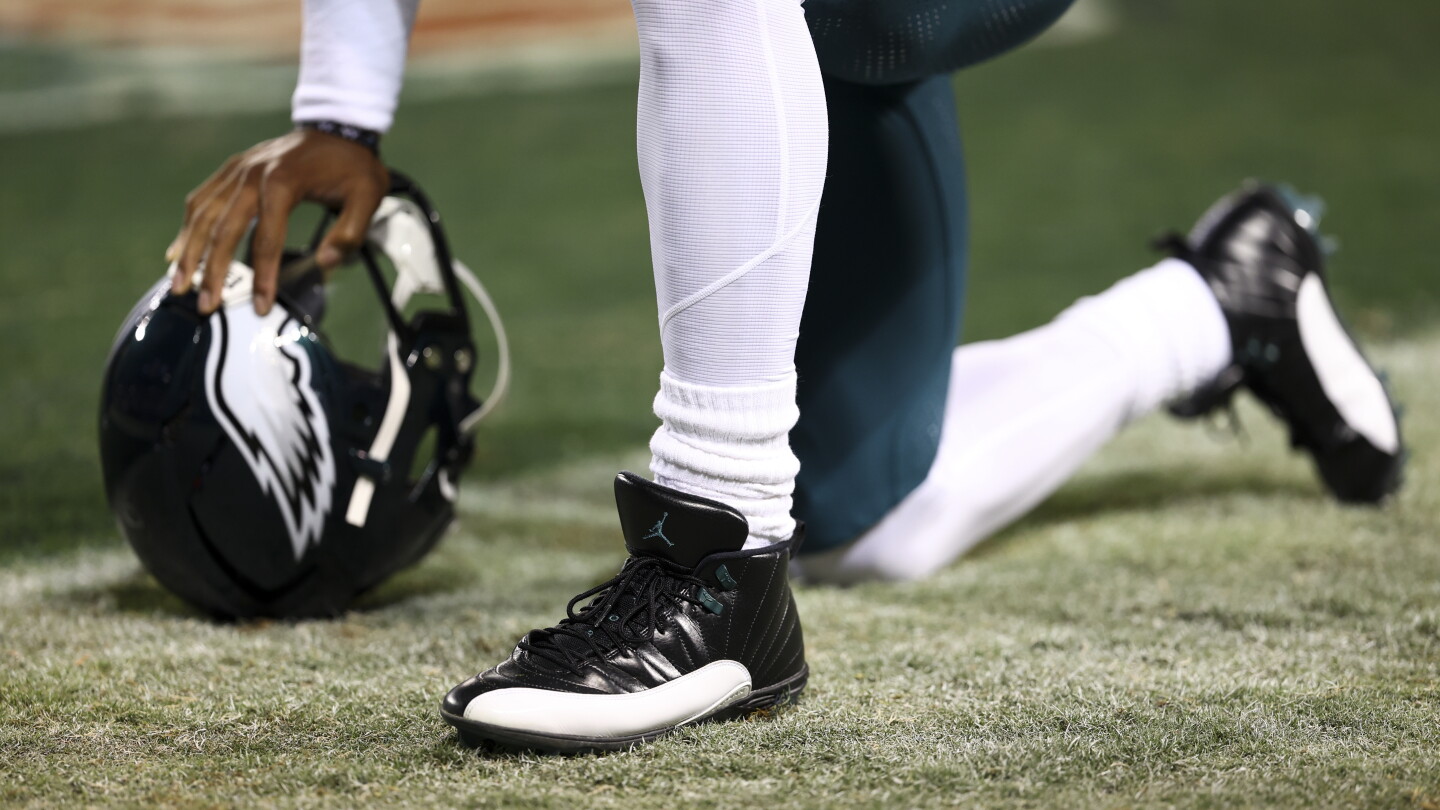
Amidst the ongoing developments surrounding Jalen Hurts’ health, reporters covering the team naturally have pressing questions. With Philadelphia Eagles coach Nick Sirianni being the only member of the coaching staff available to speak to the media on Monday, he inevitably became the focus of those inquiries.
During his press conference, Sirianni avoided offering the full transparency and detailed updates that journalists were seeking. However, one offhand remark he made sheds light on a persistent, systemic issue within NFL organizations. Years after Congress mandated the use of unaffiliated physicians to objectively determine when a player can return following a concussion, too many teams—and the medical staff they employ—view their roles not as treating athletes as patients, but as checking the necessary boxes to clear them for play.
Sirianni stated when asked about the medical decisions regarding a blood clot discovered in Hurts’s leg: “I think I’ll put it this way, the same doctors and trainers that helped 21 of our 22 starters be available in the Super Bowl are the same guys today that deeply care about our guys to help them.” (Emphasis added.)
Team doctors should not be focused on helping players “be available.” Their primary duty is to provide medical care to athletes who, when facing health issues, are patients first. Without independent medical oversight, the objective can easily shift from ensuring the patient’s well-being to maximizing the player’s ability to compete on the field.
Consequently, the Hurts situation should serve as a critical starting point for a thorough evaluation of how medical care is delivered to NFL players. When both the player and the organization are motivated by a desire for the player to take the field, a physician who frequently advises that a player is unfit to play risks being replaced by one who aligns with the unspoken objective of keeping as many players as possible “be available” for every game.
As the Eagles navigate the fallout of a situation marked by increasingly puzzling decisions, the only way to make sense of the team’s actions is to view them as an effort to serve the dual goal of satisfying the player’s and the team’s desire to have Hurts “be available” to play, rather than prioritizing his optimal medical care.
In Hurts’ case, the immediate response to finding the blood clot appeared centered on doing whatever was necessary to facilitate his return to play, even if it meant advising him against sleeping as a precautionary measure.
This bizarre recommendation has only deepened the confusion, leading sports journalist Tom Pelissero to update his report regarding whether Hurts was told not to sleep and didn’t or if he managed Hurts actually sleeping, at least briefly, at the stadium before the game.
Every piece of public information suggests that the blood clot was treated not as a critical health emergency for the patient, but as an availability crisis for the team.
The question should never be, “What do we need to do to make sure he’ll be available?” Instead, it must be, “What do we need to do to take care of this player?,” with his availability remaining a secondary concern at best.
There remains the critical, unanswered question of why Hurts was permitted to fly across the Atlantic Ocean with a diagnosed leg blood clot, merely three days after crossing the ocean with the clot undiagnosed. The priority seems to have been maintaining the possibility of Hurts playing in the upcoming game against the Panthers, rather than ensuring he faced no elevated risk of further complications.
This situation should not be dismissed just because Hurts avoided a life-threatening pulmonary embolism. The league and its teams must treat this incident as a wake-up call, addressing the ongoing culture of treating medical professionals as tools for securing player availability rather than essential resources for patient care.
Also Read
- ‘Like a family’: De Zerbi credits players’ talk and bonding trip for improving Tottenham
- Carolina Hurricanes Face Early Forwards Injury Crisis, Depth Called Upon Again
- Christian Horner: Building Red Bull’s F1 engine was “scary as hell”
- Liverpool and Manchester United Lead Chase for Borussia Dortmund’s Felix Nmecha