






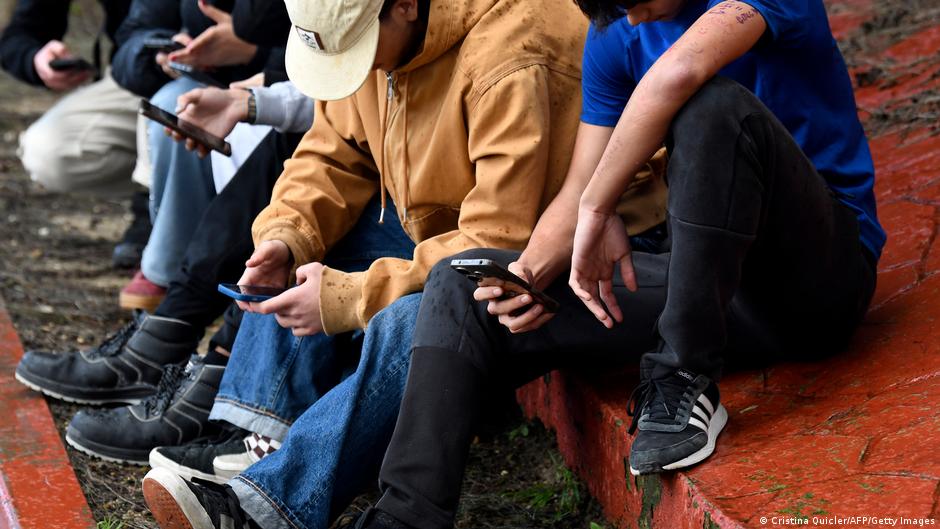
On a typical school day, young people spend an average of 4.5 hours online, and more than six hours over the weekend, according to newly released EU data.
The same study revealed that nearly 14% of European Union teenagers—about one in seven—report using screens for eight hours or more daily. This figure rises to over ten hours on Saturdays and Sundays.
When asked about the impact of screen time, 40% of respondents said it was positive, while only 29% noted negative effects. Approximately half of 13‑ to 18‑year‑olds view social media in a positive light, with 48% believing it benefits their mental health.
Conversely, almost one in three teens reported feeling sad, stressed, or socially excluded due to social media. About 40% struggled with concentration or sleep disorders.
The survey also highlighted exposure to harmful content. More than a third saw misinformation, a quarter encountered hate speech, and nearly one in five witnessed unwanted violent material.
Screen Time Versus Social Media Use
Professor Tanya Notley of Western Sydney University cautions against automatically linking social media to deteriorating wellbeing. “The data do not show a direct correlation between screen time and mental health outcomes,” she told DW.
Notley urges policymakers to distinguish between general screen usage—which includes television and homework—and specific social media engagement.
“When we discuss screen time, the term is broad. We include TV, homework, and other activities. Focusing on social media use provides a clearer picture.”
In terms of regulation, the poll found that almost half of respondents called for stricter enforcement of existing rules, while 44% wanted more education on social media. Nearly half also supported additional restrictions and age limits.
EU-wide social media ban for kids?
To view this video please enable JavaScript, and consider upgrading to a web browser that supports HTML5 video
Growing Support for Social Media Bans
Former clinical psychologist Susie Davies, founder of the UK charity PAPAYA (Parents Against Phone Addiction in Young Adolescents), has expressed concern about mental‑health impacts and advocated for a ban on users under 16. “Modern platforms tap into dopamine reward pathways, making overconsumption and compulsive use a risk,” she said.
Davies argues that adolescents are especially vulnerable because their prefrontal cortex—responsible for decision‑making and impulse control—is still developing. She called for a total ban for minors accessing social media platforms.
Earlier in June, the UK announced that, from Spring 2027, users under 16 across England, Scotland, Wales and Northern Ireland would be prohibited from joining social media. Australia already imposed a similar ban for minors in December. Norway and Canada are also exploring comparable measures.
Although the EU maintains strong digital regulations—such as the Digital Services Act and Digital Fairness Act—some member states seek additional restrictions. France, Spain, Greece, Austria and Denmark are evaluating national bans and potential EU‑wide implementation.
Social media bans: What it means for you
To view this video please enable JavaScript, and consider upgrading to a web browser that supports HTML5 video
Germany’s latest government commission recommends a total ban on users under 13, arguing that Europe should adopt such a measure. The European Commission has set up an independent panel on online child safety, which will report in mid‑July before deciding on next steps. Analysts note that a ban for users under 16 is likely to be formally considered.
Could Bans Backfire?
Rares Voicu, President of the European Youth Forum, expresses caution about blanket bans. “The impulse to ban is simplistic and does not address the complexity of social media use among young people,” he told DW.
Voicu emphasizes that social media plays a crucial role in news consumption and social connection for adolescents. The loss of these platforms could disrupt vital community ties.
Research fellow Nandi Vijayakumar from Deakin University notes that many young people find identity, friendship, and belonging through online communities—especially those lacking offline networks.
Voicu stresses the need to consider what alternative activities would replace social media for under‑16s. “Without new engagement options, we risk losing the very sense of community social media currently fosters.”
Pros and cons of a social media ban for children
To view this video please enable JavaScript, and consider upgrading to a web browser that supports HTML5 video
While calls to ban access for those under 16 have surged, particularly after Australia’s implementation, Professor Notley argues that the experiment’s success remains unproven. “It is a high‑risk policy not founded on robust evidence,” she said.
Notley recommends pilot initiatives, a review of existing regulations, and an emphasis on digital media literacy before sweeping bans. She added that the first evaluation of Australia’s ban on youth mental health and safety will be published later this year and urged governments to pause until that data is available.
Edited by: Jess Smee
Also Read
- Sindh Police Initiate Comprehensive Investigation into Rape and Murder of Three‑Year‑Old Girl in Quaidabad
- Sudan: Warnings mount over the risk of new mass atrocities
- Palantir Stock Drops to 52‑Week Low Despite Ongoing Contract Wins
- US Supreme Court scales back Roundup cancer lawsuits in victory for company


