



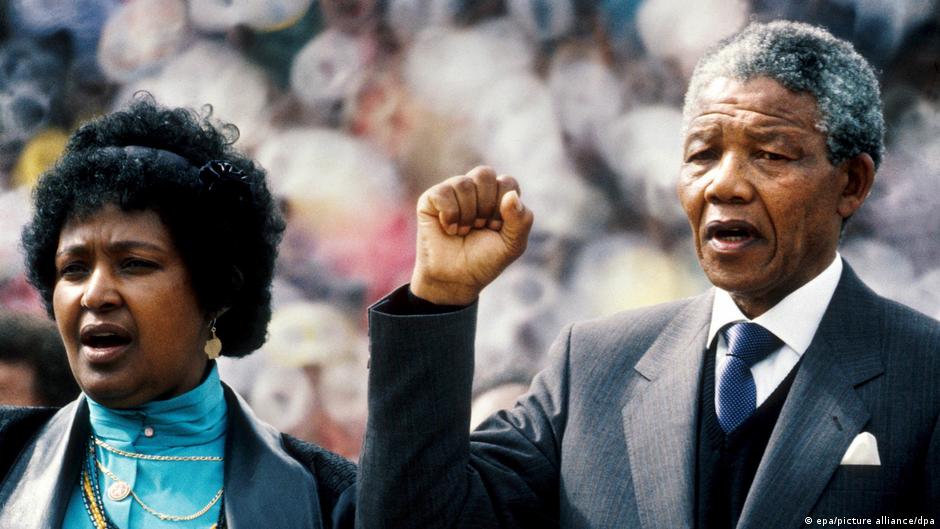
In South Africa, Nelson Mandela is commemorated annually on July 18, his birthday and the day the Nobel Peace Prize laureate dedicated to fostering a more equitable society.
Mandela, the anti-apartheid revolutionary, championed the fight against discrimination based on race and ethnicity. However, nearly three decades after apartheid’s end, many Black South Africans continue to experience xenophobia, rejection, and violence.
Competition for Jobs
“We live in a world where many young people feel hopeless due to limited opportunities, and their frustrations are often directed at foreigners, perceived as job competitors,” explained Mpho Tsotetsi, a 32-year-old social worker in a township near Johannesburg.
She does not believe Mandela’s vision is entirely shattered but acknowledges its challenges. “Mandela envisioned a South Africa grounded in reconciliation, respect for human dignity, and African solidarity,” Tsotetsi told DW.
Mandela recognized that many African nations supported South Africa during the anti-apartheid struggle, Tsotetsi noted. “He believed Africa’s future depended on unity rather than division.”
However, rising anti-migrant protests contradict this ideal.
Many migrants have fled South Africa in recent weeks due to threats from vigilante groups like “March and March” and “Operation Dudula,” who have warned of further violence and intimidation.
According to Tsotetsi, the “Mabahambe” (“You must go!”) marches and broader anti-migrant demonstrations reflect the anger of many South Africans who feel the government has failed to address unemployment, crime, irregular migration, and inadequate service delivery. Critics, however, have labeled these protests as xenophobic.
Mandela’s Legacy Is Not Static
Verne Harris, a staff member and former archivist at the Nelson Mandela Foundation, asserts that these public frustrations are valid.
While people are growing impatient, the demonstrations are also politically motivated. With local elections approaching in November, opposition parties have incentives to amplify anti-government sentiment.
“Nelson Mandela’s legacy is not a static entity but a dynamic public resource open to new interpretations,” Harris told DW. “It has always been continuously redefined over time; it is a living construct. It can be harnessed for positive or negative purposes.”
Mandela, visionary of a free South Africa
To view this video please enable JavaScript, and consider upgrading to a web browser that supports HTML5 video
Mandela, known as Madiba, first publicly addressed Afrophobia and xenophobia shortly after assuming the presidency in 1994, Harris stated.
“In 1995, he made his stance clear: These forms of hatred are unacceptable in a democracy. That early call in our democratic era is the foundation the Nelson Mandela Foundation continues to advocate,” Harris said.
To comprehend Afrophobia in South Africa in 2026, Harris emphasized understanding the structural realities of a specific form of capital. South African capital, he explained, interacts with the rest of the continent through deeply exploitative means.
“This mirrors colonial exploitation patterns and explains—similar to how European and North American nations guard their borders against African migration—South Africa now adopts comparable measures,” Harris added.
Elite Party Leadership
The economic concessions made by the Mandela government align with the African National Congress’s (ANC) capitalism vision, according to Mametlwe Seipei, who works at Kopanang Africa Against Xenophobia, a coalition of civil society groups, workers, and migrant organizations.
“An economy dominated by foreign mineral monopolies and cheap labor from abroad—its exploitation has led to our current situation,” Seipei told DW.
He argues that while the ANC unified mass aspirations for better lives during the liberation struggle, the party’s leadership belongs to the political elite.
He criticizes how the rise of black capitalism has preserved the apartheid-era economic structure without advancing societal progress.
Tessa Dooms, a sociologist and founder of Rivonia Circle NGO, describes the current state this way: “A distinct form of apartheid still exists, as if nothing changed in 1994. People continue to live as rich and poor, Black and white, as if nothing has transformed—that is part of the difficulty,” she told DW.
“The real reason this country has failed to overcome its divisions is that we have not dismantled inequality,” Dooms said. “We have permitted wealth to accumulate, and while the difference now is that this wealth resides in the hands of a political and economic elite. This ignores the majority among the poor, who are also Black.”
Failure of Wealth Redistribution
Mandela’s “rainbow nation” vision sought to reconcile the country, Dooms emphasized.
“It was not a mistaken concept but one that would always fall short without a firm commitment to structurally dismantling apartheid,” Dooms added, stressing Mandela’s dream required systemic reforms in government and economic structures.
Obakang Arie, a young accountant, notes that while xenophobia opposes Mandela’s ideals, his legacy persists in South Africa’s ongoing democratic practices:
“We can elect our chosen governments, enjoy robust human rights protections, and remain empowered citizens and civil society advocates,” he told DW.
Yet South Africa’s economy, classified as emerging, sustains growth rates below inflation, constraining economic advancement.
“The March movement and subsequent protests merely underscore the vision measured against post-apartheid realities,” Arie added.
Social worker Tsotetsi affirms, “Mandela’s dream is not dead—it rests with my generation to choose whether fear and division govern South Africa or compassion, justice, and accountability. Our decisions will determine if his vision endures.”
The 77 Percent – Inequality 30 Years After Apartheid?
To view this video please enable JavaScript, and consider upgrading to a web browser that supports HTML5 video
Also Read
- U.S. Strikes Iranian Bridges and Energy Facilities, Iran Reports Expansion
- HSBC Upgrades Apple to ‘Buy’ Following Record Highs, Anticipating AI-Driven Growth
- Hungary’s Prime Minister Seeks Refund for EU Migration Fines Amid Policy Overhaul
- Trump’s Released Election Documents Fail to Validate Fraud Claims