






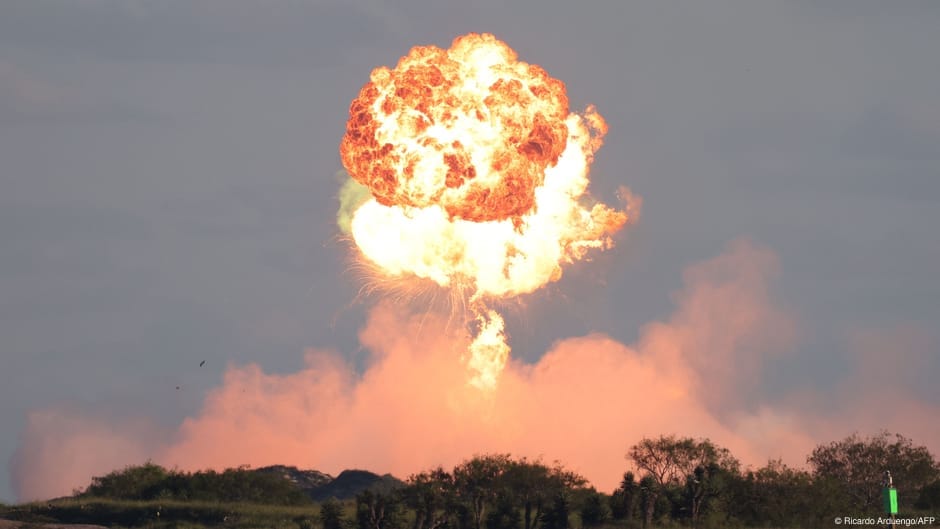
SpaceX successfully sent its latest Starship spacecraft into orbit, but the company failed to recover the booster as intended.
The company, founded by billionaire Elon Musk, is working toward a fully reusable launch system. It had aimed to recover both the booster and the upper stage—the spacecraft itself.
Rather than returning to the launch site, the booster veered over the Gulf of Mexico and exploded above the water. The upper stage remains in orbit and is scheduled to return to Earth on Saturday.
SpaceX plans to catch the upper stage with mechanical arms when it lands back at the pad, which would mark the first time the vehicle has returned to Earth and could allow it to be reused on later missions.
Besides testing the reusable system, the mission deployed 26 SpaceX satellites for its Starlink network.
How did the launch proceed?
Starship is the largest and most powerful rocket system in the world. Standing 124 meters (407 feet) tall, it consists of a spacecraft mounted atop a booster, with both stages designed from the start to be fully reusable.
During Friday’s launch, both the spacecraft and booster lifted off successfully from SpaceX’s Starbase facility in South Texas. The flight was uncrewed, though Starship is designed to carry both crews and cargo.
On its return, the booster deviated from its course toward the launch site and headed to a designated area over the Gulf of Mexico, where it exploded above the sea. The cause of the failed controlled landing was not immediately clear.
“Not sure right now why we weren’t able to bring it back,” SpaceX’s Dan Huot said.
The upper stage continued into orbit and soon began deploying the 26 satellites it carried.
It is set to return to Earth on Saturday.
Why is reusability important?
A fully reusable rocket system is central to SpaceX’s effort to lower the cost of spaceflight.
SpaceX has recovered the Starship booster on earlier flights, but the upper stages from all 14 previous Starship missions ended up in the ocean, either by design or because of failures.
Friday’s flight was intended to achieve recovery of both stages for the first time.
SpaceX currently relies mainly on its smaller Falcon rockets, which are not fully reusable because their second stage cannot be recovered.
Musk has said he expects SpaceX to carry out Starship launches once a week by early 2027.
The program has received billions of dollars in NASA funding, and SpaceX has invested at least $15 billion of its own.
Its primary goal is to send astronauts to the Moon by 2028, though unresolved technical challenges could delay that timeline.
China’s new rocket heats up space race, challenging SpaceX
To view this video please enable JavaScript, and consider upgrading to a web browser that supports HTML5 video
Also Read
- ASEAN Leaders Convene in Manila as Myanmar Crisis and Haze Disputes Linger
- Saudi Experts Urge Faster Diagnosis as Study Reveals Years-Long Delay in Seeking Mental Health Care
- Iranian Navy Reports Three Tankers Ablaze Following Mine Strikes in Strategic Hormuz Strait
- One Nation Reveals NSW Upper House Candidates Including Katherine Deves


