







Image courtesy of RFEF shows Oyarzabal contesting for the ball against Portugal.
Mikel Merino’s 91st‑minute strike allowed Spain to edge past Portugal in the round of 16, moments before the team entered extra time. A timely pass from Ferran Torres, orchestrated by Basque midfielder Merino, highlighted a tactical move by manager Luis de la Fuente. Historically, since 1950, Portugal and Spain have never secured a competitive victory over each other by more than a single goal, suggesting that narrow margins may have shaped Spain’s game plan.
Reviewing the details of this relatively subdued match reveals that Spain generated multiple attacks, created several chances, and fired numerous shots, particularly during a lively first half that later eased into a more measured tempo. While the concept of ‘deserving’ can be ambiguous, Spain’s expected‑goal tally of 1.78 aligns with their performance and does not account for the many unclaimed attempts that entered the Portuguese box.
? ???? ???????, ?????.
Long live San Fermín and long live @mikelmerino1!! #VamosSpain | #FIFAWorldCup pic.twitter.com/5yl38qb5K3
— Spanish Men’s Soccer Team (@SEFutbol) July 6, 2026
A recurring observation from Spain’s display is the limited level of threat they posed. Aside from a deflected effort by Nuno Mendes and a late header by Bernardo Silva, the crowd experienced few moments of tension. Portugal threatened La Roja more than in any of their prior four fixtures, yet they managed only modest impact. Spain’s expected‑goal figure of 0.58 fell short of the 0.78 they recorded against earlier opponents such as Austria, Uruguay, Saudi Arabia, and Cape Verde, and Portugal extended their streak to five consecutive clean sheets.

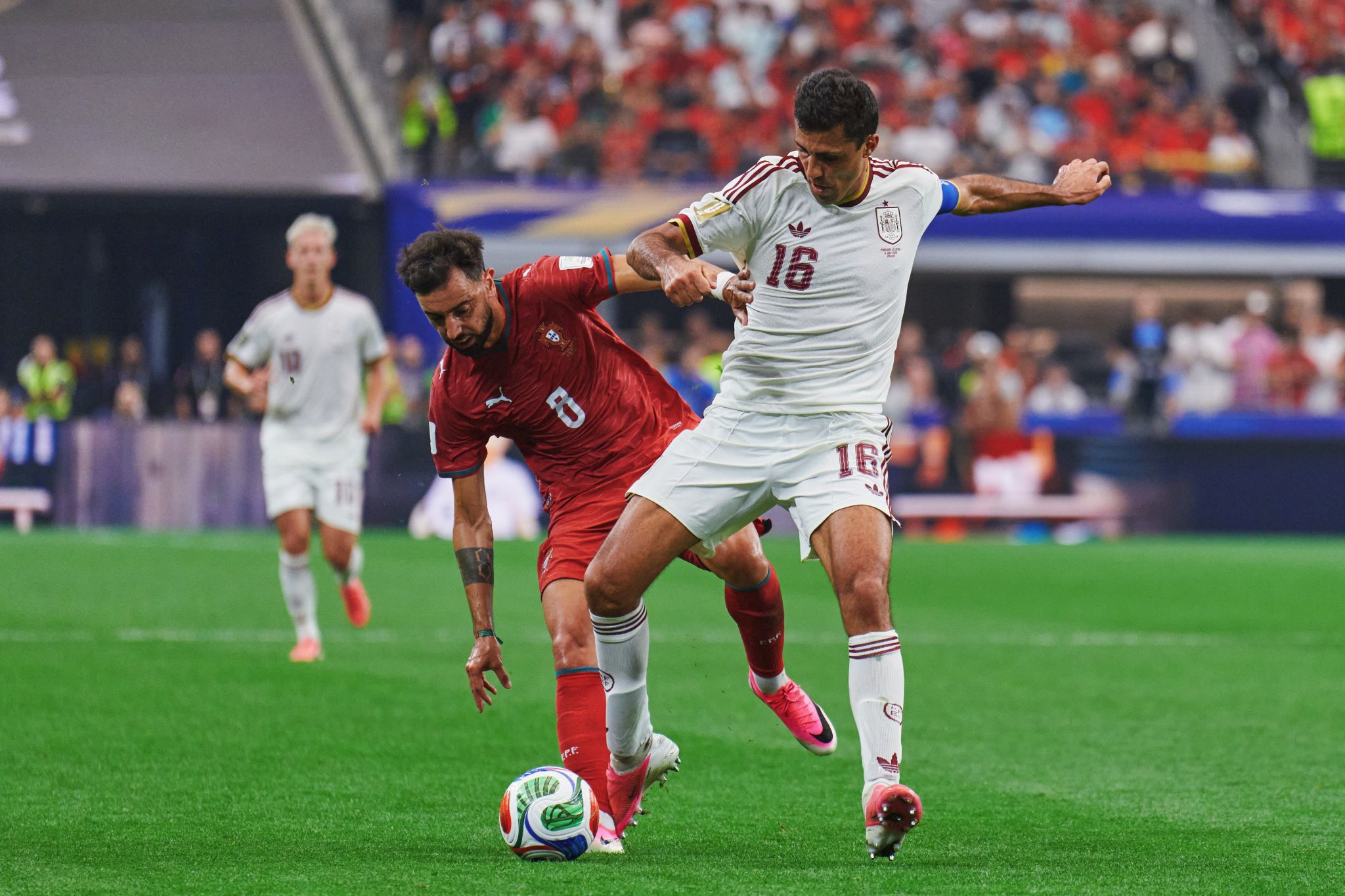
It is evident that, for the third time in five matches, Spain’s attacking output remained underwhelming. Their play alternated between caution and a lack of cutting edge. Although Dani Olmo’s movements behind Portugal’s midfield produced some of the team’s most promising moments, La Roja failed to capitalize on numerous passing opportunities in those zones. Reluctant to adopt the first forward pass they observed, Spain relied heavily on central distribution, which sometimes appeared hesitant. The term ‘timid’ aptly describes their approach.
“Anyone who believes we can win without enduring hardship is mistaken,” Rodri Hernandez remarked after the match, emphasizing the team’s maturity. This composure distinguishes the current Spanish side from the earlier squad under Luis de la Fuente. While Nico Williams continues to assume an increasingly prominent role, his absence of pace and directness is keenly felt, especially alongside Lamine Yamal, who at times appears to shoulder the burden alone. The pair epitomize a youthful, charismatic Spanish team that thrives in high‑pressure situations and challenges opponents to match its intensity. Against Portugal, Opta recorded that only 36 of Spain’s 531 passes were long (6.8%), a marked decline from the 17% long‑pass rate seen in the Euro 2024 final against England.


It was particularly striking that when the young forward delivered several incisive balls into the box, Mikel Oyarzabal—renowned for his precise timing—failed to make the expected runs, rendering him virtually absent. Opta’s pass map reveals that Oyarzabal positioned deeper than both Lamine Yamal and Alex Baena, aligning with Olmo in midfield. The limited forward movement of the Basque player suggests a deliberate tactical instruction from de la Fuente to hold him back, focusing instead on intercepting Portugal’s counter‑attacks.
If the quarter‑finals produce a final four featuring the tournament favourites, Spain is poised to meet France, a side boasting the competition’s most extensive and formidable arsenal. Aware that their own attacking options are somewhat limited, observers argue that Spain’s increasingly measured approach may be strategically tuned for a potential clash with France. The team performed comfortably against Austria and Saudi Arabia, showcasing clear superiority, yet in other fixtures they maintained tight control over matches with few scoring opportunities. This conservative strategy could represent Spain’s most realistic pathway to overcoming Didier Deschamps’ heavily equipped French side, though it may also reflect an underestimation of Spain’s capabilities.
Also Read
- Rahul Dravid Raises Questions Over Vaibhav Sooryavanshi’s Test Future
- Cloud Forest and River Card Face Off in Newbury Handicap Clash
- Midfield doubts deepen after Liverpool’s chaotic defeat at Newcastle – will the club act in the window?
- Crystal Palace Sets £25 Million Price Tag on Jean-Philippe Mateta for Aston Villa Transfer


