






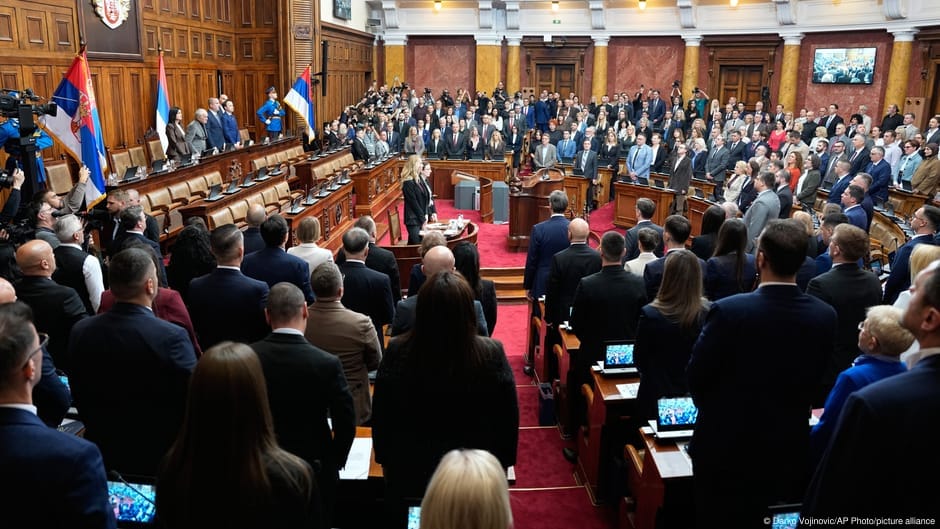
Representatives from Serbia’s student-led movement were sworn in as lawmakers on Tuesday, approximately four weeks after concluding the 14-year tenure of President Aleksandar Vučić.
The Students’ List formally assumed their parliamentary seats during the inaugural session, marking the initial step for the youth-oriented party in constructing Serbia’s next government.
The Students’ List secured 140 of 250 parliamentary seats, while Vučić’s Serbian Progressive Party (SNS) holds 103; the remainder are held by ethnic minority representatives.
Serbia’s student-led movement ends Vucic era
To view this video please enable JavaScript, and consider upgrading to a web browser that supports HTML5 video
Hundreds gathered outside the parliament building in Belgrade to express support for the newly sworn-in lawmakers, the majority of whom are teachers, professors, and other professionals with limited prior political experience.
Conversely, SNS candidates faced a hostile reception, with a woman in the crowd pouring yogurt over an SNS member as she ascended the parliament steps.
Per Serbian media, the newly elected lawmakers have spent several days preparing for their inaugural session, where they will confront veteran opposition figures, including Aleksandar Vučić, now the opposition leader following his electoral defeat.
90 days to form a government
The Students’ List has a 90-day window to nominate a prime minister, unveil their policy programme, and form a government now that parliament has been constituted.
Lessons from Serbia: how students defeated an authoritarian leader
To view this video please enable JavaScript, and consider upgrading to a web browser that supports HTML5 video
The coalition unites figures from both the left and the right, as well as pro-European and pro-Russian factions. It prioritizes domestic reforms and seeks to advance European Union accession negotiations. The List opposes sanctions on Russia and recognizes Kosovo, a stance shared by the vast majority of Serbian citizens.
The movement has pledged to enhance healthcare, strengthen education, and double the defense budget, alongside a range of additional reforms.
The selection of a new parliamentary speaker will also trigger the appointment of an acting president, a role the speaker has held since Vučić resigned in September to contest the prime ministership.
A snap presidential election must be convened by November 27 and conducted by December 27.
Both major parties are anticipated to nominate presidential candidates, though Vučić is barred from seeking a third term due to constitutional term limits.
Ready to break free: How Serbia’s media are changing
To view this video please enable JavaScript, and consider upgrading to a web browser that supports HTML5 video


