




Artificial intelligence may soon consume up to 3% of global electricity demand by 2030. According to a recent United Nations report, the water requirements for this expansion could equal the annual domestic water consumption of 1.3 billion people in sub-Saharan Africa.
The report examines the land use, water consumption, and greenhouse gas emissions driven by the rapid growth of AI. The findings suggest that if the data centers powering these technologies were a sovereign nation, they would rank 11th globally in energy consumption due to the immense power required to train complex models and serve users. By 2030, this ranking could rise to sixth, with a land footprint equivalent to the size of Connecticut and emissions comparable to the United Kingdom’s 2025 output, depending on the adoption of renewable energy.
To explore the drivers of this environmental footprint and potential solutions, we spoke with Kaveh Madani, the lead investigator for the report, Director of the United Nations University Institute for Water, Environment and Health, and recipient of the Stockholm Water Prize.
Sascha Pare: What is the primary conclusion of the report?
Kaveh Madani: The central takeaway is that while AI is often discussed as a virtual or “cloud-based” technology, it has a massive physical presence. Behind every prompt and interaction is a tangible environmental cost. From the extraction of critical minerals and hardware manufacturing to the construction and operation of data centers and the eventual management of e-waste, the supply chain is resource-intensive. We must recognize that “digital” does not mean “impact-free.”
SP: Why does AI require such significant amounts of land and water?
KM: Every stage of the AI lifecycle involves land and water use and carbon emissions. For instance, extracting critical minerals often consumes vast amounts of water and leads to significant pollution. We previously published a report in April detailing the “water injustice” associated with this mining process.
You have to decide if you want to continue using your water for agriculture or if you want to put it into data centers.
Kaveh Madani
Furthermore, the production of energy itself requires land and water, regardless of whether the source is renewable or fossil-based. Hydropower, for example, occupies significant land and water resources. Additionally, the data centers themselves require physical space and immense amounts of water for cooling systems.
SP: How severe are these projected impacts by 2030?
KM: While precise current usage is difficult to track, we estimate that AI currently accounts for roughly 20% of data center loads, a figure expected to reach 40% in a few years. By 2030, AI’s energy demand could equal 3% of the world’s total electricity—making it the sixth-most energy-intensive “country” on earth. The associated water footprint is equally staggering, matching the domestic needs of 1.3 billion people in sub-Saharan Africa.
SP: Can local communities and the environment sustain this growth?
KM: In many regions, difficult trade-offs will emerge. Communities will have to choose between sustaining agriculture or powering data centers. Without the active involvement of these communities, the most vulnerable and impoverished populations will bear the brunt of these consequences.
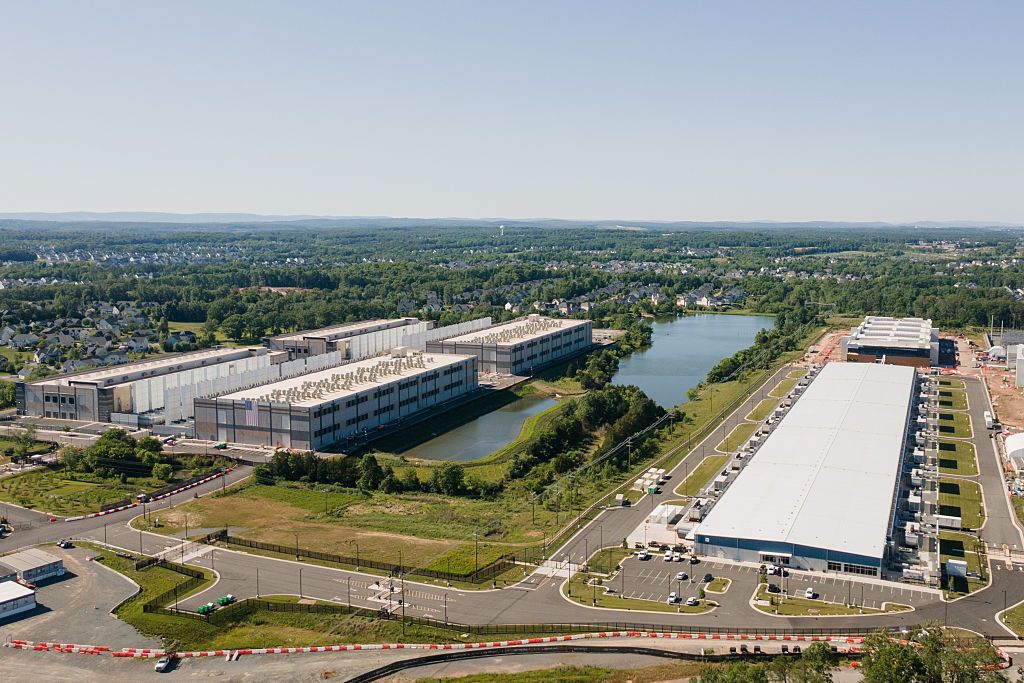
A Microsoft Azure data center in Aldie, Virginia.
(Image credit: Lexi Critchett/Bloomberg via Getty Images)
Global electricity demand is rising, and renewables are struggling to keep pace. This means we may be unable to retire old fossil-fuel plants and may even need to increase their use to meet AI’s demand, further pressuring a fragile environment. Some data centers are already being built in regions facing “water bankruptcy,” creating a degradation loop that threatens both nature and human society.
SP: Who stands to benefit from this expansion, and who is being marginalized?
KM: AI offers broad benefits to humanity, improving lifestyles and creating new opportunities. However, the distribution of these benefits is unequal. Wealthy nations and affluent individuals profit the most, while the private investors driving this growth do not bear the costs of pollution or land degradation. Meanwhile, poor regions in Africa, South America, and Asia—where critical minerals are mined—often lack basic clean water and energy infrastructure. These vulnerable economies suffer the environmental consequences without reaping the rewards.
SP: Given the possibility of an “AI bubble,” how reliable are your 2030 projections?
KM: We believe our projections are conservative. There is immense pressure from the private sector and governments who view AI as a matter of national security and sovereignty. Many expansion decisions are driven by a desire to “stay in the race” rather than comprehensive environmental assessments, suggesting the growth could be even more aggressive than predicted.
SP: China is experimenting with underwater data centers to solve cooling issues. Is this a viable path for other nations?
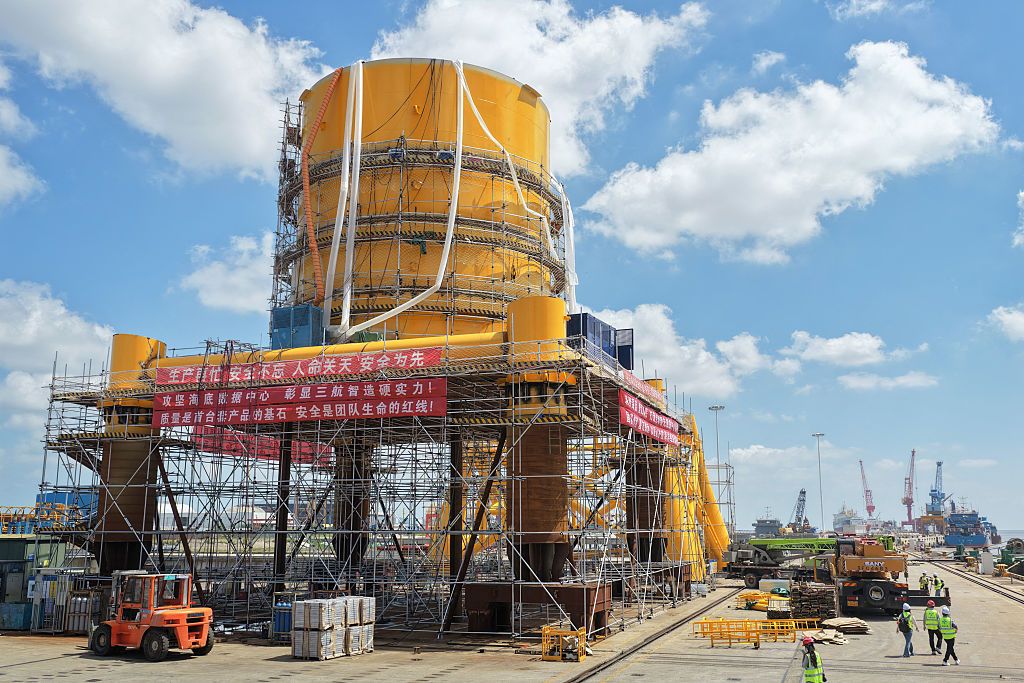
Chinese companies are testing underwater data centers to solve cooling demands. Here, we see a data center under construction at a shipyard in Nantong, in China’s eastern Jingsu province.
(Image credit: CN-STR / AFP via Getty Images)
KM: China’s centralized system allows for rapid scaling of renewables, which is positive, but scaling is not enough on its own. To reverse climate change, the world needs a much more aggressive shift toward green energy. Regarding underwater data centers, we lack sufficient data to determine if they are truly lower-impact. Moving an impact “out of sight” does not make it impact-free; there are likely other environmental risks we have yet to fully understand.
SP: What are the best solutions to ensure AI’s expansion is fair and sustainable?
KM: We propose a governance framework based on transparency and sustainability. Developers and service providers must be held responsible for creating more efficient systems. Governments must ensure that footprints are monitored and regulated, using pollution taxes and incentives to reduce environmental damage from the mine to the landfill. Crucially, communities hosting these centers should share in the profits and opportunities they generate.
Finally, users can make a difference through mindful consumption. We should ask: Is it truly necessary to generate another image or video? Is “thinking mode” required for this specific task? By making smarter choices and demanding transparency from providers and governments, users can help steer AI toward a more sustainable future.
Editor’s note: This interview has been condensed and lightly edited for clarity.