







There have been several encouraging signs for the Toronto Maple Leafs. Auston Matthews looks dominant again, Gavin McKenna’s transition has been promising despite a questionable lineup decision, and William Nylander appears ready to lead the team offensively.
Toronto’s primary problem last season was preventing goals. Nine games into the 2026-27 season, that remains the team’s most significant weakness. The defense has struggled to find its footing, contributing to blown leads and lost points.
Defensive Numbers Remain Below Standard
Toronto allowed the second-most goals in the league last season, surrendering 295 at an average of 3.60 per game. Although the Maple Leafs rank 10th in goals scored this season, they have also conceded 31 goals, placing them near the bottom of the league.
Their penalty kill has been outstanding at 96.4 percent, but their five-on-five play has been inconsistent. The Maple Leafs have allowed four goals in five of their last six games, a trend that continues to undermine their results.
Looking deeper, Toronto has allowed 412 five-on-five shot attempts, the eighth-most in the league. The team is also tied for the second-most five-on-five goals against at 25. The volume and quality of chances it has surrendered remain well above expectations. Although there is still time to address the issues, nothing has changed significantly from last season.

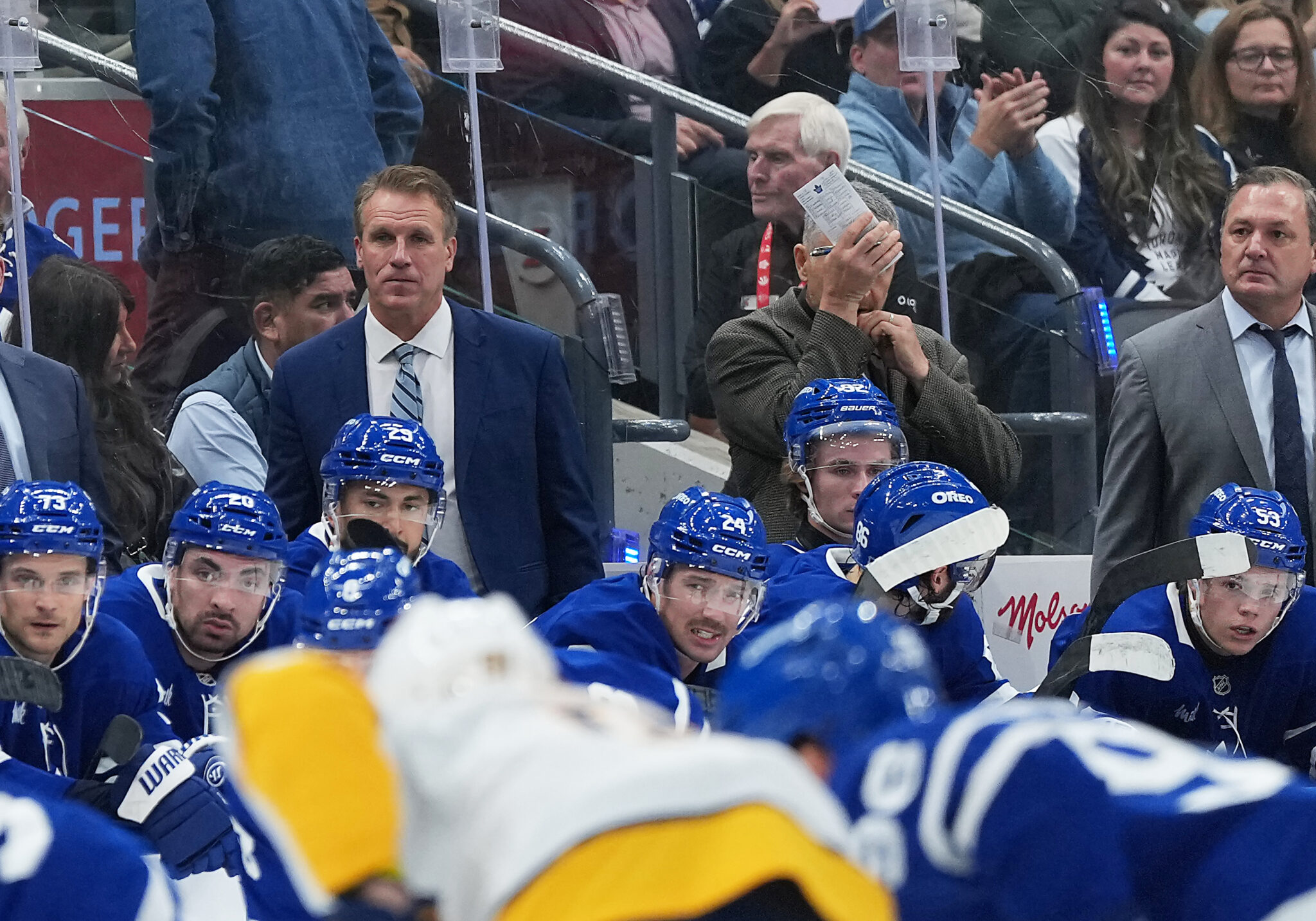
Most of the defensive core remains in place from last season, with a few new additions intended to improve mobility. The evidence suggests those changes have not solved the underlying problems. Toronto has shown more activation in the rush and improved its breakouts, but turnovers in dangerous areas and extended time spent defending in its own zone have continued to cost the team points.
These results fall short of the expectations for a team that hoped to revamp its defense during the offseason. The Maple Leafs appear more confident when moving the puck out of their zone, but their rush coverage and costly mistakes remain persistent problems.
Toronto Continues to Give Up Easy Zone Entries
Several games have exposed the Maple Leafs’ defensive shortcomings. Toronto squandered a 3-0 lead against the Vegas Golden Knights, made repeated mistakes in its loss to the Utah Mammoth, and allowed the Buffalo Sabres to complete a 5-4 comeback in overtime.
Head coach Jim Hiller and the players have acknowledged that the defensive play needs to improve, yet the same patterns continue to emerge.
The issues were evident during Toronto’s recent road trip and its last two games. The Maple Leafs have struggled to defend the rush and have given opponents too much room to enter the offensive zone. They rarely pressure puck carriers effectively in the neutral zone, and when they do challenge, they expose themselves to seams and backward entries that create space for opponents to attack.
A couple of goals against stood out as particularly avoidable.
The first goal conceded against the Mammoth illustrates the problem. Morgan Rielly was passive and hesitant while defending Daniil But, initially retreating from the play before attempting to challenge. As he stepped in, he opened his stance and allowed But to move between his legs. Anthony Stolarz also failed to close out the short-side opportunity, but Rielly’s hesitation and poor execution were decisive factors in the goal.
Toronto’s tendency to surrender easy zone entries remains concerning. On Brett Howden’s goal against the Golden Knights, the Maple Leafs were caught off guard by a quick breakout pass. Mitch Marner was left alone at the blue line with ample time to direct the puck toward the middle, but inadequate coverage allowed Howden to deflect it easily.
Once again, poor execution, an uncontested entry and a lack of awareness led to the goal against.
Only nine games have been played, so Toronto still has time to correct its approach. However, its recent defensive play has closely resembled the struggles of previous seasons. Without greater structure and conviction, the same problems could define another disappointing campaign.
Also Read
- 2026 Butterfield Bermuda Championship odds: Rookie phenom is betting favorite
- David Benavidez Urges Jai Opetaia to Avoid Deontay Wilder Bout
- Drew McIntyre Reveals Career-Best Physical Condition at 41, Confirms Long-Term WWE Future
- Monday Morning NFL Top 10 Rankings: Fantastic QB Play Elevates Bears, Packers, Patriots


