






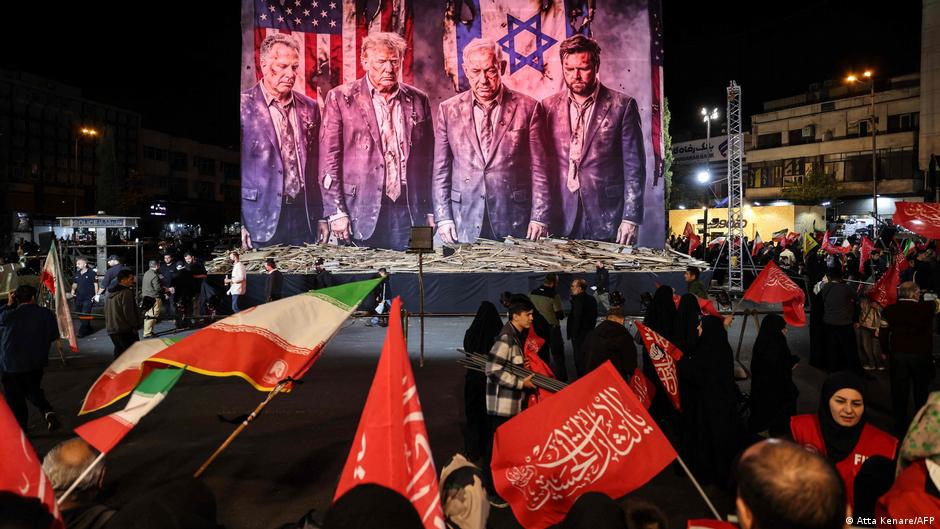
After his party’s resounding defeat in this week’s US midterm elections, President Donald Trump acknowledged that the conflict with Iran likely influenced the outcome.
Speaking to Fox News, Trump said, “I think a part of it was Iran, but, at the same time, people understood the importance of what I’ve done with Iran,” while also conceding that voters were uneasy about the war’s effect on gasoline prices.
Observers note that both the United States and Israel had delayed major attacks on Iran until after the US voting concluded.
Late October reporting in The Wall Street Journal revealed that the Trump administration had already warned Gulf governments to prepare for a short, intense military campaign following the midterms.
Could conflict escalate again?
Although the president retains broad foreign‑policy authority, a Democratic‑controlled Congress could restrict funding for further military actions. The newly elected Democrats, however, will not take their seats until early next year, leaving the current legislative balance unchanged for now.
Two American political‑science professors argued in Foreign Affairs this week that presidents who become “lame ducks” after losing congressional support often pursue more aggressive foreign policies.
They explained that lame‑duck leaders often turn to foreign policy to cement their legacy, where presidential authority is less constrained by domestic politics, and identified Iran as a primary arena for potential action.
Trump also told several media outlets that he was in “no rush” to start bombing Iran again.
Opinions on Iran’s next moves remain divided.
Iranian officials have said they are prepared for any attack, and senior leaders’ rhetoric suggests a willingness to target a broader range of assets than before, including regional energy and economic infrastructure, undersea telecommunications cables, and data centers.
If Iran perceives an existential threat to its leadership, then “all bets are off,” said Ross Harrison, a senior fellow at the Washington‑based Middle East Institute, during a virtual briefing hosted by MEI this week. “I think they will target differently in the Gulf states [this time] … so it really depends on how all this unfolds.”

Other experts believe Iran held back its actions to pressure Trump before the midterms and may now be more open to negotiating a peace deal now that the election is over.
Unwilling participants
The ongoing crisis has left Gulf states, which have been primary targets of Iranian attacks, in a difficult position.
“We find ourselves drawn within a crisis that we worked diplomatically very hard to try to avert,” said Anwar Gargash, a foreign‑policy adviser to the United Arab Emirates leadership, at a security conference in Bahrain last weekend. “We are clearly seeking a political off‑ramp.”
Qatar has been mediating between the US and Iran while also conducting emergency drills at its airport. The Emiratis are running similar exercises, and Saudi Arabia faces a two‑front conflict, already coping with Houthi attacks from Yemen. Egypt has reportedly reinforced air defenses around the Suez Canal.
Regardless of what follows, the US‑Israel‑Iran war has forced Gulf states to reassess their defense ties with America. Rather than providing security, US bases have made them additional targets.
“There is widespread disappointment across the region with the US over the folly of the war, the erratic nature of Washington’s military and diplomatic conduct, and its decision to prioritize Israel’s defense over that of its Gulf partners,” said Hasan Alhasan, a senior fellow at the IISS, to Bloomberg this week. “If the US liberation of Kuwait in 1991 was the moment that established America’s role in the region, the 2026 war may be remembered as the moment that undid it.”
Replacing America?
Gulf states are broadening their alliances—most notably, the UAE is deepening ties with Israel, and Saudi Arabia has entered the Mecca defense pact with Pakistan and Turkey.
“The Gulf states have already moved toward strategic autonomy and self‑reliance,” wrote Andreas Krieg, a senior lecturer at King’s College London’s School of Security Studies, for Middle East Eye this week. “A lame‑duck Trump will speed that process.”
Even so, a Democratic Congress might restore some reliability to the US partnership.
Krieg recommends that Gulf nations unite to pressure the United States not to attack Iran and then negotiate a non‑aggression pact with Tehran without US involvement.
However, Ryan Crocker, a former US ambassador to the region and a distinguished fellow with MEI, doubts such unity is possible.
“I’m afraid that meaningful Gulf unity is not coming to a theater near us anytime soon,” Crocker said. The Qataris remain distrustful because of how other Gulf states acted against them in 2017. He added, “there are well‑known differences between Saudi Arabia and the UAE we see in Sudan [and] in Yemen, and, of course, the profound differences … on relations with Israel. So I would not expect any meaningful moves toward [Gulf] security cooperation.”
In the longer term, Gulf states are likely to reach some understanding with Iran.
“The Gulf states understand that they probably can’t buy their security only from Washington, and that they’re going to have to buy it, to some degree, by some kind[Any] relationship with Tehran,” added MEI’s Harrison. “It’s inevitable. Geography reigns.”
The exact form of such a non‑aggression pact remains unclear, he noted. This is why Gulf leaders now worry most about the conflict escalating again to a point where the path back to diplomacy is lost, Harrison concluded.
Also Read
- Prime Minister Carney Unveils Budget Aimed at Boosting Canada’s Economy Amid Ongoing U.S. Trade Tensions
- Washington delays broader Chinese tech export restrictions until Jan. 10
- Palestinian Farmers Face Severe Access Restrictions During West Bank Olive Harvest
- Hegseth Dismisses Renewed Impeachment Push, Vowing Precedent Will Hold


