






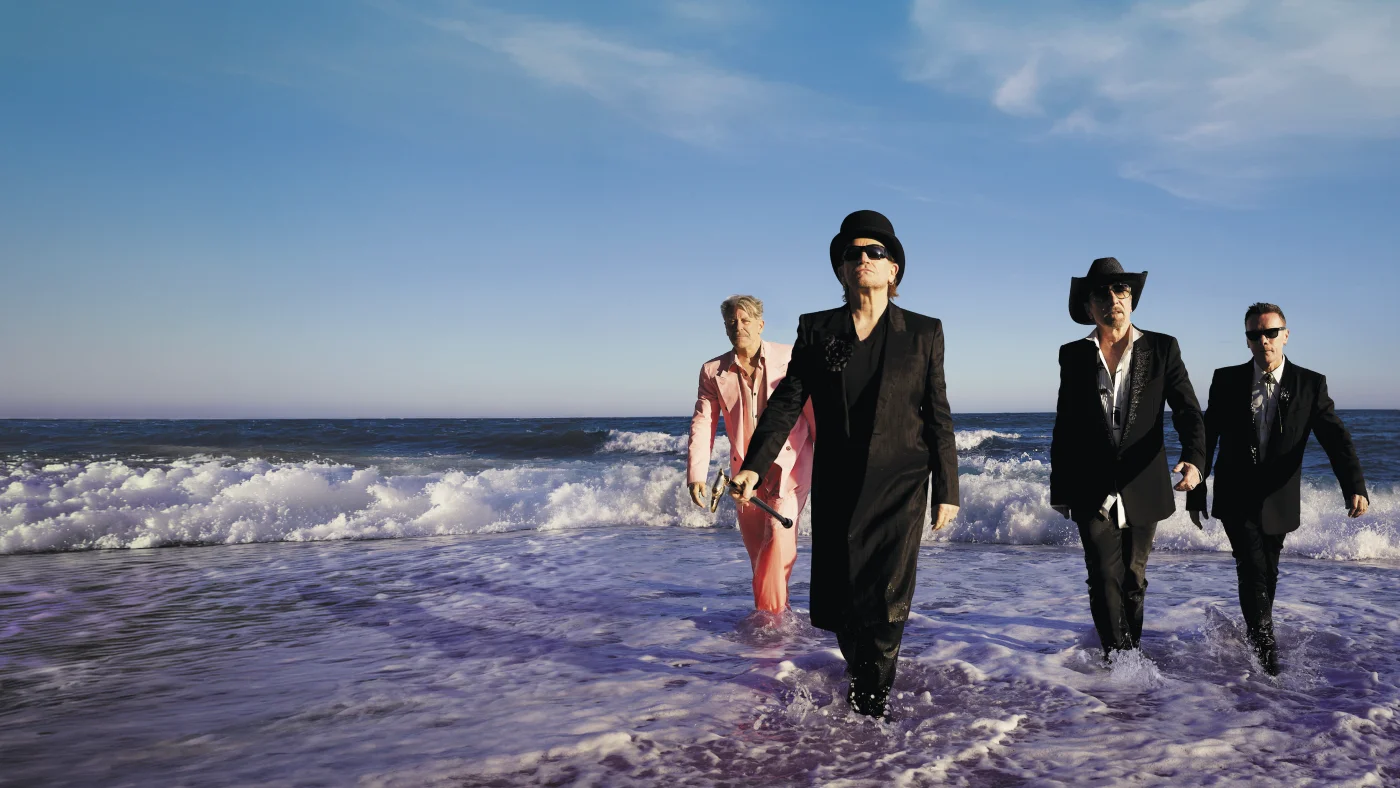


U2’s 16th album, Carnaval De Luz, clatters through the band’s history with unapologetic delight.
Bono must be counting his blessings—whether from the Dublin sky or his strategic advisors. U2 has returned, not merely because they demanded reentry into the cultural conversation. Few major rock bands have navigated a twilight period as turbulent as this one. Half a century into their reign as rock’s quintessential overachievers, the quartet found that status increasingly unwieldy. Age and wealth distanced them from pop’s evolving dialogue, pushing them toward the dreaded classification of nostalgia act. In chasing relevance, they made spectacular missteps; leaning on fan loyalty, they kept generating revenue while slipping further into irrelevance. Bono, the most extroverted frontman since Mick Jagger, watched his children supplant him in celebrity columns and contended with health issues. Yet the stars have realigned, and Carnaval De Luz emerges as a fortunate 16th record that makes U2 admirable again, if not strictly “cool.”
Despite dissenting voices, this collection of dance tracks and late-night reflections reaffirms U2’s standing as a blockbuster act capable of startling, engaging, and generating joy. It follows two recent EPs that felt like renewal ceremonies and several singles signaling the band’s intent to play—in both the musical and disruptive senses. An engagement with Latin music, hinted at by Spanish phrases foreshadowed in the album title and Bono’s revelation that one track was named for his latest platonic muse, Rosalía, proves less like awkward appropriation than a reinforcement of the Eurotrash cosmopolitanism the group introduced on 1992’s Achtung Baby. (Her reported response—an amused “Do I have to sing on this?”—suits the song’s message: they can barely touch the hem of her garment, but they gush anyway.) Where U2 has previously strained to seize the moment by adopting ill-fitting trends, here a core commitment to their own historic innovations fuels an immediacy that feels earned, not forced.


Before the singles confirmed a return to familiar terrain, The Edge had whispered of a “sci-fi Irish folk project.” Beyond an uptick in the guitarist’s pedal-happy noise generation, however, this music isn’t experimental. It does benefit from a certain investment in time travel. Like a self-referential version of Terry Gilliam’s Time Bandits, Carnaval De Luz clatters through U2’s history with unapologetic delight. Opening track “Go (Carnaval De Luz)” begins with a wash of noise recalling Achtung‘s “The Fly.” The interplay of Edge’s guitar against Adam Clayton’s bass on “Silencio” calls back to “Two Hearts Beat as One” from 1983’s War. “The Greatest Show on Earth” is a ballad evoking the band’s Wim Wenders era, while “Glorify” sizes down the strut of 2004’s “Vertigo” to fit a more direct invocation of grace. Bono cycles through his various techniques: beat-poet rapping, unctuous falsetto, broken croon, that wail. Larry Mullen Jr. demonstrates what expensive physical therapy can achieve, hammering the drums with machine-gun force.
Religious and profane, aggressive and generous, the songs on Carnaval De Luz add new layers to U2’s defining preoccupations: what it means to possess a sense of mission in an instant-gratification world, and how difficult yet rewarding it can be to keep searching for meanings of the word soul.
Notably, Bono’s lyrics have grown more direct in their expressions of Christian faith. He remains susceptible to a goddess—the unnamed “face of the future” in “La Reina” joins a harem of divine feminine muses—and an anti-dogmatic believer, as “Torn,” apparently the last song Dolly Parton recorded, makes evident. That particular goddess shared Bono’s stubborn conviction that people are essentially good, especially when enriched by faith, and that loving your neighbor remains possible; their collaboration will move some hearts, but pushes the limits of mawkishness as it laments the loss of the ecumenical ideal.
Faith remains this band’s axis, and clearly feels more urgent to Bono now than in the ’90s, when he first openly indulged the lemon-squeeze of earthly pleasure. We’re closer to heaven now; this is an older man’s album, reflective and repentant. “Street of Dreams” opens with Psalm-like phrases: “God, hear me shout.” In “Glorify,” he addresses those who reject the spiritual with the ultimate Jesus flex, snarling, “There’s nothing you can do to keep me from loving you.” Casual listeners uninterested in religion may find such fervor uncomfortable. Those tolerant of preaching will appreciate how he continues to play with that tradition, as on “Midnight Sunshine,” a bubblegum soul number that turns on the pantheistic punchline: “You say God no longer cares for us / I say the stars are only there for us to shine.” Banal on the page, Bono’s words gain necessary light from a melody that functions like a mnemonic tool—or, yes, a prayer. It’s a tiny pep talk to stay connected. Dogma breaks things, but the night is illuminated; let’s dance.
U2 strives to maintain that nimbleness throughout Carnaval De Luz, and largely succeeds. In doing so, the time bandits meet the moment in which they’ve landed. Whether dumb luck or Spidey sense guided the release date—arriving right after U.S. midterm elections that solidified a return of liberal confidence—this music runs on similar energy. As in many recent impactful campaigns, humor plays a key role in making U2’s bolder messages palatable. Sometimes it takes the obvious form of wordplay, as when Bono quotes Ernest Hemingway’s famous quip about his favorite cocktails in “Silencio,” but mostly it resides in the music itself. This is where bassist Adam Clayton, the career-long secret weapon, makes the difference. Motown’s bop and the bubbling syncopation of lovers rock inform his style; here those rhythms counterpoint Mullen’s driving drums and Bono’s impassioned declarations. Bono knows how to turn a phrase in Clayton’s direction as Edge’s guitar creates static around both, so heavier pronouncements fizz and shift meaning. This playfulness among bandmates makes a song like “The Mirror Maker (Rosalía)” not a cringeworthy come-on but a genuine expression of awe at a younger artist. Longtime studio allies Brian Eno and Jacknife Lee ensure the atmosphere suits this interplay. Instead of the big skies of the Daniel Lanois era or even the Eno-helmed, overlooked 2009 gem No Line on the Horizon, this album’s production stresses agility and fun.
Even the grand ballad “The Greatest Show on Earth”—an homage to the illuminated cathedrals U2 makes of stadiums when playing “With or Without You” on world tours—possesses enough antic energy to save it from navel-gazing ponderousness. Channeling Peggy Lee singing “Is That All There Is” with Courvoisier in hand, the song meditates on the many marriages that constitute a life. Naming heartache and productive codependence, he may be addressing his actual wife, Ali, who has been with him as long as he has gone by that ridiculous name. Regarding a dream gone dusty, he seems caught up with his bandmates, cajoling them into the spotlight once more. But when he sings “Breathe on me and I’m love and I’m lust,” he welcomes a force beyond those intimates—on one hand, the spirit that guides him; on the other, the fans he still insists on making a congregation. Clayton and Mullen turn that spotlight into pinpoints, preventing Bono from settling too firmly into grandiose gestures, while Edge offers the soaring guitar lines that made them work originally. This torch song becomes a soul invocation, redolent of Aretha and the Sweet Inspirations; all he can do, Bono realizes, is say that little prayer. For himself, for the band, for the moment where we’re stuck—and, even if you’re not a fan, for you.
Also Read
- Kate Nash Forecasts $16,000 Loss on North American Tour, Will Use OnlyFans Income to Cover Costs
- The Edge Clarifies Story Behind His Unproduced ‘Elf’ Sequel Treatment
- Noel Fielding Distances Himself From Russell Brand, Calling His Old Jokes ‘Horrible and Inappropriate’
- Daily Visual Puzzle: Spot the Sliver, Solve the Scene


