






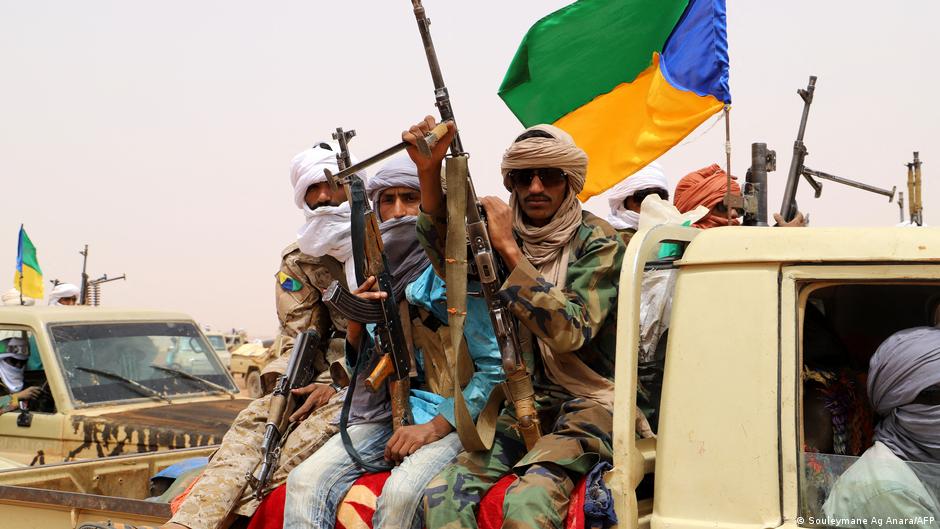
Ukraine’s war with Russia may be extending into Africa’s Sahel region, where a CNN investigation published in September reported that roughly 15 Ukrainian drone specialists are assisting Tuareg rebels in northern Mali. Their shared adversary is Mali’s military government in Bamako and its Russian partners.
Questions remain about the reliability of these claims and the potential diplomatic costs for Kyiv. Marta Oliynyk-D’omochko, coordinator of the African Studies Program at the National University of Kyiv-Mohyla Academy, identifies a clear strategic motive: “Ukraine’s main interest is to weaken Russia’s influence around the world,” she told DW. Diminishing Moscow’s military footprint, she added, would also erode the economic leverage that accompanies it.
Russian historian Irina Filatova, professor emeritus at the University of KwaZulu-Natal in South Africa, finds Ukrainian support for the Tuareg movement plausible, though she notes a lack of independent evidence to confirm it.
Kyiv’s alleged partners present complications. The Tuareg separatist Azawad Liberation Front (FLA) cooperates with Jama’at Nusrat al-Islam wal Muslimeen (JNIM), a jihadist coalition affiliated with al-Qaeda.
Suspicions dating back to 2024
In July 2024, DW reported on possible involvement by Ukraine’s military intelligence service (HUR) in an ambush on Russian Wagner fighters near Tinzaouaten in northern Mali. At the time, HUR spokesperson Andriy Yusov stated that Tuareg rebels had received intelligence enabling the attack, though Ukraine denied direct participation.
Jihadist groups in Africa and their links
To view this video please enable JavaScript, and consider upgrading to a web browser that supports HTML5 video
Paramilitaries from Russia’s Wagner Group and Malian troops suffered heavy losses in the July 2024 attack. CNN’s investigation has renewed debate over whether the Russia-Ukraine war is being fought by proxy on African soil.
Signals from Kyiv, but no confirmation
Speculation intensified after a post on X by Kyrylo Budanov, former head of Ukraine’s military intelligence and now chief of staff to President Volodymyr Zelenskyy. On September 7, he wrote that Ukrainian intelligence protects the country’s interests worldwide — “from Russia to Africa … in the burning desert sands and in the snows of icy Antarctica.” Budanov did not explicitly mention Mali, and his post does not confirm any specific operation. CNN reported that Ukrainians provided drone training, operational planning, and remote support for drone missions; DW has not independently verified these claims.
DW contacted the HUR with detailed questions regarding personnel deployment, political authorization, and safeguards to prevent indirect benefit to JNIM, which cooperates with the FLA. The agency did not provide a substantive response, indicating it might share information at a later date. The extent of any Ukrainian involvement therefore remains unclear.
Why Mali matters to Kyiv
Following military coups in 2020 and 2021, Mali pivoted away from Western partners toward Russia. The Wagner Group was subsequently replaced by the Africa Corps in 2025 as Moscow reorganized its continental military presence. Russia has sought to consolidate influence in the Sahel and position itself as a reliable security partner.
Ulf Laessing, former head of the Sahel program at the Konrad Adenauer Foundation in Mali and now head of its Syria and Iraq program, said Russia continues to expand its African activities. “I have received information that the Africa Corps still uses Syria and Libya as transit points for flights from Russia, including for refueling and loading, to support its operations on the continent,” Laessing told DW.
How could Wagner Group revolt impact Africa?
To view this video please enable JavaScript, and consider upgrading to a web browser that supports HTML5 video
From Ukraine’s perspective, pressuring Russian forces in Africa could be strategically attractive. Filatova sees a clear logic: “The Ukrainians regard Russian troops anywhere in the world as legitimate targets.” Setbacks in Mali could tie up Russian resources and damage Moscow’s reputation as a security guarantor, she argued.
However, Oliynyk-D’omochko emphasized that the relationship with the Tuaregs is not a comprehensive alliance. The FLA seeks not to topple the government in Bamako but to secure self-determination or extensive autonomy for northern Mali. She characterizes the arrangement as tactical: “It is more of a situational alliance against a common enemy than a comprehensive partnership.”
The alliance with jihadists
The FLA is fighting for an independent state in northern Mali, a region predominantly inhabited by Tuaregs. JNIM, by contrast, aims to impose strict Islamic rule. Both groups oppose the military government and its Russian allies, but their ultimate objectives diverge.
Potential Ukrainian support for the FLA would not, in itself, constitute direct backing for JNIM. However, jihadists could benefit indirectly through joint operations or by gaining access to knowledge and equipment. Cooperation between Tuareg and Islamist groups dates back more than a decade.
After the ousting and killing of Libya’s longtime ruler Muammar al-Gaddafi in October 2011, heavily armed Tuareg fighters returned to Mali and reignited the struggle for independence. In the process, separatist ambitions became entangled with Islamist movements. Iyad Ag Ghaly, the current leader of JNIM, was himself a participant in the Tuareg rebellion before turning to jihadism.
According to Oliynyk-D’omochko, the cooperation is primarily tactical. The two sides have collaborated during past uprisings but later fell out. It remains unclear how long the current alignment will endure.
For Kyiv, this poses political risk. In many African countries, Tuaregs are viewed as separatists. Engagement with them could create the perception that Ukraine is meddling in another state’s internal affairs.
Claims of support for armed groups
Mali, Niger, and Burkina Faso accuse Ukraine of supporting armed groups and threatening their territorial integrity. The three Sahel nations, all governed by military juntas, have severed diplomatic ties with Kyiv and deepened cooperation with Russia.
In September, Mali’s Foreign Minister Abdoulaye Diop told the United Nations that Ukraine was providing “clear and open support to terrorist groups and other mafia-like groups to undermine our country’s territorial integrity,” according to Agence France-Presse. Diop offered no evidence for the claim.
The three governments may have an interest in legitimizing their partnership with Moscow and portraying Kyiv as a destabilizing actor. Oliynyk-D’omochko has found no definitive proof of the allegations but warned of potential consequences for Ukraine’s Africa policy. Kyiv advocates equal partnerships with African countries; any perceived cooperation with separatists could undermine that message and affect how potential partners view Ukraine.
What price could Ukraine pay?
Engagement in Mali could offer Ukraine a relatively low-cost means of weakening Russian interests beyond Europe. A small team of specialists could train local fighters and enhance their drone capabilities.
But a partnership with the FLA carries political hazards. Because the Tuareg separatists cooperate with JNIM, Kyiv could face accusations of indirectly supporting jihadist fighters — undermining its efforts to strengthen relations with African countries.
How Mali’s big bet on Russia is backfiring
To view this video please enable JavaScript, and consider upgrading to a web browser that supports HTML5 video
Also Read
- U.S. Treasury Secretary Scott Bessent Declares Iran’s Economy “Collapsing” Under New Sanctions
- Brazilian Real Declines as Investors React to Lula’s Re-Election Win
- Before You Commit Capital to Your Business Idea, Prove That Buyers Will Pay for It
- Lula wins fourth term in dramatic Brazil election comeback


